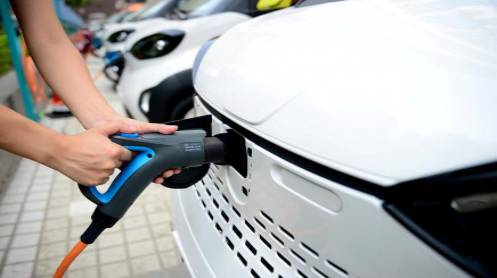
ISLAMABAD: The International Monetary Fund (IMF) has reportedly rejected Pakistan’s proposal to impose a reduced 1% sales tax on New Energy Vehicles (NEVs), including electric vehicles (EVs), creating fresh uncertainty over the finalisation of the country’s Auto Policy 2026-31.
According to sources, the government presented a proposal to the IMF on Thursday seeking a concessional tax regime for environmentally friendly vehicles. The proposal included a sales tax rate equivalent to 50% of the standard 18% sales tax on hybrid vehicles and a nominal 1% sales tax on NEVs. However, the IMF did not endorse the proposal and sought further clarification from the government.
The disagreement comes at a critical time as Pakistan’s existing auto policy expires at the end of June, while the National Assembly is expected to approve the federal budget next week. Any changes in sales tax or customs duties must be incorporated into the Finance Bill before its passage.
Officials familiar with the discussions said the IMF remains opposed to reduced sales tax rates for vehicles, including EVs, and has reiterated its preference for applying the standard 18% sales tax across the board. The Fund has reportedly suggested that any incentives for promoting electric mobility should be provided through direct subsidies rather than tax concessions.
The delay in reaching an agreement has further complicated efforts to finalise the Auto Policy 2026-31, which has already been affected by differences between key government ministries. Sources revealed that consultations chaired by Deputy Prime Minister Ishaq Dar failed to produce consensus on several policy issues, particularly the tariff structure.
A major point of contention is between the Ministry of Industries and Production and the Ministry of Commerce. While the industry ministry seeks higher protective tariffs for local vehicle assemblers, the commerce ministry insists that the new policy must remain consistent with the National Tariff Policy, which envisages a gradual reduction in customs duties to a maximum of 15% by 2030.
As part of its proposals, the Ministry of Industries suggested reducing customs duty on NEV-specific parts to 1% for the first three years and 5% thereafter. It also recommended exempting sales tax on imported NEV components and applying only a 1% sales tax on locally produced and sold NEVs for five years. Additional proposals include exemptions from Federal Excise Duty (FED), Capital Value Tax (CVT), and withholding tax on NEVs during the policy period.
The ministry has also proposed imposing additional levies on conventional internal combustion engine vehicles to accelerate the transition towards cleaner transportation. Under the proposal, vehicles valued between Rs15 million and Rs20 million would face a 5% levy, those priced between Rs20 million and Rs25 million would attract a 10% levy, while vehicles worth more than Rs25 million would be subject to a 15% levy.
The draft policy places significant emphasis on localisation and domestic manufacturing. It targets up to 85% local value addition in two- and three-wheelers, including electric vehicle categories L6 and L7, by 2030. Manufacturers would be required to localise critical EV components such as battery packs, electric motors, controllers, and power electronics. Failure to achieve localisation targets could result in suspension of tariff concessions and other incentives.
The policy also proposes a gradual phase-out of various regulatory exemptions and concessionary Statutory Regulatory Orders (SROs) by 2030, aiming to reduce Pakistan’s weighted average applied tariff to below 6% while encouraging a more competitive and efficient automotive sector.
With the IMF maintaining its hard stance on tax concessions and government ministries still divided on key policy measures, the future direction of Pakistan’s automotive and electric vehicle industry remains uncertain as the deadline for the new auto policy approaches.
Story by Shahbaz Rana