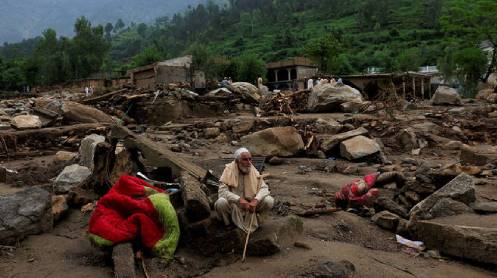
ISLAMABAD: Pakistan has reduced its climate-related development spending in the FY2026-27 Public Sector Development Programme (PSDP) despite increasing exposure to extreme weather events and growing global investment in climate resilience.
The federal government has allocated Rs2.4 billion ($8.6 million) for climate-related PSDP projects in the upcoming fiscal year, marking a decline of more than 60 percent compared to around Rs6.4 billion allocated five years ago.
The reduction comes at a time when South Asian countries, including China, India, and Bangladesh, are significantly increasing investments in climate adaptation, mitigation, and green infrastructure. The divergence highlights Pakistan’s rising vulnerability to climate shocks despite being widely recognised as one of the most climate-affected countries in the world.
International indices, including the Climate Risk Index by Germanwatch, consistently rank Pakistan among the nations most severely impacted by climate-related disasters. Similarly, the World Bank Climate Change Knowledge Portal identifies the country as highly vulnerable to rising temperatures, extreme weather events, and water stress.
Experts warn that Pakistan is already experiencing more frequent and intense heatwaves, with projections indicating further temperature increases over the coming decades. This is expected to place additional pressure on public health systems, agriculture, labour productivity, and energy demand.
A major concern remains the accelerating melt of glaciers in the Hindu Kush–Karakoram–Himalayan region, which feeds the Indus River system — the backbone of Pakistan’s agriculture, industry, and urban water supply. According to the United Nations Development Programme (UNDP), rapid glacial retreat is increasing the risk of glacial lake outburst floods while also threatening long-term water security.
Research by the Pakistan Institute of Development Economics (PIDE) shows that floods, droughts, erratic rainfall patterns, and rising temperatures are already affecting crop yields and food security across the country.
In contrast, Bangladesh has steadily increased climate-related allocations, with spending rising from approximately Tk24,226 crore in FY2020-21 to over Tk42,206 crore in FY2024-25, according to published budget analyses. India has also expanded its climate investments through large-scale funding for renewable energy, green hydrogen, electric mobility, and adaptation programmes.
Pakistan remains particularly exposed due to its dependence on the Indus Basin, which supports nearly 90 percent of agricultural output. Climate-related disruptions to this river system have nationwide implications, ranging from food security risks to energy and water shortages.
The country’s vulnerability was underscored by the devastating 2022 floods, which affected more than 33 million people and caused widespread economic losses, according to government and United Nations assessments.
Despite these escalating risks, the recent reduction in climate-related development funding has raised concerns among experts about Pakistan’s preparedness to cope with future climate shocks.
Story by Kasim Abbasi