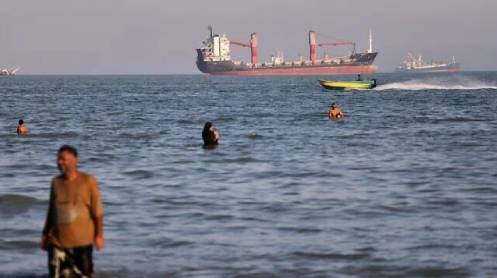
WASHINGTON/TEHRAN: Tensions between the United States and Iran escalated sharply on Friday after US forces launched airstrikes on Iranian military installations in response to a drone attack on a commercial cargo vessel transiting the strategic Strait of Hormuz.
According to the US Central Command (CENTCOM), American aircraft targeted Iranian missile and drone storage facilities, along with coastal radar sites, following what it described as an Iranian one-way drone attack on the Singapore-flagged cargo ship M/V Ever Lovely on June 25.
The vessel was reportedly sailing out of the Strait of Hormuz along the Omani coast when it was struck. CENTCOM accused Iran of carrying out an “unwarranted act of aggression” that violated the recently agreed ceasefire and threatened freedom of navigation through one of the world’s busiest maritime trade corridors.
“The Iranian attack clearly violated the ceasefire and undermined the security of international commerce passing through this vital waterway,” CENTCOM said in a statement.
In response, Iran’s Islamic Revolutionary Guard Corps (IRGC) announced that it had launched attacks on US military positions in the region. While the Guards did not disclose the locations or extent of the operations, they described the action as retaliation for the latest US strikes.
Earlier, Iran’s semi-official ISNA news agency published a statement attributed to the IRGC warning that Tehran’s response would be “swift and decisive” before later removing the report without explanation.
Meanwhile, US Vice President JD Vance warned Tehran against any further military escalation, saying Washington remained committed to the ceasefire but would respond forcefully to any additional attacks.
“Iran signed a ceasefire agreement. We have honored it. If they have disagreements about how the MOU is being applied, they can pick up the phone. But violence will be met with violence,” Vance said in a post on X.
The latest exchange marks a significant deterioration in regional security despite recent diplomatic efforts aimed at halting nearly four months of conflict. Analysts warn that continued military retaliation by both sides could further destabilize the Gulf region and threaten global energy supplies, particularly as commercial shipping through the Strait of Hormuz remains critical to international oil and gas markets.