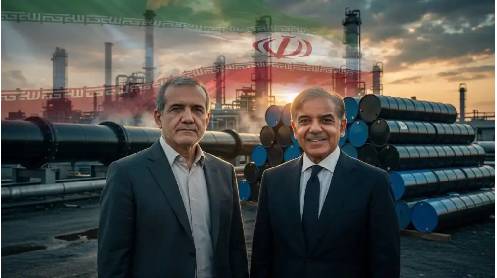
LAHORE: Federal Minister for Petroleum Ali Pervaiz Malik has said that Pakistan is actively considering the import of cheaper crude oil and natural gas from Iran as part of the government’s efforts to reduce the country’s energy import bill and provide relief to consumers.
Speaking to the media in Lahore on Sunday, the minister said the government was exploring the possibility of sourcing discounted Iranian crude oil following the temporary easing of US sanctions on Tehran. He noted that the government remained committed to lowering energy costs and ensuring affordable fuel prices for the public.
The option of importing Iranian crude has re-emerged after the easing of geopolitical tensions in the region. Industry estimates suggest that Pakistan could save between $170 million and $340 million annually if it imports 10 to 20 percent of its petroleum requirements from Iran at discounted rates, including savings on freight costs.
While local refineries are technically capable of processing Iranian crude, industry experts point out that commercial challenges remain. Iranian crude typically produces a higher proportion of furnace oil, for which domestic demand is limited, posing operational and marketing constraints for local refiners.
Commenting on fuel prices, Malik said the government was taking proactive measures to reduce the burden on consumers. He acknowledged that recent increases in petrol and diesel prices had created difficulties for the public but expressed optimism that the situation had improved.
“Good times are coming now,” the minister said, adding that the government had already implemented substantial reductions in petroleum prices.
On June 19, Prime Minister Shehbaz Sharif announced a Rs74 per litre reduction in petrol prices and a Rs67 per litre cut in high-speed diesel (HSD) prices, passing on the benefits of declining international oil prices to consumers.
The reductions followed the easing of tensions in the Middle East after an interim understanding between the United States and Iran, which helped restore normal shipping through the Strait of Hormuz. The reopening of the vital energy corridor contributed to a decline in global crude oil prices after a period of volatility.
Malik maintained that the reduction in domestic petroleum prices was even greater than the decline witnessed in international markets, reflecting the government’s commitment to providing maximum relief to the public.
Story by Amjad Mahmood