NFEH Demands Urgent Restoration of Karachi’s Dug-Up Roads
Karachi: President of the National Forum for Environment & Health (NFEH), Naeem Qureshi, has expressed grave concern and disappointment over the continued neglect of Karachi’s roads that were dug up for the laying of new gas pipelines, despite reports that more than Rs11 billion in road-cutting and restoration charges had already been paid in 2025 by the Sui Southern Gas Company (SSGC) to the Karachi Metropolitan Corporation (KMC), Town Municipal Corporations (TMCs), cantonment boards and other relevant civic authorities. In a strongly worded statement, 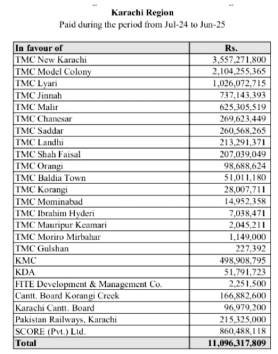
Naeem Qureshi said it was unacceptable that residents of Karachi were still being forced to endure broken, uneven and hazardous roads in numerous localities more than a year after the road-cutting charges had reportedly been paid in advance for the restoration of these roads. He remarked that if the required restoration funds had already been deposited with the competent authorities, there could be no justification for allowing the city’s road network to remain in such a deplorable condition. He said the deteriorating roads had become a daily ordeal for millions of motorists, commuters, motorcyclists, schoolchildren, patients, pedestrians and public transport users, who continued to face severe traffic congestion, vehicle damage, increased fuel consumption, delays in emergency services and a heightened risk of road accidents. “The people of Karachi should not be made to suffer endlessly because of administrative delays, poor coordination or institutional inefficiency,” he said. The NFEH President urged the Karachi Metropolitan Corporation, all concerned Town Municipal Corporations, the Karachi Development Authority and other relevant provincial authorities to immediately complete all pending formalities, including the issuance of any required No Objection Certificates (NoCs), so that the damaged roads could be reconstructed without any further delay. He emphasised that bureaucratic procedures should never become an excuse for prolonging public misery when funds for road restoration had reportedly already been paid. Naeem Qureshi said the poor condition of Karachi’s roads was not merely a civic inconvenience but had also become a serious environmental and public health issue. He pointed out that broken roads continuously generated large quantities of dust and particulate matter, significantly worsening air pollution across affected neighbourhoods. The dust was exposing motorists, commuters, pedestrians, roadside vendors and nearby residents to respiratory ailments, allergies, asthma and other health complications, particularly affecting children, senior citizens and individuals already suffering from respiratory diseases. He added that damaged roads also contributed to noise pollution, traffic congestion, excessive fuel consumption and unnecessary vehicular emissions, thereby increasing Karachi’s carbon footprint and undermining efforts to improve the city’s environmental sustainability. The NFEH President observed that Karachi simply could not afford to have multiple major road corridors simultaneously left in a dilapidated state. He noted that one of the city’s busiest arteries, University Road, had already remained under severe stress for an extended period because of the ongoing Bus Rapid Transit (BRT) Red Line project. “When University Road has been under prolonged disruption due to a mega infrastructure project, every other agency operating in Karachi has an even greater responsibility to ensure that roads excavated for utility works are restored at the earliest possible opportunity,” he said. Naeem Qureshi maintained that every public institution involved in infrastructure development must work in close coordination to minimise inconvenience to citizens rather than multiplying it. He stressed that once underground utility works were completed, road restoration should immediately follow so that public life could return to normal without unnecessary delays. He called upon all concerned authorities to publicly disclose the utilisation of the road restoration funds and ensure complete transparency and accountability regarding the reconstruction of roads damaged during gas pipeline rehabilitation works. “The citizens of Karachi deserve safe, smooth and environmentally sound roads. They have every right to know why roads remain dug up and dangerous despite the reported payment of substantial restoration charges,” he said. The NFEH President urged the Sindh government, KMC, TMCs, cantonment boards, KDA and all other relevant agencies to treat the restoration of Karachi’s roads as an emergency public service obligation and complete the reconstruction work on a war footing. “Karachi has suffered enough. The time for passing responsibility from one institution to another is over. The people deserve action, accountability and roads that are safe to travel on,” he concluded.