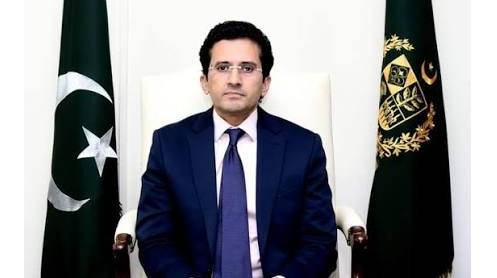
KARACHI: Petroleum Minister Ali Pervaiz Malik has assured Pakistan’s refinery industry of the government’s full support in securing financing and completing major refinery upgradation projects, including Pakistan Refinery Limited’s (PRL) proposed investment of up to $2 billion.
The minister, accompanied by the Petroleum Secretary and senior officials, held a series of meetings with major refineries in Karachi on Thursday to review ongoing and proposed modernisation projects and discuss measures to achieve financial close.
During his visit to PRL, the minister was briefed on the refinery’s proposed upgradation project, which is estimated to require an investment of $1.8 billion to $2 billion. The project is among Pakistan’s largest refinery modernisation initiatives and aims to upgrade petroleum products to Euro-5 specifications while doubling the refinery’s production capacity.
According to Adil Khattak, Chief Executive Officer of Attock Refinery Limited (ARL), the PRL project could be implemented in two phases, although a final decision on its phasing has yet to be taken.
The Petroleum Ministry assured PRL of its support in achieving financial close and facilitating the company in dealing with overseas stakeholders and other relevant parties where required.
The minister subsequently visited Pakistan-Arab Refinery Limited (PARCO), where he held discussions with the management regarding its refinery expansion and upgradation plans as well as the security and resilience of Pakistan’s energy supply chain.
He also met representatives of the Attock Group, ARL and National Refinery Limited (NRL) to review their respective modernisation projects.
During the meeting, ARL management briefed the minister on its next upgradation project, which is aimed at bringing its petroleum products in line with Euro-5 standards and increasing motor gasoline production by 25 percent.
ARL representatives said that despite being Pakistan’s oldest operating refinery, successive investments in modernisation had transformed the facility into one of the country’s more advanced refineries. They expressed confidence that the company would face no major difficulty in arranging financing for the proposed project because of its strong financial position.
ARL also urged the government to finalise the long-awaited refinery upgradation agreements, saying the company had been ready to sign them for nearly two years but government-side delays had held up the process.
Khattak said that despite its reservations, the company remained ready to sign the agreement once the government completed the necessary formalities.
According to refinery representatives, the petroleum minister assured them that the upgradation agreements would be signed next week, no later than Friday.
The refinery industry also appreciated the minister’s role in securing approval of the refinery upgradation policy and advancing work on strategic petroleum reserves, which Pakistan currently does not have.
Industry representatives said the government had commissioned a study by an internationally recognised consultancy to develop recommendations for establishing and maintaining strategic petroleum reserves. They termed the initiative important for strengthening Pakistan’s energy security and protecting the country against potential supply disruptions.
The refinery sector also welcomed the government’s decision to introduce daily petroleum product pricing, describing it as a long-standing industry demand.
According to refinery representatives, the new pricing mechanism has helped address fluctuations in product lifting. Under the previous system, oil marketing companies could increase purchases ahead of expected price increases and reduce or delay lifting when prices were expected to decline.
Such fluctuations could lead to shortages or excessive inventories, forcing refineries to reduce throughput or temporarily shut down units.
The daily pricing mechanism, industry officials said, would align product demand more closely with market conditions, reduce inventory distortions and provide greater stability to refinery operations.
The Petroleum Minister also met the management team of Cnergyico during his engagements with the refinery sector in Karachi, reviewing its operational and investment plans.