ISLAMABAD: Energy experts, regulators, researchers and industry stakeholders have called for strengthening the operational and financial foundations of power distribution companies (DISCOs) before expanding the Competitive Trading Bilateral Contracts Market (CTBCM).
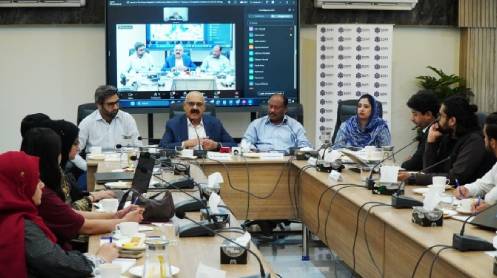
Thank you for reading this post, don't forget to subscribe!The recommendations were made during the launch of the Energy Regulatory Sandbox by the Sustainable Development Policy Institute (SDPI)’s Network for Clean Energy Transition (NCET), focusing on the impact of competitive auctions on DISCOs and the consequences of market liberalisation.
Speaking at the event, Shah Jahan Mirza, former Managing Director of the Private Power and Infrastructure Board (PPIB), described CTBCM as one of the most important issues facing the power sector. He said the current competitive market remained limited in scale, with the proposed auction quantum unlikely to have a major impact on the overall system.
He identified DISCO privatisation and the development of a competitive electricity market under CTBCM as two key pillars of the sector’s transition. He also welcomed SDPI’s sandbox initiative as a useful exercise for assessing the potential impact of market liberalisation.
Mirza said international experience showed that greater competition could improve electricity prices, service quality and availability. He stressed that the primary objective should be to reduce overall system costs, while ensuring that wheeling revenues and appropriate cost recovery from migrating consumers protect the remaining system from adverse financial impacts.
He said the proposed 200MW auction would draw from the most expensive segment of generation and could serve as an important first step towards a competitive electricity market. Existing solar installations, he added, should be better utilised rather than removed from the system.
Dr Khalid Waleed, Energy Economist and Research Fellow at SDPI, said the rapid adoption of solar and Battery Energy Storage Systems (BESS) was playing an increasingly important role in the sector’s transition. He advocated reforms covering DISCO privatisation, market liberalisation and wheeling arrangements.
He proposed treating solar and BESS facilities as Virtual Power Plants (VPPs), allowing them to sell daytime electricity to industrial consumers through the CTBCM framework. However, he cautioned that privatisation alone would not deliver benefits to consumers and industry unless innovation remained central to market reform.
Muhammad Ayub, former CEO of Khyber Pakhtunkhwa Transmission and Grid Company, stressed that the CTBCM required stronger operational infrastructure, including a functional SCADA system and real-time online data.
The sandbox exercise, presented by SDPI researcher Muhammad Umer, examined the country’s first proposed 200MW wheeling auction being launched by the Independent System and Market Operator (ISMO) under Phase-I. The broader plan envisages up to 800MW being allocated for periods of up to five years.
The exercise sought to assess the financial impact on DISCOs, evaluate different market scenarios, examine tariff implications and develop policy recommendations.
Among the recommendations, Umer proposed a VPP-led revenue model for DISCOs, targeted consumer pools and a gradual approach to auction participation. He also suggested establishing a CTBCM surplus-market mechanism under Scenario-II, with an estimated revenue gain of around Rs93 billion.
Muhammad Faisal Sharif, an Energy and Climate Practitioner at the University of Bath, said CTBCM provided an enabling framework for competition through relevant institutions and authorities. He stressed, however, that the transition should not focus solely on DISCO revenues and must also address the needs of rural and marginalised communities.
Waqas Haroon Moosa, Chairman of the Pakistan Solar Association, questioned the methodology used to calculate potential DISCO revenue losses, arguing that industrial base-rate multiplication did not account for other applicable charges. He suggested that surplus electricity, particularly in areas experiencing load-shedding, could be redirected to commercial consumers to reduce potential revenue losses.
Amina Shahab, Research Associate at the Policy Research Institute for Equitable Development (PRIED), raised concerns over the reliability of electricity supplies for industrial consumers. She noted that uninterrupted electricity was essential for continuous production and that many industrial users were already relying on a combination of solar, wind and thermal generation.
She questioned whether the initial 200MW CTBCM phase and subsequent expansion would succeed without adequately assessing consumer readiness and the demand for reliable electricity.
Muhammad Umar Khan, Joint Director (Power and Infrastructure Procurement) at PPIB, said governments in countries that transitioned towards liberalised electricity markets had often supported the process through federal funding or subsidies during the initial stages.
Mashhood Urfi, Energy Transition Officer at Alternate Development Services (ADS), sought clarification regarding the weekend-charging assumption used in the sandbox study and asked which of the two scenarios offered greater economic viability.
The session concluded with an interactive question-and-answer session involving experts and participants.