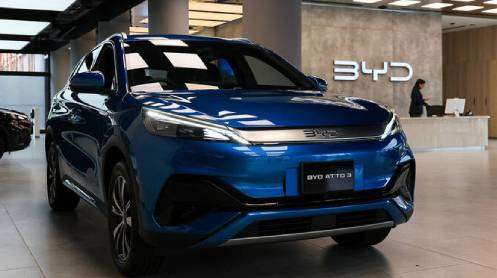
KARACHI: The planned electric vehicle assembly plant of BYD in Gharo, Sindh, has missed its earlier operational deadline, with the facility now expected to begin production in the second half of 2026.
Thank you for reading this post, don't forget to subscribe!According to a note by Topline Securities, Hub Power Company Limited (Hubco) has informed analysts that the assembly plant being developed by its subsidiary Mega Motor Company (MMCPL) is now targeted to come online in 2H2026. The facility is planned to have an initial production capacity of 25,000 vehicles annually, with the potential to scale up to 50,000 units.
Hubco had previously stated in February 2025 that the plant would become operational during the first half of FY2026. The company holds a 50% stake in the project.
The EV venture was initiated in June 2024 when Hub Power, through its wholly owned subsidiary Hub Power Holdings Limited (HPHL) and associated company MMCPL, partnered with BYD Auto Industry Company, the Chinese electric vehicle manufacturer, to establish an EV business in Pakistan.
MMCPL did not respond to queries regarding the reasons behind the assembly delay, the current status of the plant, its vehicle localisation plans, expected imports of BYD vehicles before local production and first-year production targets.
Topline Securities said Hubco management had put the total project investment at $150 million, including $90 million in project financing. The company is targeting a 30% share of Pakistan’s combined EV and plug-in hybrid vehicle (PHEV) market by 2030.
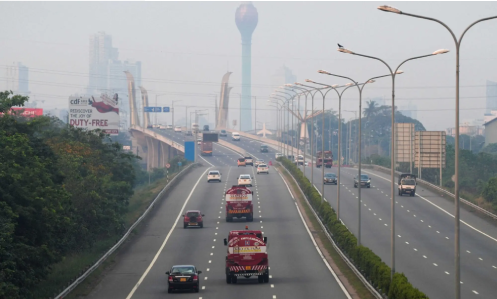
Meanwhile, Hubco is expanding its electric vehicle charging infrastructure through Hubco Green. The company currently operates 24 DC fast-charging sites, with chargers positioned approximately every 200 kilometres along the Karachi-Peshawar motorway network. It plans to reduce the distance between charging points to around 100km, while charging typically takes 25-45 minutes.
Chery Q to Enter Pakistan’s EV Market
Separately, Chery Master Pakistan (CMP) has announced plans to launch its all-electric Chery Q at the Pakistan Auto Show on September 18, as demand for electric vehicles continues to grow in Pakistan.
According to figures shared by CMP, Pakistan’s new energy vehicle (NEV) segment expanded by 392% in FY2026, reaching around 15% of the overall automobile market.
The company also plans to position the Chery Q as a potential solution for households with rooftop solar systems, allowing surplus solar generation to be utilised for EV charging.
CMP estimates that a conventional petrol vehicle travelling around 20,000 kilometres annually could consume approximately Rs488,000 in fuel. Based on real-world EV efficiency of around 7.2km per unit, it estimates that annual energy costs for operating the Chery Q could fall to approximately Rs30,000 for households able to charge the vehicle using surplus solar power.
The combination of rapidly expanding rooftop solar capacity and growing EV adoption could further strengthen the economic case for electric mobility in Pakistan.
Story by Aamir Shafaat Khan