ISLAMABAD: Prime Minister Shehbaz Sharif has approved the draft of a new five-year auto policy for 2026-31, retaining protection for existing conventional vehicle assemblers while introducing substantial tax incentives for new energy vehicles (NEVs) aimed at lowering their prices.
Under the approved draft, Battery Electric Vehicles (BEVs) will receive the highest level of tax incentives, followed by Range Extended Electric Vehicles (REEVs) and Plug-in Hybrid Electric Vehicles (PHEVs). Hybrid electric vehicles and conventional internal combustion engine (ICE) vehicles, meanwhile, will be treated equally in terms of duties and taxes.
During Wednesday’s proceedings, the prime minister directed that REEVs and PHEVs be separated from BEVs in the policy framework. He also ordered the abolition of the proposed federal excise duty (FED) on conventional cars below 1,000cc and reduced the customs duty rate on all cars from 30% to 15% in the fifth year, fiscal year 2030-31.
The prime minister approved the draft policy for 2026-31 and directed that its tariff rates be implemented from the current fiscal year to compensate for the delay. The policy will now undergo legal vetting by the Ministry of Law, while the Ministry of Finance has been directed to seek the International Monetary Fund’s (IMF) views on the draft.
Massive relief for NEVs
The committee constituted to develop consensus on the new policy had proposed equal treatment for BEVs, REEVs and PHEVs under the New Energy Vehicles Policy. However, the prime minister decided to provide the greatest incentives to BEVs, followed by REEVs and PHEVs.
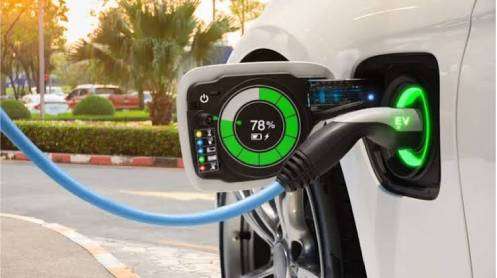
NEVs, including their completely knocked-down (CKD) kits, parts, inputs and raw materials, will be subject to only 1% sales tax. They will also be exempt from FED, Capital Value Tax (CVT) and Withholding Tax (WHT).
However, the government plans to impose additional FED on conventional vehicles to offset some of the price advantage created by tariff reductions.
The government has also approved an increase in the financing limit for NEV purchases from Rs3 million to Rs10 million, while the maximum loan tenor will be extended from three to five years.
In another incentive, the customs duty on imported charging stations will be reduced to 1%. Battery swap stations will also be supported through Viability Gap Funding.
Tariff protection to remain initially
Under the approved draft, automobile tariffs could eventually be reduced by up to 80%, with regulatory duties being phased out. Additional customs duty on imported cars will also be eliminated after two years.
However, the overall protection available to existing assemblers will largely remain intact during the first two years before being reduced gradually in the following two years.
Officials involved in policymaking said customs tariffs for completely built units (CBUs) would remain within the upper limits prescribed under the National Tariff Policy (NTP), except in the final year. The tariff structure will be reviewed after two years based on energy costs, taxes, interest rates, exchange-rate flexibility and export performance.
New tariff structure
For cars and SUVs above 1,801cc, the customs duty will remain at 40%, while FED will be 60% and sales tax 25% during FY2026-27 and FY2027-28. Customs duty will remain at 40% in FY2028-29, decline to 30% in FY2029-30 and fall further to 15% in FY2030-31, while FED and sales tax will remain at 60% and 25%, respectively.
For vehicles in the 1,001cc-1,800cc category, customs duty will be 50% in the first two years, falling to 40% in FY2028-29, 30% in FY2029-30 and 15% in FY2030-31. FED will remain at 15%, while sales tax will vary between 15% and 25%.
For vehicles up to 1,000cc, customs duty will remain at 50% in the first two years, fall to 40% in FY2028-29, 30% in FY2029-30 and 15% in FY2030-31, with sales tax at 25%.
The structure means there will be no major immediate reduction in prices of ICE vehicles up to 850cc. Prices are expected to decline by around 5.5% in the first year, largely due to the government’s decision to impose an additional 4.5% customs duty. According to the policy document, this will bring their prices closer to comparable NEVs.
Prices of cars up to 1,000cc are also not expected to fall significantly during the initial years. By the fifth year, however, prices could decline by around 9%, although annual price increases could erode part of the benefit.
The government will also impose 5% FED on 1,500cc vehicles to limit the benefit from tariff reductions. By the fifth year, prices in this segment could fall by around 11%, or approximately Rs650,000, although annual price increases could reduce the effective benefit.
The price of the Toyota Fortuner is projected to decline from Rs20.5 million in the first year to Rs18.6 million in the final year, representing a reduction of around Rs2 million, or 9%.
Focus on exports and local manufacturing
The new policy also seeks to transform Pakistan’s auto industry into a more export-oriented sector.
The government will introduce fiscally neutral duty and local tax drawback schemes to encourage exports, alongside legally binding and enforceable export obligations.
The policy targets the establishment of at least five anchor parts-manufacturing companies, with SME clusters to be developed around them. Manufacturing licences will be linked to agreements with vehicle principals for participation in global export markets.
The policy will also allow separate CKD imports for left-hand-drive vehicles and provide duty-free import of parts used in export production.
An Auto Parts Export Council will be established to improve coordination and develop industry synergies, while minimum domestic value-addition requirements will be introduced to measure and enforce localisation.
Contract manufacturing will also be promoted to reduce production costs by enabling companies to utilise existing idle manufacturing capacity.
The policy’s broader objectives include increasing exports, integrating Pakistani auto parts into global value chains, establishing clear performance targets and reward-and-penalty mechanisms, promoting EVs across categories, improving vehicle quality, lowering prices and encouraging competition, innovation and technology adoption.
Statutory regulatory orders are expected to be phased out by FY2029-30, while tariffs for the first two years will remain unchanged.
Story by Shahbaz Rana