ISLAMABAD: Gas consumers may have to bear an additional Rs46 billion as the government considers establishing 14 dedicated security wings to protect gas pipelines and oil and gas exploration and production (E&P) operations, particularly in Khyber-Pakhtunkhwa (K-P) and Balochistan.
Thank you for reading this post, don't forget to subscribe!The proposed security framework is being developed along the lines of the China-Pakistan Economic Corridor (CPEC) security model. The cost of establishing the 14 wings is estimated at Rs46 billion, with part of the amount potentially recovered from gas consumers through higher gas prices.
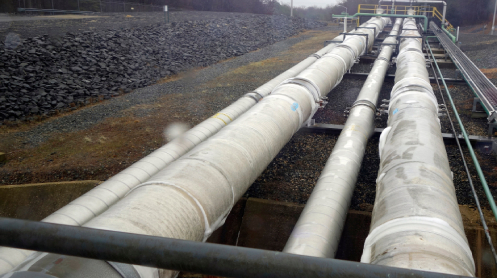
Sources told The Express Tribune that around 23 sabotage incidents had been reported over the past two years on the Shewa and Bettani pipelines and Sui Northern Gas Pipelines Limited’s (SNGPL) main northern network. The attacks resulted in an estimated gas loss of 7,624 million cubic feet (mmcf), equivalent to around 25 liquefied natural gas (LNG) cargoes.
The financial loss from the incidents has been estimated at Rs12.7 billion at the local gas price of $6 per million British thermal units (mmBtu), rising to approximately Rs27.7 billion at the re-gasified LNG (RLNG) price of $13/mmBtu.
If supplies from northern gas sources are completely suspended, diversion of expensive RLNG to meet consumer demand could increase SNGPL’s annual revenue requirement by around Rs97 billion. This would translate into an increase of approximately Rs333/mmBtu in the utility’s prescribed gas price, from the existing Rs1,719/mmBtu to around Rs2,052/mmBtu during the current fiscal year.
Officials believe an immediate and structured intervention is therefore required to strengthen security around existing infrastructure and facilitate the timely development and connectivity of new gas discoveries to the national grid.
Northern gas supplies at risk
Several recent gas discoveries in K-P, including Mami Khel, Shewa and Spinwam in the Waziristan Block, OGDC’s Bettani field under the Wali Exploration Licence and Al-Haj’s Koi Palak discovery in the Baska North Block, are considered strategically important additions to Pakistan’s indigenous gas supply.
These discoveries currently contribute around 146 mmcfd to SNGPL’s northern pipeline network. Other northern sources provide approximately 410 mmcfd, bringing total indigenous gas inflows through the network to around 556 mmcfd.
However, pipelines and other infrastructure remain vulnerable to terrorist attacks from the time of discovery through the commissioning of production facilities and injection of gas into the SNGPL network.
Security challenges are particularly severe in parts of K-P and Balochistan, where they have also affected the operations of oil and gas E&P companies and delayed exploration and development activities.
Existing security deployments cover several sensitive pipeline corridors, including Shewa-Kaka Khel, Kot Palak-DI Khan/Pezzu, Bettani-Kaka Khel, Kharappa-Marjuwala and Kharappa-Gurguri Makori.
Around 1,513 security personnel are currently deployed to protect SNGPL pipelines at an annual cost of approximately Rs3 billion.
Separately, E&P companies have deployed around 1,828 personnel to protect production facilities, incurring an annual cost of about Rs2.174 billion.
The combined security deployment therefore stands at approximately 3,341 personnel, costing around Rs5.174 billion annually.
Following a series of meetings chaired by the petroleum minister with Sui companies and E&P firms, the government has agreed on a two-part security mechanism.
Four wings for pipeline network
Under the proposed framework, four dedicated regular security wings will be established to protect SNGPL pipelines and northern gas sources.
The estimated establishment cost is Rs12 billion, with an annual recurring cost of Rs4 billion, bringing the total requirement to Rs16 billion.
After accounting for the two wings already deployed, the additional requirement for two new wings is estimated at around Rs8.969 billion, with an annual recurring cost of approximately Rs2 billion.
10 wings for E&P operations
For exploration, seismic surveys, drilling, wellhead facilities, gas processing and other E&P activities, the government proposes establishing 10 dedicated regular security wings based on the CPEC security framework.
Four wings would be deployed in K-P and six in Balochistan to support planned exploration and field operations across multiple districts where security constraints continue to hinder development.
The total establishment cost of the 10 wings is estimated at Rs30 billion—Rs12 billion for K-P and Rs18 billion for Balochistan.
The cost would be shared equally among three stakeholders: E&P companies, the federal government and the respective provincial governments, with each contributing Rs10 billion.
The estimated recurring cost of Rs10 billion per year would be borne entirely by E&P companies.
According to the proposed arrangement, the E&P security mechanism would involve no financing cost, no impact on the prescribed gas price and no pass-through to consumers.
Story by Zafar Bhutta