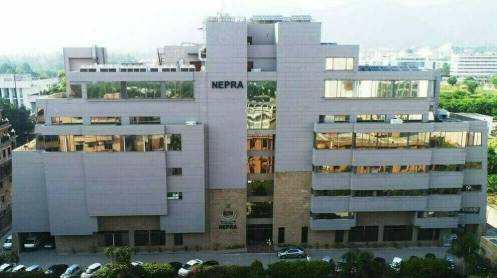
ISLAMABAD: The National Electric Power Regulatory Authority (Nepra) has approved the Integrated System Plan (ISP) 2025, envisaging an investment of around $58 billion in the power generation and transmission sectors over the next 11 years, despite serious reservations from the regulator’s members.
Nepra approved the 2025-35 planning document in a 45-page decision, while all three members of the Authority, including the chairman, recorded more than 12 pages of dissenting or separate advisory notes. The members raised questions over the inclusion and exclusion of major projects and the alleged bypassing of the Council of Common Interests (CCI), the constitutional forum responsible for matters including national energy policy and planning.
The Authority conditionally approved the ISP-2025 based on the Revised Base/Recommended Case of the IGCEP-2025, excluding Battery Energy Storage Systems (BESS) and the K-Electric transmission line proposed for 2028. The approval also covers the revised Transmission System Expansion Plan (TSEP-2025), subject to addressing Nepra’s observations.
$47bn Required for Generation Expansion
The plan considers three demand-growth scenarios — high, medium and low — based on average GDP growth assumptions of 6.37%, 4.95% and 3.52%, respectively.
The low-growth or business-as-usual scenario, based on the Rationalised Capacity Addition (RCA) assumption, has been adopted as the reference case for generation expansion.
Under this scenario, Pakistan is expected to add 26,045MW of generation capacity, comprising 17,485MW of committed projects and 8,560MW of optimised capacity, while 2,577MW of existing capacity is scheduled for retirement.
The resulting installed generation capacity is projected at 62,657MW, including 8,120MW of net-metering capacity. The estimated investment requirement for additional generation capacity stands at approximately $47.08 billion.
$10.65bn Transmission Investment
The plan also envisages substantial spending on the transmission network.
Ongoing and committed transmission projects are estimated to require around $4.6 billion, while newly proposed transmission expansion projects would require an additional $6.05 billion.
This brings the total projected transmission investment requirement to approximately $10.65 billion during the planning period.
The proposed schemes include power evacuation projects, transmission-system strengthening, new extra-high-voltage substations, transformer augmentation and voltage-control facilities.
Nepra Questions Project Changes and CCI Bypass
Nepra expressed concern over changes made to the earlier 10-year investment plan following recommendations from a technical committee constituted by the Power Division.
The regulator observed that changes to the National Electricity Policy or National Electricity Plan could not be directed by a technical committee or the Power Division without being taken back to the CCI.
Nepra also highlighted contradictory positions and statements from the Independent System and Market Operator (ISMO) and the Power Planning and Monitoring Company (PPMC), both operating under the Power Division.
BESS Investment Put on Hold
The regulator declined to approve the proposed $900 million investment in Battery Energy Storage Systems (BESS) until a comprehensive technical and economic study establishes their requirement, optimal capacity, operational application and cost-effectiveness.
Nepra also questioned contradictory assessments by ISMO and PPMC regarding the potential impact of ISP-2025 on consumer electricity tariffs.
It directed that the plan’s impact on consumer-end tariffs be properly quantified and incorporated into the main ISP report.
PPMC has projected that the consumer-end base tariff could rise to Rs37.28 per unit by 2035, compared with Rs34 per unit in 2024-25.
40MW Plant Proposed for Gwadar and Makran
Amid disruptions to electricity imports from Iran due to the ongoing geopolitical situation, the plan provides for the lateral entry of a 40MW on-site power plant for Gwadar and the Makran region.
The area currently lacks a national-grid extension that is considered technically and economically feasible.
Nepra further noted that K-Electric’s competitive renewable energy projects had initially been excluded from the ISP by ISMO, although a 269MW JCM Wind-Solar Hybrid Project at Dhabeji was subsequently incorporated for induction during the current fiscal year.
The regulator also expressed displeasure over ISMO’s disclaimer concerning responsibility for the integrity, accuracy, authenticity and completeness of the data, projections and information used in preparing the plan.
The approval clears the way for a massive long-term expansion of Pakistan’s power system, but Nepra’s reservations underline continuing concerns over project selection, constitutional oversight, data reliability, storage investments and the eventual impact on electricity consumers.
Story by Khaleeq Kiani