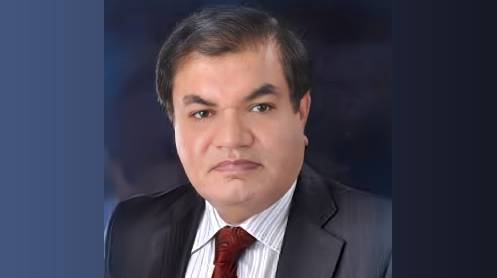
KARACHI: Mian Zahid Hussain, President of the Pakistan Businessmen and Intellectuals Forum (PBIF) and All Karachi Industrial Alliance, Chairman of the National Business Group Pakistan and FPCCI Policy Advisory Board, and former Provincial IT Minister, has said that the World Bank’s October 2026 report, Middle East, North Africa, Afghanistan and Pakistan Economic Update: From Divide to Opportunity: AI, Jobs, and Growth, presents a serious warning about Pakistan’s worsening poverty situation and the need for urgent economic reforms.
He said the report should prompt policymakers to reassess national development priorities, stressing that economic stability must be measured not merely through GDP growth and foreign exchange reserves but also through rising household incomes, decent employment and access to essential goods and services.
According to the report, Pakistan accounts for 48 percent of people living in extreme poverty across the Middle East, North Africa, Afghanistan and Pakistan (MENAAP) region, using the international poverty threshold of US$3 per person per day. In 2024, 14.3 percent of the region’s population lived below this threshold, compared with 10.4 percent globally. MENAAP is also the only region where poverty remains above pre-pandemic levels and continues to increase.
Mian Zahid Hussain noted that Pakistan’s poverty rate at the US$3-a-day threshold increased by 6.4 percentage points between 2018–19 and 2024–25. He attributed the deterioration to successive economic shocks, including the COVID-19 pandemic, the devastating floods of 2022, high inflation, currency depreciation and prolonged economic adjustment measures aimed at restoring macroeconomic stability.
These developments, he said, have eroded household purchasing power, weakened employment opportunities and placed a disproportionate burden on low-income families, highlighting the need for policies that translate economic stabilisation into tangible improvements in living standards.
The business leader further noted that the World Bank has projected Pakistan’s GDP growth at 3.8 percent and inflation at 8.2 percent in 2027, while real per-capita GDP growth is expected to remain limited at 2.2 percent. He warned that modest economic expansion, combined with persistent inflation and rapid population growth, could constrain improvements in household incomes and living standards.
He emphasised that the government must address the underlying drivers of inflation, particularly the high costs of electricity, gas, petroleum products, transportation and essential food items. These costs not only squeeze household budgets but also increase industrial production expenses, undermine competitiveness and discourage investment.
Mian Zahid Hussain pointed to annual losses of approximately Rs800 billion incurred by underperforming public-sector entities and around Rs1 trillion in losses associated with power-sector line losses, electricity theft and weak recoveries. He said these inefficiencies impose a substantial burden on consumers, businesses and the national economy.
He called for comprehensive reforms to improve the performance of public-sector enterprises, reduce electricity losses, strengthen recovery systems and address weaknesses in supply chains. Digital monitoring of essential commodity stocks and distribution networks should also be expanded to discourage hoarding, improve market transparency and prevent unnecessary price increases.
Welcoming the World Bank’s recommendations, he acknowledged the importance of targeted social protection programmes, including the Benazir Income Support Programme, in supporting vulnerable households. He also described targeted fuel assistance for low-income citizens as a positive step in responding to rising petroleum prices.
However, he stressed that social protection alone cannot deliver sustainable poverty reduction. Pakistan must pursue a comprehensive economic strategy built around industrialisation, investment in human capital, infrastructure development, productive employment, value addition and export-led growth.
He said a stronger industrial base would generate employment, expand domestic production, improve productivity and create opportunities for small and medium-sized enterprises. Encouraging investment in manufacturing and processing industries, reducing the cost of doing business and strengthening export competitiveness are essential to creating sustainable livelihoods and reducing dependence on short-term relief measures.
Mian Zahid Hussain also endorsed the World Bank’s emphasis on artificial intelligence as an opportunity to enhance productivity and support economic growth. He said Pakistan should invest in digital skills, local-language data, reliable internet connectivity and the capacity of businesses to adopt emerging technologies.
According to him, technological advancement must go beyond convenience and contribute directly to reducing service delivery costs, expanding business opportunities, equipping young people with marketable skills and improving access to productive employment.
He concluded that Pakistan’s poverty challenge requires coordinated action across economic, industrial, social and technological policies. Macroeconomic stability must be accompanied by sustained investment, industrial expansion and private-sector-led growth to ensure that economic progress translates into higher incomes, better employment opportunities and lasting improvements in the quality of life for ordinary citizens.