
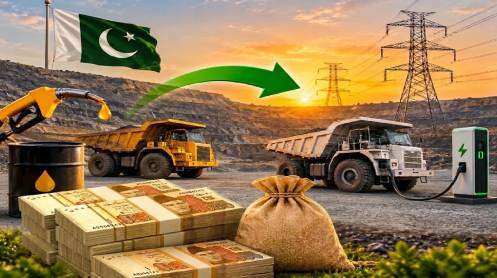
ISLAMABAD: Work has formally commenced on shifting coal mining operations in Thar Block I and Block II from diesel-generated power to the national grid, a move expected to save Pakistan between $25 million and $30 million in foreign exchange annually.
Thank you for reading this post, don't forget to subscribe!The contract for the project has been awarded, with its completion target advanced to April 2028, ahead of the original end-2028 deadline.
According to an official statement, the progress was reviewed on Wednesday during a meeting on the electrification of Thar coal mining operations, chaired by Federal Minister for Power Division Awais Ahmad Khan Leghari.
Acting on the Prime Minister’s directives, the Power Division has moved the initiative from the planning stage to implementation. The project will connect mining operations in both blocks to the national grid through 132-kilovolt transmission infrastructure originating from the Islamkot Grid Station, providing approximately 60 megawatts of electricity to the mining sites.
The transition is expected to generate daily diesel savings of around Rs25 million. It will also reduce coal production costs and lower the coal tariff by approximately $0.70 per tonne, ultimately contributing to a reduction in the overall power purchase basket cost.
Currently, electricity generated through diesel for mining operations costs approximately 33 cents per kilowatt-hour. Following grid connectivity, this cost is expected to decline to around 13 cents, representing a reduction of more than 60%.
Thar’s mining operations currently consume between 200,000 and 250,000 litres of diesel daily, including approximately 35,000 litres used for dewatering activities. The shift to grid electricity will substantially reduce this consumption by replacing diesel-powered operations with comparatively cheaper electricity.
The initiative is also expected to deliver environmental benefits, with annual carbon emissions projected to decline by approximately 80,000 tonnes. In addition, diesel-powered mining vehicles will gradually be replaced with electric alternatives, supporting the country’s broader decarbonisation objectives.
During the meeting, the Managing Director of the Thar Coal and Energy Board informed the minister that both mining blocks were actively pursuing electric vehicle deployment.
Block I plans to induct 40 electric trucks by the end of this year, while Block II is targeting the commencement of electric vehicle deployment in 2028, alongside the completion of grid connectivity.