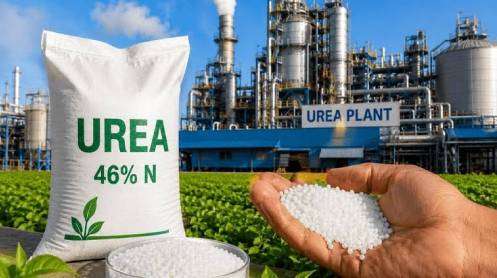
ISLAMABAD: Pakistan’s fertiliser industry has urged the government to introduce long-term, field-specific gas supply contracts for domestic urea manufacturers, arguing that protecting local production is essential for national food security and reducing dependence on imported nitrogen fertilisers.
Thank you for reading this post, don't forget to subscribe!The industry has also called for promoting Thar coal as an alternative feedstock for fertiliser production, following China’s model, and introducing targeted subsidies to address the country’s imbalance in fertiliser nutrient consumption.
According to fertiliser manufacturers, Pakistan’s agricultural soils are deficient in phosphate, potash, zinc and organic matter, making it essential to improve access to these nutrients through targeted government support and comprehensive soil testing. The industry maintained that domestically produced urea should not be blamed for the imbalance in fertiliser consumption.
Citing the examples of India and Bangladesh, the industry said both countries had expanded rather than reduced domestic urea production while introducing measures to make phosphate and potash fertilisers more affordable. India provides nutrient-based subsidies, while Bangladesh has also reduced the cost of phosphate and potash fertilisers.
“Pakistan should follow a similar approach by protecting its urea manufacturing capacity and gas supplies as pillars of food security, while directing public funds towards nutrients that farmers cannot afford,” the industry suggested.
It urged the government to offer long-term, field-specific gas contracts to urea plants, initially utilising the Ghazij and Shawal gas discoveries allocated in December 2025, followed by stranded and low-BTU gas fields. It also recommended exploring Thar coal-based fertiliser production in line with China’s experience.
The industry further proposed introducing fixed subsidies in rupee terms for every kilogramme of phosphorus oxide and potassium oxide, irrespective of whether the fertiliser is locally manufactured or imported. It suggested setting subsidy rates to bring the price of a DAP (di-ammonium phosphate) bag to approximately twice the price of a urea bag, while ensuring that potash subsidies are substantial enough to encourage greater consumption.
To improve subsidy distribution, manufacturers recommended using the Kissan Card and similar provincial mechanisms, with assistance capped on a per-acre basis for small and medium-sized farmers and linked to soil testing. This, they argued, would make subsidies more targeted, affordable and less vulnerable to leakage through dealers.
The industry also called for securing fertiliser imports through long-term, government-backed contracts for DAP, phosphoric acid and potash, alongside building strategic reserves of phosphate and potash to protect farmers against international supply disruptions and price volatility.
Other recommendations included expanding accredited soil-testing laboratories, introducing soil health cards, incorporating zinc into fertiliser packages and promoting split applications of nitrogen to improve nutrient efficiency.
The industry maintained that Pakistan’s fertiliser imbalance was primarily driven by the high cost and limited affordability of phosphate and potash rather than excessive urea consumption. It warned that weakening domestic urea manufacturing in pursuit of a more balanced nutrient ratio could create a greater risk by increasing reliance on imported nitrogen fertilisers in an increasingly volatile global market.
According to fertiliser manufacturers, Pakistani farmers currently apply nitrogen, phosphate and potash in an approximate ratio of 78:21:1, compared with the global average of around 59:21:20, based on Food and Agriculture Organisation (FAO) data.
The industry noted that Bangladesh is frequently cited as a model for balanced fertiliser consumption, with a nutrient ratio of approximately 49:34:18. However, citing US Department of Agriculture data, manufacturers pointed out that Bangladesh’s total factor productivity has grown by only around 0.2% annually since 2000, compared with approximately 1.5% in Pakistan.
The fertiliser industry argued that Pakistan needs a comprehensive nutrient management policy that protects domestic urea production while making phosphate, potash and other essential nutrients more accessible to farmers.
Story by Zafar Bhutta