
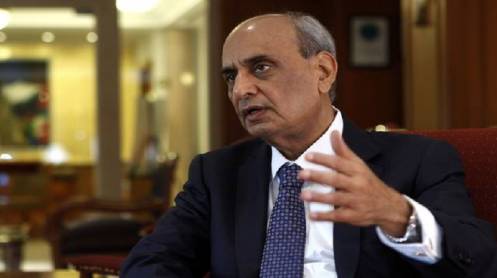
KARACHI: Mian Muhammad Mansha, Chairman of Nishat Group and MCB Bank, has called for comprehensive structural reforms, a leaner government, lower energy costs and the removal of bureaucratic hurdles to revive private investment, strengthen industrial competitiveness and generate employment in Pakistan.
In an interview with Business & Finance, he said excessive government expenditure, regulatory delays, high electricity tariffs and an inefficient business environment were discouraging businesses from expanding and creating jobs.
Drawing on the experience of MCB Bank’s privatisation, Mansha argued that reducing the size of the public sector could free up resources for more productive economic activities. He recalled that around 50,000 employees had accepted golden handshakes following the bank’s privatisation, using their compensation to establish restaurants, schools and other businesses. He suggested that similar restructuring could help improve the efficiency of government departments and public-sector agencies.
Mansha also highlighted major infrastructure constraints, particularly at Karachi’s port, which he said were increasing export costs and undermining trade competitiveness. He cited operational inefficiencies, including instances where cement vessels ready for loading were moved aside to accommodate incoming shipments. Road congestion between Karachi Port and Punjab was also adding to cargo transportation difficulties.
He questioned why an unused berth at the former Pakistan Steel Mills had remained unutilised for nearly two decades instead of being privatised and developed to facilitate trade.
However, he stressed that privatisation should lead to improved efficiency, increased investment and smoother trade operations rather than simply higher charges. Referring to the transfer of terminal operations to foreign private operators, he claimed that port charges had doubled without corresponding fresh investment.
Bureaucratic red tape was another major concern. Mansha recalled that his cement company had spent four months seeking regulatory approval to import municipal waste from Britain, Denmark and Italy for use as alternative fuel at its Karachi facilities. Despite the waste being supplied free of cost, the company faced prolonged delays in obtaining routine permissions.
On the energy front, he warned that persistently high electricity tariffs were forcing industrial consumers to move away from the national grid and increasingly rely on solar power and battery storage. He said Nishat’s factory operations were expected to become largely independent of grid electricity by March.
He cautioned that declining grid demand could leave expensive power generation capacity increasingly underutilised, creating further financial pressures for the electricity sector. Rather than restricting solar adoption, he said, policymakers should address the underlying structural inefficiencies and high costs within the power system.
Emphasising the importance of employment generation, Mansha identified labour-intensive manufacturing, particularly textiles and garments, as a key driver of large-scale job creation. He said Pakistan needed affordable energy, a lower tax burden and efficient rail-based freight transportation to restore industrial competitiveness and encourage investment.
He also advocated greater regional economic integration, arguing that improved trade relations with neighbouring countries could expand export markets and create opportunities in tourism and hospitality. Pakistan, he said, should pursue economic engagement with India, Afghanistan and landlocked Central Asian states rather than allowing political considerations to restrict regional trade.
Referring to his recent meeting with senior Turkmen leadership, Mansha noted a shared interest in developing regional transit connectivity and trade into a significant economic opportunity.
He maintained that reducing the cost of doing business, improving infrastructure, facilitating private investment and expanding regional trade were essential to putting Pakistan’s economy on a sustainable growth trajectory.
Story by Nasir Jamal