
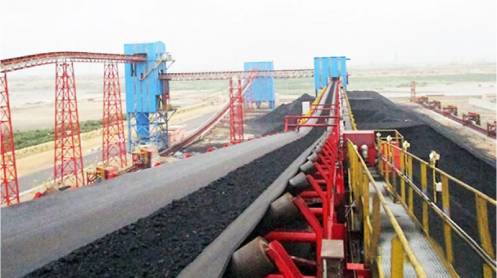
ISLAMABAD: Imported coal supplies to power plants and major industries have been disrupted after the only coal-handling conveyor system at Pakistan International Bulk Terminal (PIBT) at Port Qasim remained out of operation since November 18, raising concerns over electricity generation, port congestion and mounting financial losses.
The disruption comes at a challenging time for Pakistan’s energy sector, which is already facing liquefied natural gas (LNG) supply constraints and reduced hydropower availability. Power producers and coal suppliers are now facing rising demurrage charges as vessels remain anchored while awaiting cargo discharge.
With coal-handling operations reduced to a fraction of their normal capacity, PIBT has rejected requests from power producers and suppliers to declare force majeure, a move they say would help them pursue insurance claims and mitigate financial losses.
According to PIBT, the conveyor system was damaged on November 18 during coal discharge from the vessel Pegasus 8. The terminal attributed the failure to the excessively dusty nature of Tanzanian coal and the presence of foreign materials, particularly sharp pieces of iron mixed with the cargo.
The terminal estimated that repairs could take between eight and 10 days.
The state-run Jamshoro Power Company (JPC) said coal vessels were currently being unloaded manually at a significantly reduced rate of around 3,000 tonnes per day, compared with the normal capacity of approximately 30,000 tonnes.
In a letter addressed to PIBT and the federal government, JPC warned that the disruption posed an immediate threat to its uninterrupted coal supplies, with potentially serious consequences for plant operations and electricity generation.
The company said delays in coal deliveries could deplete critical fuel stocks, jeopardise electricity generation for the national grid and increase port congestion and demurrage costs.
Slower cargo handling is also expected to prolong vessel waiting times, increasing the cost of imported coal and, consequently, electricity generation. Delays to incoming shipments could further affect procurement schedules and raise costs for vessels already en route or ordered.
JPC Warns of $3 Million Demurrage Exposure
Highlighting the financial implications, JPC estimated that demurrage exposure from its five upcoming vessels could exceed $2 million to $3 million, equivalent to approximately Rs556 million to Rs834 million.
The company also warned that insufficient coal inventories could result in potential capacity payment losses of around Rs2.2 billion per month.
In view of the scale of the disruption and its potential consequences, JPC urged PIBT to formally declare force majeure without delay.
The power producer maintained that all demurrage, detention charges, additional expenses, damages and losses arising from the disruption should be borne by PIBT.
Meanwhile, a shipping line has also warned that it would seek compensation for prolonged vessel waiting times and any damage sustained by its ship during conventional unloading operations.
PIBT Rejects Force Majeure Request
PIBT, however, rejected the requests, maintaining that the conveyor breakdown did not constitute an event warranting a force majeure declaration because cargo discharge operations had continued through conventional unloading methods, although at a considerably slower pace.
Industry sources pointed to the terminal’s dependence on a single jetty, coal berth and conveyor system as a major factor behind the severity of the disruption.
They also highlighted delays in expanding the terminal’s infrastructure. A second conveyor system proposed in 2021 was intended to increase annual coal-handling capacity from 12 million tonnes to 17 million tonnes. However, the additional facility has yet to be constructed.
The latest breakdown has renewed concerns over the vulnerability of Pakistan’s imported coal supply chain and the need for alternative handling arrangements and infrastructure redundancy to prevent disruptions at critical port facilities.
Story by Khaleeq Kiani