Mansoor Khan, Chairman of the Oil and Gas Regulatory Authority (OGRA), announced that the government intends to deregulate petroleum prices in phases, with a collaborative approach involving all stakeholders. This decision comes in response to ongoing discussions regarding the deregulation of High-Speed Diesel (HSD) and petrol, addressing concerns and seeking consensus across the oil industry. Speaking at OGRA’s headquarters in Islamabad, Khan emphasized the importance of engaging relevant stakeholders, including dealers and oil marketing companies (OMCs), before implementing any deregulation measures. The government’s move follows a directive from the Prime…
Read MoreAuthor: Admin
Power Distribution Companies Seek Nepra’s Approval for Rs51.88 Billion Recovery
State-owned power distribution companies (Discos) have formally requested the National Electric Power Regulatory Authority (Nepra) to approve the recovery of Rs51.88 billion from consumers. This recovery is attributed to various adjustments for the third quarter of fiscal year 2023-24, spanning from January to March 2024. A significant portion of this amount, constituting 60.4% or Rs31.35 billion, comprises capacity charges from power consumers to be paid to private power generators. Once Nepra establishes the additional charges per unit for Discos, these will also apply to K-Electric customers. Aligned with federal government…
Read MoreE&P Companies Push for Depletion Allowance Amidst Regulatory Challenges
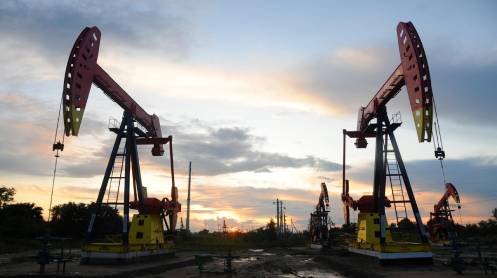
In a bid to bolster hydrocarbon exploration and production (E&P) in Pakistan, companies are urging the government to grant a 15% depletion allowance on ageing fields, advocating for a waiver on the additional 15% wellhead value. This plea comes amidst discussions to ease the windfall levy on gas and condensate, emphasizing the need for incentives to optimize operations in mature fields. Sources reveal that E&P firms are highlighting the economic viability challenges posed by ageing fields, stressing the importance of cost-effective strategies like artificial lift systems ranging from $0.3 million…
Read MoreEmpowering Communities: Battery Storage Revolutionizes Renewable Energy in Pakistan
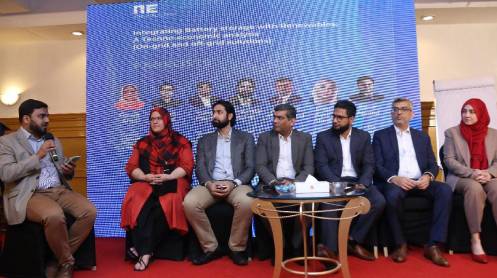
A recent study unveils the transformative potential of Battery Energy Storage Systems (BESS) when integrated with solar and wind power, promising a substantial drop in electricity costs to as low as 6-8 cents per unit. Released under the title “Integrating Battery Storage with Renewables: A Techno-economic Analysis,” this study is a collaborative effort between Renewables First and the Policy Research Institute for Equitable Development. The study’s insights showcase how this hybrid approach not only drives down costs but also extends energy access to remote communities beyond the national grid. At…
Read MoreGrid vs rooftop: the energy debate
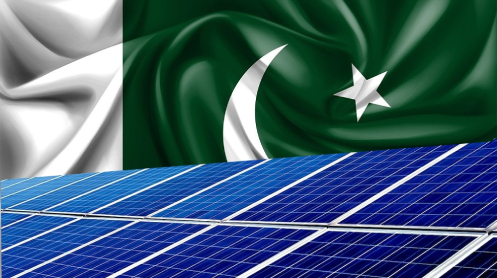
Pakistan’s total electricity consumption, as measured in terms of sales, has decreased to 112.9 TWh in FY2023 from 124.6 TWh in FY2022 The recent hype and chaos around net-metering and the roof-top solar taxation fiasco has brought the power sector of Pakistan to the brink of another planning conundrum. Pakistan’s total electricity consumption, as measured in terms of sales, has decreased to 112.9 TWh in FY2023 from 124.6 TWh in FY2022. This 10 per cent decrease in electricity consumption is causing screens to flash red warning at the NTDC and…
Read More