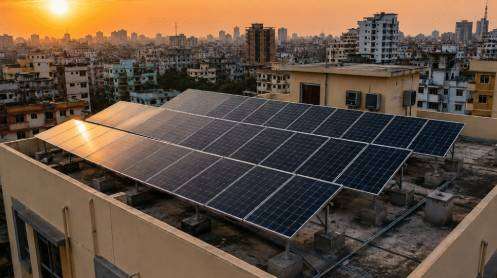
DHAKA: Bangladesh has launched a new incentive programme for rooftop solar systems equipped with battery storage as the country struggles with severe power shortages and seeks to reduce its dependence on imported fossil fuels.
Under the programme, consumers installing eligible rooftop solar systems by February 28, 2027 will receive 10.50 taka ($0.086) per kilowatt-hour for surplus electricity supplied to the national grid for three years, according to a government notification.
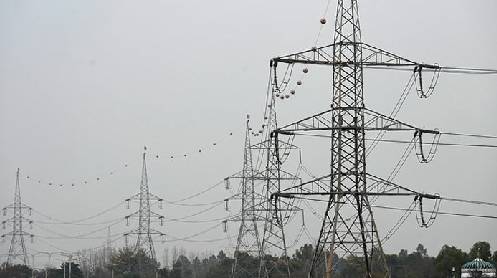
The initiative comes as Bangladesh faces its worst electricity shortages in years. Power shortfalls reached nearly 4,000 megawatts at their peak in August, triggering widespread outages across the country.
The crisis has been aggravated by shortages of natural gas, while constraints on coal and fuel oil supplies have further reduced the operating capacity of power plants. The government has been working to secure additional oil and liquefied natural gas (LNG) supplies amid heightened global energy-market uncertainty.
Bangladesh aims to generate 20% of its electricity, equivalent to around 5,500 MW, from renewable sources by 2030, with the target rising to 30% by 2040.
Under the new scheme, the government has capped the generation cost of rooftop solar electricity, including battery storage, at 8 taka per unit. The incentive includes a 20% profit margin and an additional premium, while consumers installing systems below the benchmark cost will be allowed to retain the resulting savings.
Bangladesh currently has around 1,559 MW of renewable energy capacity, with solar accounting for the majority.
Energy officials see rooftop solar as a faster means of expanding renewable generation alongside large-scale projects, particularly in a densely populated country where land availability is a major constraint.
Battery storage is expected to enable consumers to use solar-generated electricity beyond daylight hours while reducing pressure on the national grid during peak demand periods.
The latest initiative also reflects growing concerns over fuel-price volatility and potential supply disruptions linked to instability in the Middle East. As a major energy importer, Bangladesh remains vulnerable to fluctuations in international fuel markets.
By promoting rooftop solar and battery storage, the government hopes to strengthen energy security, ease pressure on the power grid and accelerate the country’s transition towards cleaner and more locally generated electricity.
By Reuters