
ISLAMABAD: Carbon credits could generate additional revenues equivalent to 10 to 20 percent of earnings for qualifying low-carbon projects in Pakistan, creating new financial opportunities for investments in renewable energy, electric vehicles, battery storage, agriculture and other environmentally sustainable initiatives, according to the chief executive of climate finance firm Resources Future.
Thank you for reading this post, don't forget to subscribe!Khurram Lalani, Director and CEO of Resources Future, said carbon credits offered businesses an additional revenue stream that could improve project economics, help recover operating and maintenance expenses and make environmentally friendly investments more financially attractive.
Speaking to Business Recorder, Lalani described carbon credits as a tradable commodity that could provide additional financial returns to businesses investing in projects that reduce greenhouse gas emissions or remove carbon dioxide from the atmosphere.
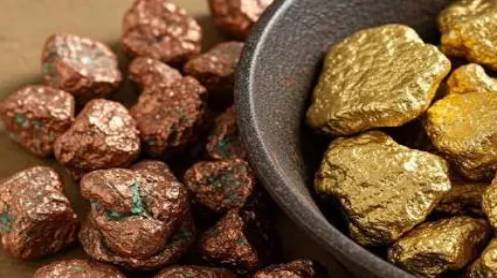
“Anything which is a low-carbon project can essentially get you carbon credits,” he said, comparing carbon credits with commodities such as gold, silver and copper.
Carbon credits, also known as carbon offsets, represent the reduction or removal of one tonne of carbon dioxide equivalent (CO2e) from the atmosphere. They enable businesses and other organisations to compensate for their emissions by financing verified projects involving renewable energy, afforestation, mangrove restoration and other emissions-reduction activities.
Such credits are issued following certification and verification under recognised international standards, including those administered by organisations such as Verra and Gold Standard.
Lalani said carbon credits should be considered an additional monetisation opportunity rather than the primary source of income for environmentally sustainable projects.
“If you are investing anyway, you can consider this as the cherry on top. This is not the whole cake, but a cherry on top,” he said.
He estimated that qualifying projects could generate an additional 10 to 15 percent in revenue through carbon credits, with the potential to reach 20 percent in certain cases.
Using a Rs10 billion investment as an example, he explained that carbon credit revenues could strengthen the project’s overall financial performance and help cover operational and maintenance costs.
The opportunity, he said, extended well beyond conventional solar and wind power projects to electric vehicles (EVs), battery energy storage systems (BESS), biodiesel manufacturing, forestry and agriculture.
Solar and wind installations can potentially generate carbon credits by displacing electricity produced through fossil fuels such as diesel, furnace oil and natural gas. Similarly, electric vehicles can qualify by replacing conventional petrol-powered transport and reducing associated emissions.
“Anything which displaces or sequesters carbon can be converted into a project that can earn carbon credits,” Lalani said.
He disclosed that Resources Future was working with developers involved in battery storage and electric mobility projects, including businesses importing electric buses and manufacturing electric motorcycles.
The company was also supporting a large biodiesel manufacturing facility under construction in Pakistan that had applied for carbon credits.
Lalani said biodiesel producers could benefit from two separate revenue streams: selling the fuel and monetising verified emissions reductions through carbon credits.
He also highlighted the potential of agriculture and forestry, citing the company’s agroforestry initiative involving mango restoration as an example of projects that could generate carbon-related benefits.
Pakistan Lagging Behind Regional Markets
Despite its considerable potential, Pakistan has been relatively slow in developing carbon credit projects and attracting private-sector investment compared with regional markets such as India, China and Bangladesh.
Lalani attributed this gap to limited awareness, insufficient technical expertise and a lack of understanding among Pakistani industrialists about the commercial benefits of carbon markets.
He said businesses in several competing economies had increasingly incorporated carbon credit opportunities into their investment strategies, while Pakistani companies remained more focused on conventional business models.
He also identified limited risk appetite among local investors as a factor restricting the development of new carbon market opportunities.
However, he expressed optimism that Pakistan’s market could expand as businesses became more familiar with carbon finance and its potential to improve investment returns.
High Development Costs Remain a Challenge
Another major obstacle is the cost of developing carbon credit projects, which requires technical documentation, emissions assessments, independent verification and registration with recognised international carbon credit registries.
According to Lalani, developing a typical carbon credit project can cost approximately $100,000, while engaging foreign consultants, particularly from Europe, could push consultancy expenses alone to between $200,000 and $250,000.
He said Resources Future had developed an approach that could bring project development costs below $100,000.
Lalani argued that businesses undertaking large investments should incorporate carbon credit development expenses into their overall project costs rather than viewing them as an independent commercial activity.
For projects worth Rs5 billion or Rs10 billion, he said, an additional investment of around $100,000 could be relatively modest compared with the potential additional revenue generated through carbon credits.
He noted that industrialists in India and China were increasingly integrating carbon credit strategies into their low-carbon investment plans.
International Markets Offer Revenue Opportunities
Lalani said carbon credits generated through Pakistani projects were generally sold to international buyers, as the domestic carbon market and related financial infrastructure remained at an early stage.
He added that local banks had yet to introduce dedicated financing products based on carbon credits, indicating that financial institutions needed greater awareness and expertise to support the emerging market.
He also warned that changing international climate regulations, particularly the European Union’s Carbon Border Adjustment Mechanism (CBAM), could have significant implications for Pakistani exporters.
CBAM introduces carbon pricing on certain carbon-intensive goods imported into the European Union, making emissions associated with manufacturing an increasingly important consideration for international trade.
Lalani said Pakistani textile manufacturers and other exporters needed to prepare for the growing emphasis on carbon emissions and environmental compliance in international markets.
He argued that companies should invest in emissions reduction and explore credible carbon credit mechanisms to strengthen their position in global supply chains.
Government Urged to Accelerate Carbon Market Regulations
While Pakistan’s carbon market became operational in early 2025 following the approval of federal guidelines under Article 6 of the Paris Agreement, Lalani said further regulatory clarity was required to attract investment and accelerate project development.
He pointed out that the existing policy framework needed to be supported by detailed rules and implementation guidelines to provide certainty to project developers, investors and international buyers.
“The government needs to speed up, expedite that process. Make sure the rules are out there, so it gives enough clarity to everyone involved,” he said.
He also called for capacity-building programmes for industrialists, financial institutions and investors to improve understanding of carbon markets and their commercial potential.
Furthermore, he stressed the importance of operationalising a federal climate change fund to mobilise financing for low-carbon investments and support the development of high-integrity carbon credit projects.
Lalani said Pakistan had substantial potential to benefit from the global carbon market but needed stronger institutional arrangements, regulatory clarity and private-sector participation to compete with regional economies.
He urged businesses to take a long-term view of carbon credits as an additional monetisation opportunity and invest in credible projects capable of delivering measurable and independently verified emissions reductions.
The emerging carbon market could provide Pakistan with an opportunity to attract climate finance, diversify revenue streams for green investments, support cleaner industrial development and strengthen the country’s competitiveness in an increasingly carbon-conscious global economy.
Story by Ali Ahmed