
KARACHI, November 11: Sindh Chief Minister Syed Murad Ali Shah has reiterated his government’s commitment to attracting domestic and international investment in the province’s vast mineral resources, highlighting their potential to boost industrialisation, strengthen energy security, create employment opportunities and accelerate economic growth.
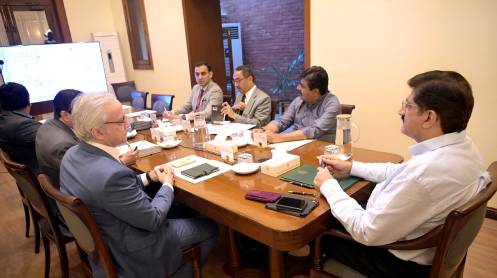
Thank you for reading this post, don't forget to subscribe!Chairing a meeting at the CM House, the chief minister reviewed Sindh’s coal and non-coal mineral reserves, ongoing mining projects and investment opportunities. Provincial Minister for Mines and Minerals Syed Sardar Shah briefed the meeting on mineral reserves, existing operations, investment prospects and the government’s strategy for sustainable mineral development.
Murad Shah said the provincial government aimed to unlock Sindh’s mineral wealth through scientific exploration, responsible extraction, modern mining technologies and value addition to transform natural resources into economic opportunities for local communities.
Thar Coal Holds 175 Billion Tonnes of Reserves
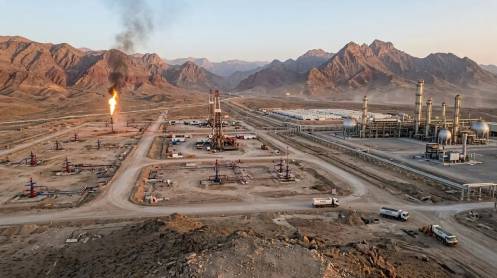
The meeting was informed that the Thar coalfield contains estimated reserves of 175 billion tonnes, offering significant potential for indigenous energy production and industrial development. Its estimated energy equivalent was presented as 50 billion tonnes of oil equivalent (TOE), alongside coal-related gas-equivalent resources of 2,000 trillion cubic feet (TCF).
The chief minister reviewed two major coal mining and power generation projects established under the China-Pakistan Economic Corridor (CPEC) early harvest programme.
Sindh Engro Coal Mining Company (SECMC), established under a public-private partnership, has a mining capacity of 11.2 million tonnes per annum (MTPA) and power generation capacity of 1,980 megawatts. The Sindh government holds a 54.7 per cent stake, while Engro and its associates own the remaining 45.3 per cent. The provincial government has invested Rs12.9 billion in the company’s equity.
Meanwhile, Sino-Sindh Resources Limited (SSRL), established by Chinese investors, has a mining capacity of 7.8 MTPA and power generation capacity of 1,320 MW, backed by private investment exceeding $2.6 billion. The project is also helping save foreign exchange by substituting imported coal.
Diverse Opportunities in Non-Coal Minerals
The meeting also reviewed investment opportunities in several non-coal minerals, including granite, iron ore, marble, limestone, celestite, China clay, silica sand and lake salt.
Granite deposits in Nagarparkar, Tharparkar, offer opportunities for dimension stone production, decorative products and cutting and polishing industries. Iron ore deposits in Thatta, Jamshoro and Tharparkar could support steel-related industries, exploration and mineral beneficiation.
Marble deposits in Thatta and Jamshoro offer potential for finished stone products, while limestone reserves across Khairpur, Dadu, Jamshoro, Sukkur, Hyderabad, Thatta and Karachi could support cement and construction industries.
Other investment prospects include celestite in Jamshoro, China clay in Tharparkar, silica sand in Jamshoro and Thatta, and lake salt in Dadu, Sanghar and Tharparkar. These resources offer opportunities in processing, refining, manufacturing and value-added products.
The chief minister stressed that investors should move beyond the extraction and sale of raw minerals and establish local processing and manufacturing facilities to generate greater economic value, employment and export opportunities.
Responsible Mining and Community Development
The meeting also discussed the provincial government’s framework for ethical governance, social responsibility and environmental protection in the mining sector.
The Thar coal projects were highlighted as examples of how mining operations could contribute to local development through employment, education, healthcare, clean drinking water and community infrastructure.
Under Block-I, approximately 5,000 jobs have been generated, with around 97 per cent of the workforce belonging to Sindh. More than 20,000 direct local employment opportunities have reportedly been created cumulatively during project development and implementation. Community initiatives include a 250-bed hospital in Islamkot, healthcare facilities, reverse osmosis plants and technical training programmes for local youth.
Under Block-II, approximately 2,350 local people are employed through SECMC-related operations, with 94 per cent of the workforce from Sindh, including 60 per cent from Thar. Seven medical facilities provide free healthcare, while 33 reverse osmosis plants supply clean drinking water to surrounding communities.
Environmental initiatives include the plantation of more than 1.3 million trees under the Thar Million Tree Programme, water treatment and reuse, biodiversity conservation, bio-saline agriculture and progressive land rehabilitation.
Murad Shah emphasised that mining activities must strictly comply with environmental standards, occupational health and safety requirements and community protection measures, including appropriate resettlement arrangements.
Infrastructure and New Investment Prospects
The meeting also reviewed infrastructure projects supporting mineral development, including road connectivity, water supply facilities and the proposed Thar Rail Connectivity Project, a joint venture between the federal and Sindh governments.
The proposed railway link is expected to facilitate the transportation of Thar coal to industries across the country, expanding the market for indigenous coal.
The briefing also highlighted opportunities for alternative uses of Thar coal, particularly coal briquetting and coal-to-urea production, which could support industrial development, strengthen food security and reduce foreign exchange expenditure.
The government has also developed 12 exploration blocks following detailed drilling, with geological and exploration data available to facilitate investment decisions.
Reaffirming Sindh’s openness to investment, the chief minister said the government would encourage strategic partnerships, joint ventures, technology transfer and the adoption of modern mining practices.
He said transparent regulations, competitive investment opportunities, institutional support and investor-friendly procedures would remain central to the provincial government’s mineral development strategy.
The chief minister said the ultimate objective was to transform Sindh’s mineral wealth into sustainable economic growth, industrial expansion, employment generation and prosperity while protecting the environment and safeguarding the interests of communities in mineral-rich areas.