
ISLAMABAD: The cumulative cost of Pakistan’s three major dam projects has surged by 176% to Rs3.5 trillion from the original estimate of Rs1.28 trillion, as the government approved Rs275 billion in supplementary grants for six priority water sector projects.
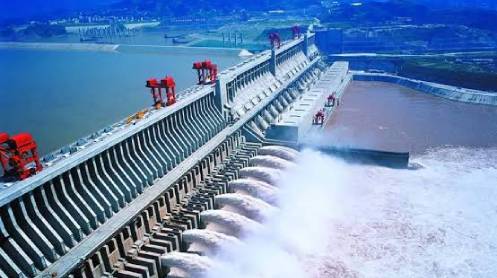
Thank you for reading this post, don't forget to subscribe!The Economic Coordination Committee (ECC) of the Cabinet, which met under the chairmanship of Finance Minister Muhammad Aurangzeb on Wednesday, approved the additional allocation to support construction work on the Diamer-Bhasha Dam, Dasu Hydropower Project, Mohmand Dam, Chashma Right Bank Canal, Greater Karachi Bulk Water Supply Scheme and Kachhi Canal.
According to the Ministry of Water Resources, the approved amount is against an original funding demand of nearly Rs450 billion for the current fiscal year. The allocation is intended to accelerate work on critical water infrastructure projects.
The sharp escalation in dam construction costs has significantly increased the financial burden on the national budget. The combined estimated cost of the Diamer-Bhasha, Dasu and Mohmand projects has risen by approximately Rs2.3 trillion, representing a 176% increase over their original estimates.
The cost of the Diamer-Bhasha Dam has increased by Rs642 billion to Rs1.12 trillion, reflecting a 134% escalation. The Ministry of Water Resources attributed the increase primarily to exchange rate fluctuations and said a revised Planning Commission proforma had been submitted for approval by the Executive Committee of the National Economic Council (ECNEC).
Similarly, the estimated cost of the Dasu Hydropower Project has surged from Rs486 billion to Rs1.74 trillion, an increase of Rs1.254 trillion, or approximately 260%.
The Water and Power Development Authority (WAPDA) has also reassessed the cost of the Mohmand Dam at Rs666 billion. The project was originally approved in 2018 at Rs310 billion, with a completion deadline of September 2025. Its revised estimated cost represents an increase of Rs356 billion, or 115%.
The government has also acknowledged that rising prices of petroleum products and construction materials have contributed to the growing financial requirements of major infrastructure projects.
For the current fiscal year, the federal government has sought Rs1.035 trillion in cash grants from the provinces against their combined share of Rs8.8 trillion. However, the actual transfer of these funds depends on the Federal Board of Revenue (FBR) achieving its revenue collection target of Rs15.264 trillion.
Any shortfall in tax collection could automatically reduce provincial contributions. The FBR has already recorded a revenue shortfall of Rs95 billion during the first four months of the fiscal year.
A Finance Ministry official said the ECC had approved the Rs275 billion allocation, but its actual disbursement would remain contingent on revenue receipts. The remaining cash grants would be utilised for other government initiatives, including armed forces projects.
Separately, the ECC approved Rs84.2 billion in three supplementary grants for various armed forces requirements, including the Istaqlal project and the induction of an aircraft.
The approved allocations include Rs31.32 billion for the Special Security Divisions North and South, Rs11.9 billion for Pakistan Navy facilities, Rs10 billion for internal security duty allowances and border fence maintenance, Rs29.1 billion for the Istaqlal project and Rs1.1 billion for the induction of a Lineage L-1000 aircraft.
On a summary submitted by the Interior and Narcotics Control Division, the committee also approved Rs3.71 million for helicopter maintenance requirements of the Frontier Corps Balochistan (North).
The ECC further approved the transfer of Rs15.625 billion in savings generated through austerity and fuel conservation measures to the Prime Minister’s Austerity Fund 2026. The Finance Ministry said the decision reflected the government’s commitment to fiscal discipline and prudent management of public resources.
On a proposal from the Commerce Division, the committee approved restrictions on the import of camera-enabled smart glasses and recommended that provincial governments and the Islamabad Capital Territory formulate workplace regulations governing their use.
The committee also approved the continuation of gas supplies to FatimaFert and Agritech, the two urea manufacturing plants operating on the Sui Northern Gas Pipelines Limited (SNGPL) network, until December 31, 2026, subject to the availability of the required energy supplies.
In another decision concerning the petroleum sector, the ECC approved relaxation of applicable Exploration and Production (E&P) Rules for the extension and renewal of 89 petroleum rights, subject to fulfilment of prescribed conditions.
Additionally, the committee sanctioned a Rs1 billion grant for the gasification of villages located within a five-kilometre radius of gas production fields during FY2026-27. The initiative aims to expand gas infrastructure and improve access to natural gas for communities situated near producing fields.
Story by