Høvik, Norway, October 7, 2026: Energy-importing countries are expanding clean energy three times faster than energy-exporting nations as governments seek to reduce their dependence on imported oil and gas by accelerating the deployment of domestically produced power, according to the tenth edition of DNV’s Energy Transition Outlook.
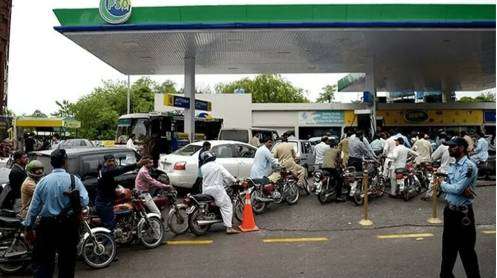
The disruption of energy supplies through the Strait of Hormuz has further strengthened governments’ efforts to reduce their exposure to imported fossil fuels. Meanwhile, oil and gas-exporting countries outside the Middle East are increasing production to compensate for supply disruptions, while their own decarbonization efforts are progressing more slowly than those of importing regions.
According to DNV, the share of non-fossil energy in the primary energy mix of importing regions has increased by 2.2 percentage points over the past five years, compared with just 0.7 percentage points in exporting regions.
This means China, India and Europe have collectively shifted towards non-fossil energy more than three times faster than the Middle East, North America and Russia.
Prolonged Conflict Could Permanently Reduce Fossil-Fuel Demand
The disruption in the Strait of Hormuz has increased incentives for energy-importing countries to diversify their supplies and reduce exposure to oil and gas markets, potentially creating greater long-term risks for fossil-fuel exporters.
DNV’s latest forecast expects the Middle East to account for around 40% of global oil production by 2050, down from 50% in last year’s outlook.
DNV also examined a scenario in which the conflict in the Middle East continues until 2030, with oil and gas prices remaining moderately elevated throughout the period. Under this scenario, global oil and gas demand would be 4–6% lower while the conflict persists and would remain 2–5% below DNV’s main forecast for the rest of the outlook period.
The analysis suggests that prolonged disruption could lead to permanent demand destruction as governments and consumers accelerate the shift towards alternative energy sources.
“Energy security is redrawing the map of the energy transition,” said Ditlev Engel, CEO – Energy Systems at DNV. “Importing regions are accelerating electrification, renewables and storage to reduce their exposure to the most insecure fossil-fuel markets. Exporters, meanwhile, are responding to today’s shortages by increasing investments and production. The result is a widening divide in the speed and direction of the transition.”
He added that despite increasing geopolitical complexity, the energy transition is already happening at significant scale and must be accelerated as energy becomes increasingly recognized as critical infrastructure.
Technology Gap Is Widening
DNV also identifies a growing gap between mature, cost-competitive technologies and emerging technologies that remain dependent on increasingly constrained policy support.
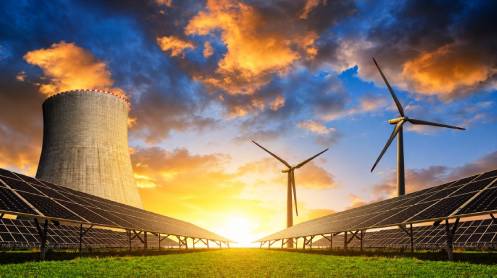
Falling costs are driving rapid deployment of solar PV, onshore wind and battery storage, with solar and wind increasingly displacing fossil fuels in power generation. Installed battery capacity has increased 14-fold over the past five years.
However, technologies needed to decarbonize hard-to-electrify sectors are struggling to gain momentum because of high costs and concerns over industrial competitiveness.
Compared with last year’s outlook, DNV has reduced its long-term forecasts for hydrogen by 29% and carbon capture and storage (CCS) by 15%. While both technologies are still expected to expand rapidly from a low base, DNV says stronger policy support will be required to close the cost gap and accelerate their deployment.
Nuclear power remains a notable exception among higher-cost technologies. DNV expects nuclear to maintain its current share of global electricity generation as electrification accelerates. Installed nuclear capacity is forecast to increase by 30% over the next decade and 170% by 2060, despite high costs and supply-chain risks.
“Driven by solar, wind and increasingly battery storage, electricity is emerging as the clear winner of the energy transition,” said Sverre Alvik, Director of Energy Transition Research at DNV.
He said the pace of electrification over the next two decades is expected to be more than twice that of the previous two decades. Although importing countries are leading the shift, fossil-fuel exporters are also embracing electrification because of its greater efficiency and lower costs.
AI Adds to Growing Electricity Demand
Artificial intelligence is creating a significant new source of electricity demand, with DNV forecasting that global data-centre electricity consumption will nearly triple from around 400 TWh in 2025 to 1,100 TWh by 2030.
AI workloads are expected to overtake conventional data-centre workloads in 2031. However, DNV says data centres, including AI, will still contribute less to global electricity-demand growth through 2040 than either electric-vehicle charging or space cooling.
Growth in data-centre power demand will initially be concentrated in North America, where data centres are expected to account for around one-third of the increase in power generation through 2030. In China, DNV expects data-centre electricity demand to be less significant relative to overall power-demand growth.
World Remains on Track for 2.3°C Warming
Despite accelerating electrification and renewable-energy deployment, DNV says the world remains off track to meet the ambitions of the Paris Agreement.
The outlook forecasts that energy-related emissions will decline by 44% by the middle of the century, putting the world on a trajectory towards approximately 2.3°C of warming.
Global net-zero emissions are not expected until the 2090s, and even that timeline remains uncertain because it depends partly on technologies such as direct air capture that have yet to be deployed at scale.
The findings underline a growing divide in the global energy transition: energy-importing economies are accelerating clean-energy deployment to strengthen energy security, while many fossil-fuel exporters continue to expand production, potentially widening the gap between regions in the pace and direction of decarbonization.