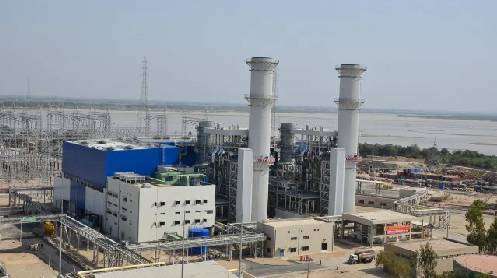
ISLAMABAD: The government has invited international competitive bids for the rehabilitation of fire-damaged Steam Turbine-16 (ST-16) at the Guddu 747 Power Plant, a project expected to restore 297MW of generation capacity and reduce the plant’s generation cost by Rs4.19 per unit.
According to the Power Division, rehabilitation of the turbine and its associated generator would bring the generation cost down from Rs13.87 to Rs9.68 per unit, while enabling the plant to return to full combined-cycle operation.
ST-16 has remained out of service since a fire in July 2022, forcing the Guddu plant to operate in open-cycle mode with an output of around 450MW. Its relatively high generation cost has placed it at approximately 11th position in the dispatch merit order.
Following rehabilitation, the plant is expected to regain its designed capacity of 747MW, while its merit-order position could improve to around 7th, enabling the system operator to substitute more expensive sources of electricity.
The Power Division said detailed technical studies, integrity assessments and engineering reviews have been completed, following which an EPC turnkey procurement process has been initiated for the rehabilitation of ST-16 and associated equipment.
International competitive bids have been invited, with October 7, 2026 set as the deadline for submission. The rehabilitation project is targeted for commissioning by December 2028.
The restored turbine is expected to provide an additional 297MW, representing a 66pc increase over the plant’s current generation of around 450MW.
The rehabilitation is also expected to strengthen the national power grid. Located at a strategically important point in Pakistan’s transmission network and along the north-south power-flow corridor, Guddu’s restored generation capacity could improve grid flexibility, reliability and operational resilience.
The Power Division said the initiative reflects the government’s strategy of maximising existing generation assets, lowering electricity costs and improving system efficiency, rather than relying exclusively on the development of new generation capacity.
Story by Israr Khan