

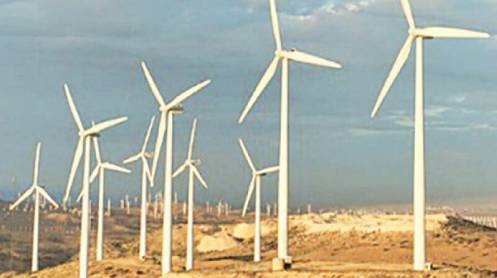
On May 20 this year, a public hearing was convened at NEPRA in Islamabad on Pakistan’s Indicative System Plan 2025-35. The plan has two parts. The first is the Indicative Generation Capacity Expansion Plan, or IGCEP, a blueprint for which power plants to build over the next decade, when to build them, and at what cost. The second is the Transmission System Expansion Plan, or TSEP which is a blueprint for the cables, towers and substations needed to carry that electricity from generation sites to consumers. Together they represent the most consequential set of investment decisions in Pakistan’s energy sector in a generation: USD 57 billion committed over ten years that will determine what every Pakistani pays for electricity in 2030 and 2035.
Thank you for reading this post, don't forget to subscribe!The hearing room was full. Regulators, planners, independent power producers, provincial government officials, foreign lenders. Formal objections had been submitted by industrialists, trade bodies, academic institutions and civil society organisations. One participant had followed the proceedings online from Karachi. Midway through the session, two foreign participants asked a question that cut through everything else. Who will invest in Pakistan? They answered it themselves: power. Only power. Not textiles, not agriculture, not manufacturing. Power — because in power the return is guaranteed by regulation and the consumer pays whether the plant runs or not. That observation framed everything that followed.
The plan submitted for approval that day ran to 320 pages. On Page 52, Section 6.2.4, the planners had written: the electricity tariff will touch the highest numbers making it unaffordable for a common person. Those are not the words of critics. They are the words of the plan’s own authors.
The central question the hearing raised, one that stayed unanswered through four months of proceedings was deceptively simple. Pakistan’s consumer today pays approximately Rs.34 per unit for electricity, roughly 12 cents. The country’s industry needs electricity at 6 to 9 cents to compete with regional peers. After USD 57 billion of new generation and transmission investment, will that gap close or widen? IGCEP contained no year-wise rupee projection for the consumer. Not for 2028, not for 2030, not for 2035. A USD 57 billion plan was submitted for approval without disclosing what it would cost the people paying for it.
Understanding why this matters requires understanding one number. Today, 52.6 percent of every electricity bill is a Capacity Purchase Price which is a fixed charge paid to power plants whether they run or not. More than half of what a consumer pays covers capacity that may be sitting idle. This charge is calculated as a fraction: total annual capacity payments divided by total units sold on the grid. When new plants are added, the payments grow. When consumers install rooftop solar and reduce their grid consumption, fewer units are sold. Pakistan imported 22 gigawatts of solar panels in 2024 alone. When both happen simultaneously, more plants added, fewer units sold, the per-unit capacity charge rises regardless of how cheaply the new plants generate. This is the structural trap that IGCEP’s 26,000 megawatts of additions walks directly into.
During hearings and in subsequent public exchanges, a counter-argument was made that deserves to be taken seriously and then examined carefully. The argument is this: in constant-price terms, removing the effect of inflation and rupee depreciation, IGCEP’s own model shows the tariff actually falling from roughly Rs.33 in FY28 to approximately Rs.29 by FY35. The reasoning is that cheap hydropower replacing expensive imported gas reduces the fuel component of the bill. Since hydro has near-zero fuel cost, and RLNG can cost Rs.25 to Rs.40 per unit in energy charges alone, the substitution genuinely does reduce the total tariff in the model. This argument is internally consistent, and within the model’s own framework, the arithmetic is correct.
The question is not whether the model is internally consistent. It is whether the model’s assumptions reflect the world the consumer will actually live in between now and 2035.
Three assumptions carry this conclusion and all three are fragile. The first is that the rupee stays at Rs.278 per dollar — the rate IGCEP uses as its base, which happens to be close to today’s rate. Every WAPDA construction loan, every World Bank repayment, every dollar-indexed contractor payment becomes more expensive in rupee terms as the currency falls. Pakistan’s rupee has depreciated in every decade since independence. At 6 percent annual depreciation — a conservative estimate by historical standards — the dollar reaches Rs.470 by 2035 and the rupee cost of USD-indexed capacity payments nearly doubles. The tariff reduction that cheap hydro was supposed to deliver is offset entirely. The second assumption is that demand grows to 180,605 gigawatt-hours by 2035 from today’s 111,467 — a 62 percent increase. Grid sales have fallen in each of the past three years. The CPP is a fixed cost. If demand grows as projected, that fixed cost is spread over more units and per-unit costs fall. If demand continues to decline as consumers exit to solar, that same fixed cost is spread over fewer units and per-unit costs rise. The model’s optimistic tariff outcome depends entirely on which of these two directions demand takes. The third assumption is that the hydro projects enter service at the costs WAPDA submitted to ISMO for modelling — not at their confirmed revised costs. Dasu alone has already overrun by Rs.1,251 billion above the figure IGCEP used. That overrun enters the regulatory asset base and earns an annual return at consumer expense. It does not appear anywhere in the tariff calculation that shows Rs.29 per unit in FY35.
Compounding this is a financial structure that places all investment risk on the consumer. Every WAPDA project in Pakistan is financed through multilateral loans whose repayments flow through a regulatory framework. When a project overruns its approved budget, the additional expenditure enters the project’s regulatory asset base and earns an annual return from electricity consumers. There is no cap on overruns and no financial consequence for the developer. The Neelum-Jhelum Hydropower Project illustrates where this leads. Approved in 1989 at Rs.15 billion, the project eventually cost Rs.507 billion. A headrace tunnel collapsed in 2022. The plant has generated no electricity since. The surcharge created to service its debt remains on every Pakistani electricity bill today. The developer earns a return on Rs.507 billion. The plant produces nothing.
Dasu Hydropower Project, one of the largest committed projects in the approved plan, was due for completion in 2019. The revised target is late 2027, eight years late. The cost has risen from Rs.486 billion to Rs.1,737 billion — a 257 percent increase confirmed by ECNEC in May 2025. The 765-kilovolt transmission line required to carry Dasu’s power to the grid will not be ready until 2028, a year after the dam. Officials told a Senate committee that the country will lose approximately Rs.2 billion every single day in stranded electricity during any gap between the two. Investigations have been sought into procurement irregularities, including a contract reportedly awarded to a disqualified firm. None of this appears in IGCEP’s cost modelling. The plan used cost figures submitted by the executing agencies themselves, before the revised ECNEC approval — meaning the tariff calculations are based on a version of Dasu that is Rs.1,251 billion cheaper than the one being built.
| IGCEP’s promise that electricity will become affordable by 2035 is calculated on project costs as submitted by those building the projects — not on the confirmed revised figures approved weeks before the hearing. The gap between those two numbers, across four projects alone, is Rs.2,341 billion. |
Before the determination was issued, one decision by the Power Division deserves to be acknowledged directly. Ten thousand megawatts of proposed capacity — carrying USD 17 billion in associated costs — were removed from the committed list before the plan reached NEPRA for final approval. That is not a small administrative adjustment. It is a recognition that the plan as originally conceived was carrying commitments the system cannot justify given current demand trends. Whoever made that call, and whatever the political difficulty involved, it was the right call. It prevented USD 17 billion of additional fixed costs from entering a system already struggling under the weight of the capacity it has. Credit belongs where it is due.
The determination also drew a distinction that sits at the heart of the entire debate — the difference between a committed project and a strategic one. A committed project is one with financing secured, a power purchase agreement in place, and construction underway or imminent. Its costs are recoverable from consumers because a buyer has effectively been contracted. A strategic project is different. It serves a national interest beyond electricity generation — water storage, food security, flood control, regional development — and its cost exceeds what the least-cost alternative would have been. National Electricity Policy 2021, in Annexure 1, explicitly provides that the cost premium of such projects, the difference above the least-cost market rate, should be financed by the sponsoring Federal or Provincial Government through the Public Sector Development Programme. Not by the electricity consumer. The problem is that this provision has never been applied. Every rupee of Diamer Bhasha, every rupee of Dasu, every rupee of Mohmand has been structured as a pass-through to the consumer tariff — 49 percent of dam and land acquisition costs plus 100 percent of the power generation component, as confirmed in WAPDA’s own current tariff petition before NEPRA. These are strategic projects being financed as committed ones. Until that structure changes, the cost overruns of these projects will continue to flow automatically to every electricity bill in Pakistan.
On September 11, NEPRA issued its determination on ISP 2025-35. The plan was approved, but not as submitted. Ten thousand megawatts of capacity and USD 17 billion in associated costs were removed from the committed list before approval. The USD 900 million Battery Energy Storage System proposal was rejected, with NEPRA directing a full technical study before any future approval. KEL’s 640 megawatt renewable energy portfolio — projects that had emerged from Pakistan’s most competitive auctions ever, at tariffs as low as US cents 3.09 per unit — was not reinstated despite NEPRA having written to ISMO as recently as March 2026 asking for their inclusion. Two KPK hydropower projects, Madyan at 157 megawatts and Gabral Kalam at 88 megawatts, were placed in abeyance — neither committed nor excluded — pending a CCI decision that was overdue years before the hearing. The determination passed, carrying conditions and dissenting member notes that filled a document nearly as long as the approval itself.
The most significant observations in the determination did not come from the objecting parties. They came from Waseem Mukhtar, the Chairman of NEPRA, in an additional note filed alongside his signature on the approval order. Whatever one thinks of the order itself and reasonable people can disagree on whether approval with conditions was the right outcome, the Chairman’s note deserves to be read separately and praised for what it is: a regulator saying, on the formal record, what needed to be said. He did not hide behind the approval. He did not allow the signing of the order to be taken as a clean endorsement of the plan. He used his position to name, precisely and publicly, the structural problems that the planning process has been unwilling to confront. That took institutional courage and the note, not the order, tells the real story of where this sector stands.
The sector, he wrote, is caught in a self-reinforcing cycle: surplus capacity raises per-unit costs, which makes grid electricity expensive, which drives consumers to solar, which reduces grid sales, which raises per-unit costs further. He cited a recent frequency control hearing in which ISMO itself confirmed that daytime grid demand has fallen to approximately 12,000 megawatts, barely above must-run levels, in the middle of the day. He directed that future plans must assess and disclose the tariff impact of proposed investments on consumers. He said committed projects that fail to demonstrate progress within defined timelines should be excluded, not retained indefinitely. He noted that ISMO, the DISCOs and CPPA-G had submitted fundamentally incompatible demand projections, making the planning exercise unreliable at its foundation. And he stated that where a project costs more than the least-cost alternative, the sponsoring government should fund the incremental cost, the consumer should not pay for a national interest decision they had no part in making.
| The Chairman of NEPRA used his additional note to record that demand is collapsing, projections are in chaos, consumers cannot be asked to fund strategic cost premiums, and the sector is in a self-reinforcing cycle threatening its long-term sustainability. He recorded all of this while signing the approval. |
Two days after the determination was issued, Business Recorder reported that ISMO had already begun collecting data for IGCEP 2027 — the next ten-year plan. Stakeholder submissions were due by September 14. The current plan had not yet been formally notified. The previous plan’s questions had not been answered. The next one was already underway.
The cycle the Chairman described is not unique to Pakistan’s power sector. It is what happens in any infrastructure system where planning begins with what can be built and ends at a price, rather than beginning with what users can afford to pay and working backward to determine what makes sense to build. Pakistan’s electricity planning has followed the first approach in every IGCEP it has produced. Each plan has arrived at electricity that costs more than the economy can competitively sustain. Each plan has been followed, after a suitable interval, by another plan that starts from the same point.
The solution is not complicated to describe, even if it is difficult to implement. Every future IGCEP must begin with a binding consumer tariff ceiling — a maximum delivered cost per unit at major load centres that the plan is not permitted to breach. Each proposed project must demonstrate, with confirmed revised costs rather than agency-submitted estimates, that it moves the tariff toward that ceiling rather than away from it. Strategic projects — dams, nuclear, major hydro — must be formally declared as such under NEP 2021 Annexure 1, with their cost premium above the least-cost market alternative funded by the sponsoring government through PSDP, not recovered from consumers. WAPDA project cost overruns above the approved PC-I must be absorbed by the government rather than passed through automatically to electricity bills. The demand model must use actual grid sales as its base year, not an overstated figure, and must explicitly model the ongoing exit of consumers to rooftop solar rather than treating it as temporary. Before adding a single new megawatt of centralised generation, the 19,000 gigawatt-hours lost annually in transmission and distribution — worth over Rs.640 billion at current rates — must be addressed with the same urgency as capacity expansion. And battery storage combined with solar and wind, built close to demand centres rather than hundreds of kilometres away in mountain valleys, must be evaluated as a genuine competing option, not a footnote. None of this is technically novel. It is a choice about whose interests the planning process serves.
The question raised at the May 20 hearing, after USD 57 billion and counting (due to cost over runs), will electricity be cheaper or more expensive in 2035 was not answered in the NEPRA determination either. IGCEP 2027’s data collection has started. Whether the next plan will be required to answer that question before it is submitted for approval is the only thing that will determine whether this time the story ends differently.
Planning that does not begin with what people can afford to pay will always arrive at a price they cannot afford to use.





