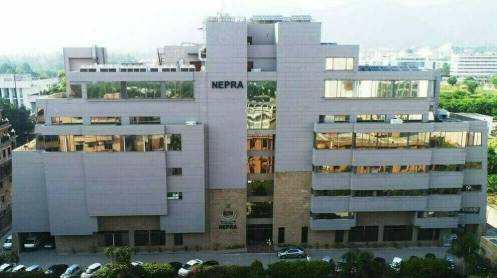
ISLAMABAD: The National Electric Power Regulatory Authority (Nepra) has raised more than a dozen questions over a proposed tariff modification for the 884-MW Suki Kinari Hydropower Project, with the project company seeking to increase its levelised tariff from Rs9.04 to Rs9.40 per unit, an increase of around 4 per cent.
Thank you for reading this post, don't forget to subscribe!According to documents, a significant portion of the proposed increase is linked to a sharp rise in the Water Use Charge (WUC), which the project company has proposed increasing from Re0.15 to Re0.425 per kWh — an increase of approximately 183 per cent.
The proposed WUC revision alone could have a cumulative impact of around Rs25 billion on electricity consumers over the remaining life of the project.
Nepra has sought detailed justification for various components of the proposed tariff modification, including changes in project costs and technical specifications.
The regulator questioned whether design changes that resulted in a USD28.604 million reduction in Engineering, Procurement and Construction (EPC) costs were justified. At the same time, it sought an explanation for an additional USD28.985 million claimed for the permanent diversion of the N-15 Highway.
Nepra also questioned the proposed revision in the project’s contract capacity from 861.548 MW to 875.160 MW, following an increase in installed capacity from 870 MW to 884 MW.
Another major issue concerns the proposed installation of two banks of 3×22 MVAr shunt reactors and associated consultancy services. The project company has claimed additional costs of USD11.372 million and Rs915.180 million, respectively, prompting Nepra to seek justification for the expenditures.
The authority has also sought clarification on the proposed replacement of discontinued PICC indices with Pakistan Bureau of Statistics (PBS) indices for Abbottabad, as well as changes to other input components used for the indexation of civil works.
Security and taxation costs questioned
Nepra has questioned an additional claim of Rs918.635 million for infrastructure required for special security arrangements during the construction period.
It has also sought justification for Rs1.946 billion in additional infrastructure costs and Rs39.964 million in engineering consultancy charges related to special security arrangements during the operational period.
The project company has further sought inclusion of non-adjustable Provincial Sales Tax on Services in the project cost. Nepra has asked whether such taxation, imposed after determination of the reference tariff, can appropriately be incorporated into the project cost.
The regulator has also sought clarification regarding the incorporation of changes in applicable Sindh Infrastructure Cess rates into the project cost during project implementation.
COVID-19 claims under scrutiny
Nepra has questioned several cost claims associated with the extended construction period attributed to the COVID-19 pandemic.
These include increases in project development, insurance, project management, owner’s engineer and legal service costs, as well as adjustments to Interest During Construction (IDC) and Return on Equity During Construction (ROEDC).
The project company has also claimed USD30 million in COVID-19-related costs, including anti-epidemic measures. Nepra has asked whether the claim is justified.
In addition, the authority has sought justification for a USD15.5 million claim relating to an agreement for accelerating project progress following the pandemic.
It has also questioned claims of USD2.82 million for acceleration of mechanical and electrical installation and USD1.742 million plus Rs243.672 million for acceleration of wet testing of the project complex.
Sinosure costs also challenged
Another issue relates to Sinosure costs, with Nepra questioning the proposed methodology for calculating the charge.
The regulator has asked whether calculating the cost based on a cap of 7 per cent of total debt servicing, comprising principal and interest during the repayment period, rather than 7 per cent of the total assessed debt amount, is justified.
Nepra has also questioned the proposed methodology for calculating IDC and interest during the operational period based on a 360-day convention.
The authority has reserved the right to examine any other matter it considers relevant during the tariff modification proceedings.
The Suki Kinari Hydropower Project, one of the major hydropower schemes developed under the China-Pakistan Economic Corridor (CPEC) framework, is therefore facing detailed regulatory scrutiny over its proposed tariff and cost adjustments.
Any increase in the project’s approved tariff and eligible project costs could ultimately have implications for electricity consumers.
Nepra has scheduled a public hearing for October 1, 2026 on the proposed tariff modification and directed interested parties and individuals wishing to participate to submit their intervention requests within one week.
Story by Mushtaq Ghumman