

ISLAMABAD: Pakistan incurs an estimated Rs3.5 trillion in annual economic losses through unnecessary energy-sector imports, driven by poor planning, delays in implementing energy-efficient building codes and the failure to revive domestic manufacturing of power-sector equipment, according to research presented by the LUMS Energy Institute (LEI).
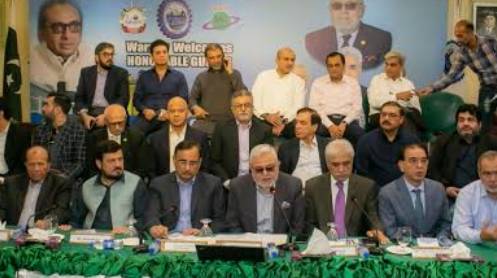
Thank you for reading this post, don't forget to subscribe!The findings were shared at an event titled ‘Pakistan’s Energy Security’, organised by LEI and attended by National Grid Pakistan (NGP) Chairman Dr Fiaz Chaudhry, Independent System and Market Operator (ISMO) CEO Dr Masood Ahmad, NGP CEO Altaf Hussain Malik and other energy-sector stakeholders.
According to LEI research, despite Pakistan having more than 36,000MW of installed generation capacity, the country’s base electricity load remained around 8,000MW between 2015 and 2023, with little growth, particularly during the four winter months.
Dr Fiaz Chaudhry observed that the situation reflected declining energy-sector productivity, as much of the additional generation capacity had been developed to meet cooling demand that remained largely unutilised for most of the year. This has contributed to higher capacity payments and mounting circular debt.
At the same time, Pakistan imports approximately $2.7 billion worth of liquefied natural gas (LNG) during the four winter months to meet space and water heating requirements, while a substantial portion of its electricity generation capacity remains underutilised.
The research also highlighted the delayed implementation of the Energy Conservation Building Code, approved by the federal government in 2023. According to LEI, effective implementation could reduce building cooling loads by up to 51 per cent. However, Punjab, Sindh and Balochistan have yet to adopt the codes, while the Capital Development Authority (CDA) and Khyber Pakhtunkhwa government have adopted them and are at different stages of implementation.
LEI technical experts Umar Farooq and Faisal Javaid Mughal said Pakistan could achieve significant economic savings, improve electricity affordability and strengthen energy security through integrated system planning, energy efficiency, renewable energy integration and domestic manufacturing.
The institute also highlighted the potential benefits of improving energy efficiency in residential buildings. Its research suggests that enhancing efficiency in just 25 per cent of residential buildings could reduce peak electricity demand by approximately 3,000MW and generate potential annual energy-cost savings of Rs442.6 billion.
The study further presented a pathway towards near-complete decarbonisation of the power sector by FY2040, reducing the share of fossil-fuel-based generation from 49 per cent in FY2024 to around 1 per cent. Under the modelled scenario, hydropower would contribute 47 per cent, wind 25 per cent, nuclear 18 per cent and solar 8 per cent.
On domestic manufacturing, LEI experts identified approximately Rs1.1 trillion in potential localisation opportunities against projected equipment demand of Rs1.9 trillion across Pakistan’s transmission and distribution sectors.
The assessment evaluated the manufacturing readiness of around 49 local companies and outlined a proposed framework for a comprehensive indigenisation roadmap. Experts noted that several power-sector plants, equipment and spare parts had previously been manufactured locally before Wapda’s unbundling in 1998, but domestic production capabilities subsequently weakened, increasing dependence on imported conductors, switches and other electrical equipment.
They said reviving local manufacturing could reduce foreign exchange outflows, strengthen industrial capacity and create opportunities for domestic businesses.
The experts also pointed out that the Engineering Development Board-led team was required under the National Electricity Policy 2023 to announce an electricity equipment indigenisation plan by June 2026, but the initiative had not materialised.
LEI urged the relevant government institutions to expedite the long-delayed Power Sector Indigenisation Plan (PSIP), stressing that localisation, energy efficiency and coordinated planning were essential to reducing import dependence and improving Pakistan’s long-term energy security.
Story by Khaleeq Kiani