# Pakistan Moves to Set Standards for EV Lithium-Ion Batteries
Thank you for reading this post, don't forget to subscribe!**ISLAMABAD:** The Ministry of Industries and Production has directed the Pakistan Standards and Quality Control Authority (PSQCA) to develop national standards for **lithium-ion batteries used in electric vehicles (EVs)** as part of efforts to strengthen the country’s emerging electric mobility and energy storage industry.
The ministry is already working with relevant stakeholders to finalise the **Next Generation Energy Storage Policy 2026-2033**. Engineering Development Board (EDB) Chief Executive Hammad Mansoor is expected to present an updated draft of the policy at an upcoming stakeholders’ meeting.
A senior ministry official said PSQCA had been tasked with preparing standards for lithium-ion batteries while the broader energy storage policy was being finalised.
Currently, Pakistan has standards and products largely focused on consumer-grade lithium batteries used in devices such as mobile phones and laptops. However, EV battery packs require much more advanced industrial standards because of their higher voltage, capacity and safety requirements.
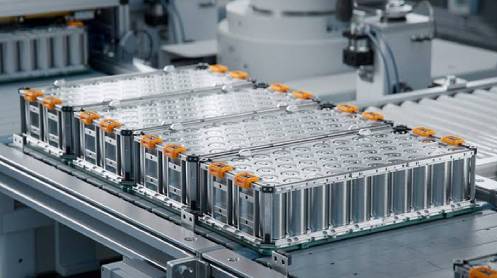
The move comes as several EV assemblers in Pakistan have expressed interest in working with the EDB to establish facilities for **lithium-ion battery assembly and potentially cell manufacturing**.
The official said national standards were also essential to ensure that imported EV batteries met appropriate safety, durability and performance requirements.
Under the proposed framework, PSQCA will develop standards covering several critical areas, including **cell safety and abuse testing**. These are expected to include extreme-stress validation and computerised physical destruction tests involving mechanical crushing, overcharging and thermal abuse to ensure cells do not catch fire under hazardous conditions.
The proposed standards will also address battery-pack integrity for four-wheel electric vehicles, an area where dedicated baseline requirements are currently lacking.
Another key area is the **Battery Management System (BMS)**. The proposed standards are expected to establish requirements for intelligent BMS systems capable of responding rapidly to overvoltage and undervoltage conditions, which can cause cell swelling and other safety risks.
Standards for **thermal defect logging** are also being considered to ensure batteries remain safe and functional under Pakistan’s climatic and operating conditions.
The proposed framework further calls for **fire-containment mechanisms** in EV battery packs. Battery structures may incorporate materials such as aerogel or fire-retardant epoxy sheets to limit heat transfer between modules in the event of a single-cell failure.
In addition, the standards are expected to cover **road durability and environmental protection**. Proposed requirements include the ability of battery packs to withstand a one-metre drop onto bare concrete without structural cracks, leakage or internal damage.
Protection against dust, water ingress and extreme weather conditions is also being considered, particularly to ensure battery safety during **flooding and monsoon conditions**.
The development of these standards is expected to provide a regulatory foundation for local EV battery assembly and manufacturing while improving the safety and reliability of batteries imported into Pakistan.
Story by Kalbe Ali