
BANGKOK: Pakistan has sought a $6.7 billion concessional oil financing facility from Saudi Arabia for 15 years to ease external financing pressures, strengthen energy security and reduce the immediate burden of petroleum imports on foreign exchange reserves.
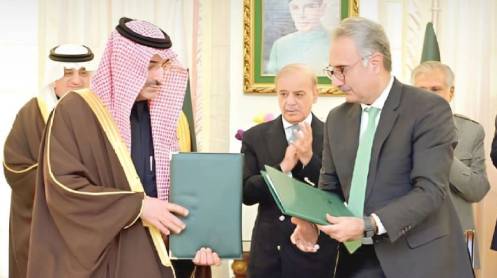
Finance Minister Muhammad Aurangzeb raised the proposed revival of the $1.2 billion annual oil facility on deferred payments with Saudi Fund for Development (SFD) Chief Executive Officer Sultan Abdulrahman Al-Marshad on Tuesday, on the sidelines of the World Bank and International Monetary Fund (IMF) annual meetings in Thailand.
The Ministry of Finance shared details of the meeting but did not disclose Saudi Arabia’s response to the request. Officials familiar with the discussions said the proposal was under consideration by the Saudi authorities.
According to the finance ministry, discussions focused on expanding bilateral trade and investment, strengthening private-sector engagement, following up on the bilateral investment protection agreement and exploring opportunities for refinery upgrades.
Both sides also reviewed progress on SFD-supported projects and stressed the need to develop a new pipeline of initiatives. The SFD reaffirmed its continued support for Pakistan within its mandate.
Saudi Arabia has provided Pakistan with oil financing on one-year deferred payments since 2019. The latest facility, signed in February 2025, expired in April. Under the previous agreement, the financing carried an interest rate of 6%, according to officials from the Ministry of Economic Affairs.
Since 2019, the SFD has provided approximately $6.7 billion in financing for petroleum products. Pakistan is now seeking to convert this support into a longer-term arrangement to ease near-term external financing requirements and improve energy security amid heightened tensions in the Middle East and uncertainty over global oil prices.
Saudi Arabia has also extended $3 billion in short-term deposits to Pakistan, which were rolled over for another three months in July. The funds have helped the country manage external debt repayment obligations.
Pakistan’s petroleum group import bill rose 5.8% to $16.8 billion in the last fiscal year. Crude oil import costs increased 32% to $7.2 billion during the same period. The pressure continued into the current fiscal year, with crude oil import costs rising 40% during July and August.
The government is pursuing longer-term financing and debt rollovers to reduce immediate repayment pressures. The IMF has estimated Pakistan’s annual gross financing requirements at nearly $30 billion for fiscal year 2027-28.
However, the IMF’s third staff-level report did not include the proposed Saudi oil facility in its projected inflows for Pakistan for fiscal years 2026-27 and 2027-28. Any agreement would therefore provide additional support beyond the currently projected financing arrangements.
Separately, Aurangzeb met International Finance Corporation (IFC) Regional Vice President for the Middle East and Central Asia Imad Fakhoury to discuss expanding private-sector investment and supporting employment and sustainable economic growth.
The discussions covered small-business financing, entrepreneurship, capital markets, green and digital bonds, mining infrastructure, value addition, affordable housing and agricultural development. Both sides also explored opportunities in livestock development and pharmaceutical exports through improved regulatory standards and investment.
The finance ministry said the government reaffirmed its commitment to the Reko Diq project and welcomed the IFC’s role in financing initiatives aimed at strengthening Pakistan’s economic growth.