
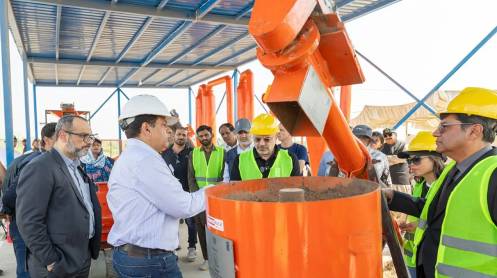
ISLAMABAD: Pakistan’s first biomass energy demonstration plant has become operational in Sujawal, Sindh, marking a significant step towards promoting renewable energy, supporting rural livelihoods and reducing greenhouse gas emissions.
Thank you for reading this post, don't forget to subscribe!Located in Pinnah Reserved Forest, the facility has been established under the Global Environment Facility (GEF)-funded Promotion and Application of Sustainable Biomass Energy Technologies in Pakistan (PASBET) project. The initiative is being implemented by the United Nations Development Programme (UNDP) in partnership with the Ministry of Climate Change and Environmental Coordination.
The plant was jointly inaugurated by UNDP and the Sindh government, becoming the first of four demonstration facilities planned under the project to showcase scalable, woody biomass-based energy technologies.
PASBET is a five-year project worth $3.5 million, aimed at promoting sustainable biomass energy solutions across Sindh, Punjab, Balochistan and Khyber Pakhtunkhwa. The initiative seeks to improve rural energy access, reduce greenhouse gas emissions and minimise pressure on natural forest resources.
Speaking on the occasion, UNDP Resident Representative Dr Samuel Rizk said Pakistan did not have to choose between meeting rural energy requirements and protecting its forests, adding that locally available agricultural and forest residues could be converted into cleaner fuels, economic opportunities and sustainable energy solutions.
He emphasised that scaling up the model would require coordinated efforts by local communities, government institutions and markets.
According to UNDP, Pinnah Reserved Forest demonstrates how forest and agricultural residues can be utilised to generate economic opportunities through biomass pellet production, community nurseries and energy-efficient cookstoves.
The initiative is also expected to contribute to sustainable forest management and the expansion of indigenous plantations, while promoting cleaner and more efficient energy alternatives for rural communities.
Story by Amin Ahmed