
ISLAMABAD: Pakistan’s exclusion from the latest round of proposed US tariffs targeting 14 economies, including China, India, the European Union, Vietnam and Bangladesh, reflects sustained diplomatic and economic engagement with Washington, supported by growing commercial ties and private-sector initiatives, a senior Ministry of Commerce official has said.
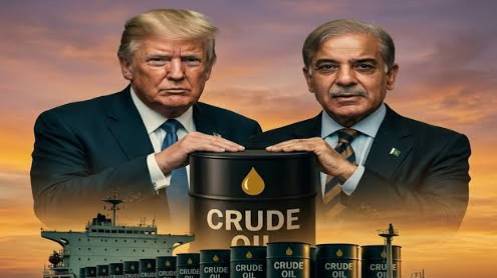
A key contribution has come from Cnergyico Pakistan Limited, the country’s largest oil refiner, which has emerged as a major private-sector contributor to reducing the bilateral trade imbalance through substantial imports of American crude oil.
Pakistan’s exports to the United States remain subject to the existing 10 per cent tariff, potentially providing local exporters, particularly in the textile and apparel sectors, with a competitive advantage over regional competitors. However, sustaining this advantage will require further expansion of bilateral trade and a predictable domestic policy environment.
According to the Commerce Ministry official, diplomatic engagement intensified after Washington announced a 29 per cent reciprocal tariff on Pakistani goods in April 2025, citing a US trade deficit of approximately $3 billion.
Prime Minister Shehbaz Sharif subsequently initiated bilateral negotiations involving the finance, commerce and foreign ministries.
A significant diplomatic breakthrough came in June 2025 when US President Donald Trump hosted Chief of Defence Forces Field Marshal Syed Asim Munir at the White House, where prospects for a bilateral trade partnership were discussed.
The negotiations resulted in a trade arrangement on July 31, 2025, reducing the announced tariff from 29 per cent to 19 per cent and creating opportunities for enhanced energy cooperation. Engagement continued in September when the prime minister and Field Marshal Munir jointly met President Trump at the White House.
Cnergyico Vice Chairman Usama Qureshi said Pakistan’s diplomatic and economic engagement had helped shift the focus of bilateral relations from aid towards trade, creating opportunities for the private sector to contribute through tangible commercial transactions, particularly US crude oil imports.
Cnergyico received Pakistan’s first-ever shipment of American crude oil in October 2025. The MT Pegasus, carrying crude from Houston, arrived at the company’s offshore single-point mooring (SPM) facility near Hub.
The facility is Pakistan’s only crude oil receiving infrastructure capable of accommodating both Suezmax and very large crude carriers (VLCCs).
During FY2025-26, Cnergyico imported approximately 7.1 million barrels of American crude oil worth $750 million. Between October 2025 and November 2026, its cumulative imports reached 10 million barrels of West Texas Intermediate (WTI) light sweet crude, valued at approximately $1 billion, according to company figures.
State Bank of Pakistan (SBP) data show that Pakistan’s import payments to the United States increased by 38.93 per cent to $3.265 billion in FY2025-26, compared with $2.350 billion in the preceding fiscal year.
Cnergyico’s reported crude purchases alone accounted for approximately 82 per cent of the increase in bilateral import payments.
Meanwhile, Pakistan’s exports to the US rose from $6.031 billion to $6.125 billion, while the country’s bilateral trade surplus narrowed by more than 22 per cent, declining from $3.68 billion to $2.86 billion. The surplus also decreased from 61 per cent to approximately 47 per cent of export receipts.
The growing significance of bilateral energy cooperation was further highlighted on November 6, when US Charge d’Affaires Natalie Baker, accompanied by members of the US Mission to Pakistan, visited Cnergyico’s refining complexes at Mouza Kund, Hub.
Cnergyico had planned to increase its American crude imports to at least 12 million barrels during the current fiscal year, targeting one million-barrel shipments every month. Disruptions around the Strait of Hormuz have further strengthened the case for diversifying Pakistan’s crude oil supply sources.
However, imports have remained below the planned level, with company officials attributing the shortfall primarily to domestic regulatory uncertainty and changes in petroleum product pricing mechanisms.
In April 2026, changes to the diesel pricing formula reportedly resulted in combined losses of approximately Rs24 billion for the country’s four refineries, according to industry estimates.
On October 31, the government revised the petrol pricing mechanism by linking imported petrol prices to the latest Pakistan State Oil (PSO) cargo costs, while keeping premiums, incidentals and customs duty components for local refineries frozen at their March 7, 2026 levels.
The refineries have jointly approached the petroleum minister, seeking withdrawal of the mechanism. They argue that the arrangement creates a levy differential of Rs49.02 per litre against locally produced petrol and violates commitments under the Brownfield Refining Policy.
Qureshi said the company remained interested in importing one US crude cargo every month, but frequent changes in domestic petroleum pricing regulations had created uncertainty for long-term commercial planning.
He stressed that consistent government policies were essential for refiners to commit to long-haul crude purchases and secure financing for refinery upgrades. He added that lenders were also reluctant to provide investment financing when the regulatory framework governing refinery margins could change without prior consultation.
Meanwhile, Cnergyico is seeking access to a proposed US Export-Import Bank (EXIM Bank) trade-financing facility to expand its purchases of American crude oil.
The company is also exploring $150 million to $300 million in foreign financing for its planned refinery upgrade, estimated to cost between $1.2 billion and $1.5 billion. Discussions have been held with US EXIM Bank, the US International Development Finance Corporation (DFC) and Middle Eastern lenders.
For Pakistan, expanding energy trade with the United States carries implications beyond refinery operations. It is increasingly linked to export competitiveness, energy security, foreign investment opportunities and the sustainability of the economic and trade gains achieved through high-level diplomatic engagement with Washington.
Story by Khalid Mustafa