
ANTALYA: Prime Minister Shehbaz Sharif has highlighted Pakistan’s rapid solarisation drive at the COP31 climate summit in Antalya, Türkiye, revealing that the country has added nearly 22 gigawatts (GW) of rooftop solar capacity in just two years through growing adoption by ordinary citizens.
Thank you for reading this post, don't forget to subscribe!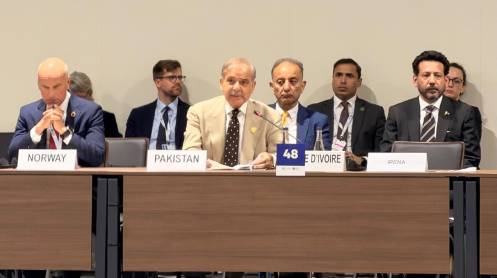
Addressing a high-level dialogue titled 35 by 35: Powering the Future on Wednesday, the prime minister described Pakistan’s solar expansion as an extraordinary transformation driven by households seeking affordable electricity, cleaner energy and greater protection from power price volatility.
“In just two years, Pakistan has added nearly 22 gigawatts of rooftop solar capacity — a quiet revolution by ordinary citizens seeking affordable power and a cleaner, more predictable future,” he said.
Shehbaz reaffirmed Pakistan’s support for the 35-by-35 Global Electrification Pledge, which aims to increase electricity’s share of total final energy consumption to approximately 35% by 2035, supporting the global transition towards cleaner energy systems.
Highlighting the country’s broader energy transition, the prime minister pointed to the recent inauguration of a key section of the Chashma-5 nuclear power project, which is expected to add 1,200 megawatts (MW) of electricity to Pakistan’s energy mix.
He also stated that clean energy sources now account for nearly 55% of Pakistan’s energy mix, reflecting the country’s growing shift towards renewable and low-carbon electricity generation.
The prime minister further highlighted progress in the transport sector, saying Pakistan’s newly drafted automobile policy supports the country’s target of making 30% of new vehicle sales electric by 2030 through incentives, including lower tariffs.
He announced that all future government buses and motorcycles would be electric, adding that electric motorcycles accounted for more than one in every 10 motorcycles sold in Pakistan for the first time this year.
However, Shehbaz cautioned that sustaining the clean energy transition would require substantial financial resources, modern infrastructure and affordable technology.
“The momentum is real and it is accelerating,” he said, while stressing that progress without adequate financing could not be sustained.
He called for rapid and reliable expansion of electricity grids, greater investment in energy storage and improved access to emerging technologies, noting that developing countries were already facing significant debt-related financial constraints.
According to the prime minister, Pakistan requires approximately $138 billion by 2035 for low-carbon power development, along with an additional $50 billion to replace coal-based power generation with solar energy.
He stressed that achieving the 35-by-35 target would depend on the availability of concessional financing, affordable technology and stronger international cooperation.
“Let us resolve to power our economies without impoverishing our people and light up our homes without darkening our planet,” he said, urging countries to translate their climate commitments into practical action.
The prime minister also thanked Turkish President Recep Tayyip Erdoğan for convening the high-level dialogue and bringing world leaders together to discuss the future of clean energy.
Pakistan Seeks Stronger International Climate Cooperation
During the summit, Shehbaz also emphasised the need for enhanced global climate action, stronger disaster preparedness and predictable, adequate and accessible climate financing for developing countries.
According to the Prime Minister’s Office, Pakistan has established a dedicated pavilion at the COP31 venue, hosting 54 events covering various climate, energy and sustainability themes.
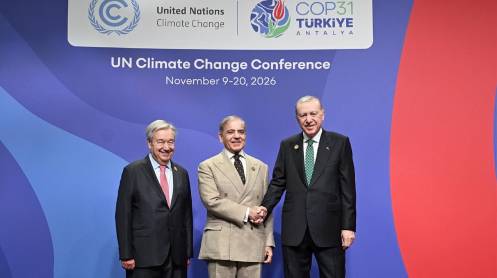
The prime minister also held meetings with several international leaders, including Iranian President Masoud Pezeshkian and Kuwait’s Prime Minister Ahmad Al-Abdullah Al-Ahmad Al-Sabah, discussing bilateral cooperation, regional developments and international challenges.
He also met Palestinian Prime Minister Mohammad Mustafa and expressed Pakistan’s solidarity with the Palestinian people.
Global Climate Action Faces Growing Challenges
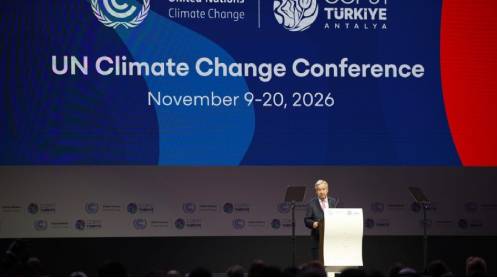
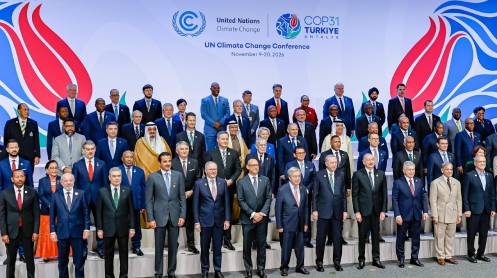
The COP31 summit is taking place against a backdrop of rising global temperatures, extreme weather events, geopolitical tensions and economic uncertainty. Delegates from nearly 200 countries are seeking progress on clean energy, electrification, climate finance and the transition away from fossil fuels.
UN Secretary-General António Guterres warned world leaders that the climate crisis was advancing faster than international efforts to address it, urging governments to strengthen their commitments and accelerate implementation.
“The brutal truth is that the climate crisis is outrunning us. This is the path to mutually assured destruction,” Guterres said, calling for stronger action to protect future generations.
Turkish President Recep Tayyip Erdoğan also highlighted the environmental consequences of armed conflicts, describing the destruction in Gaza as both genocide and ecocide.
Meanwhile, discussions at COP31 have exposed continuing differences between developed and developing countries over climate finance. Developing nations are demanding greater financial support to strengthen climate resilience, adapt to extreme weather and accelerate their transition towards cleaner energy.
As host Türkiye promotes the 35-by-35 electrification initiative, questions remain over how countries will ensure that increased electricity consumption is supported by clean generation and accompanied by meaningful reductions in fossil fuel dependence.
For Pakistan, the prime minister’s remarks highlighted the growing role of rooftop solar, nuclear power, electric mobility and international climate finance in shaping the country’s future energy landscape.