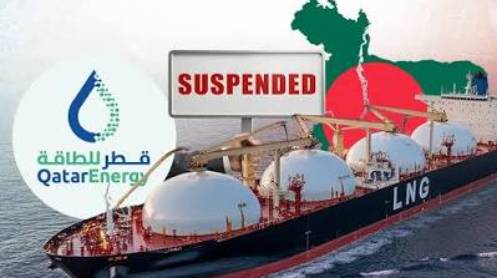
MILAN: QatarEnergy has extended force majeure notices on liquefied natural gas (LNG) deliveries, with Italian utility Edison and several Asian buyers, including customers in Bangladesh and Pakistan, facing further disruptions as the Strait of Hormuz remains closed.
Thank you for reading this post, don't forget to subscribe!Edison, one of QatarEnergy’s largest European customers, said on Monday that it would not receive LNG cargoes until the beginning of December. The company’s latest extension follows a force majeure notice first issued in April after disruptions linked to the US-Iran war.
Two trading sources said QatarEnergy had also informed customers in Asia that force majeure notices would remain in effect until November. QatarEnergy did not immediately respond to requests for comment.
Qatar has emerged as one of the biggest economic casualties of the Iran conflict, with its LNG exports falling by 96 per cent, according to a Reuters calculation at the end of August.
Data from energy intelligence firm ICIS showed that Qatar had exported only 18 LNG cargoes through the end of August, compared with 509 during the same period last year.
The prolonged disruption comes as the winter heating season approaches, forcing European buyers to seek alternative supplies to replenish gas storage ahead of the colder months. This is expected to intensify competition with Asian buyers for limited global LNG supplies and keep gas prices elevated.
Italy remains confident of meeting the European Union’s gas storage targets, but several other countries, including Germany, are accelerating efforts to replenish their reserves.
In a message posted on an Italian energy market platform, Edison said QatarEnergy would cancel another six LNG cargoes, bringing the total number of undelivered shipments to 35.
Edison, a subsidiary of France’s EDF, has so far replaced 23 of the missing cargoes, relying mainly on US suppliers to compensate for the shortfall from Qatar.
The continued closure of the Strait of Hormuz is therefore adding pressure to an already tight global LNG market, with European and Asian buyers competing for alternative supplies as the peak winter demand period approaches.
By Reuters