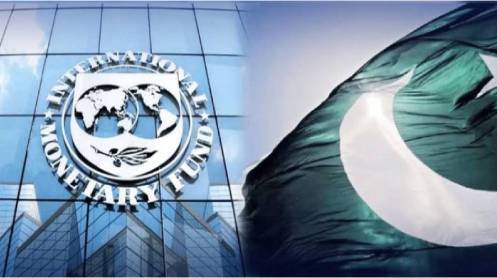
WASHINGTON: The Executive Board of the International Monetary Fund has approved the latest review of Pakistan’s economic reform programme, unlocking approximately $1.32 billion in financing under the ongoing Extended Fund Facility (EFF) and Resilience and Sustainability Facility (RSF).
The approval enables Pakistan to receive nearly $1.1 billion under the EFF and around $220 million under the RSF, bringing total disbursements under the two arrangements to about $4.8 billion.
Finance Minister Muhammad Aurangzeb welcomed the decision, describing it as a strong endorsement of Pakistan’s continued implementation of difficult but necessary economic reforms.
In a statement issued after the Executive Board meeting in Washington, the IMF acknowledged Pakistan’s “strong programme implementation,” noting that reforms had helped preserve macroeconomic stability and rebuild fiscal and foreign exchange buffers despite growing global uncertainty.
However, the Fund cautioned that escalating geopolitical tensions and the ongoing Middle East conflict posed significant risks to Pakistan’s economic outlook.
“The shocks emanating from the Middle East war underline the continued importance of maintaining strong policies and accelerating structural reforms to build resilience and achieve sustainable long-term growth,” the IMF said.
According to the Fund, Pakistan’s economy has shown signs of improvement under the programme. GDP growth has accelerated, inflation has generally remained under control despite recent pressures, and the current account remained broadly balanced during the first nine months of FY26.
The IMF noted that inflationary pressures had increased mainly due to the pass-through of higher international commodity prices into domestic energy tariffs, describing these adjustments as necessary to restore the financial viability of the energy sector.
Foreign exchange reserves also improved during the review period, reaching $16 billion by the end of December 2025, compared to $14.5 billion in June 2025. The IMF expressed confidence that reserves would continue strengthening over the medium term through sustained reforms and programme financing.
Following the Board meeting, IMF Deputy Managing Director and Acting Chair Nigel Clarke stressed the importance of maintaining tight macroeconomic policies while accelerating structural reforms.
“Pakistan needs to maintain strong macroeconomic policies while accelerating reform efforts, which are critical to managing external shocks and fostering higher sustainable medium-term growth,” Clarke said.
The IMF emphasised that fiscal consolidation should continue gradually, supported by stronger revenue mobilisation through expansion of the tax base and improved compliance. It also urged authorities to improve public financial management and spending efficiency.
The Fund said enhanced fiscal discipline would create space for greater social protection and investment in human capital, while also reducing economic vulnerabilities.
On monetary policy, the IMF praised the proactive stance of the State Bank of Pakistan in containing inflationary pressures and urged continued vigilance against second-round inflation effects.
The IMF further reiterated that exchange-rate flexibility should remain the economy’s primary shock absorber as Pakistan continues rebuilding external buffers.
Energy sector reforms remained a key focus of the programme. The Fund called for continued implementation of cost-reflective electricity, gas, and fuel pricing while ensuring targeted subsidies for vulnerable consumers.
“In an environment of high and volatile commodity prices, improvements in energy sector finances need to be sustained by keeping domestic fuel, electricity, and gas prices aligned with costs,” Clarke stated.
The IMF also underscored the need for continued reforms in governance, anti-corruption institutions, privatisation, and state-owned enterprises to improve competitiveness and reduce fiscal burdens.
Under the broader $7 billion, 37-month IMF programme, Pakistan has committed to sustaining a primary budget surplus of around 2 per cent of GDP, broadening the tax net, and pursuing reforms in under-taxed sectors including retail and agriculture.
An IMF mission is scheduled to visit Islamabad on May 15 to discuss Pakistan’s upcoming federal budget and review progress on structural reforms.
Analysts believe the IMF approval will provide short-term stability to financial markets while reinforcing investor confidence in Pakistan’s economic reform agenda and long-term fiscal sustainability.
Story by Anwar Iqbal