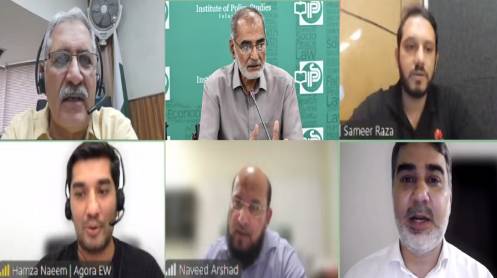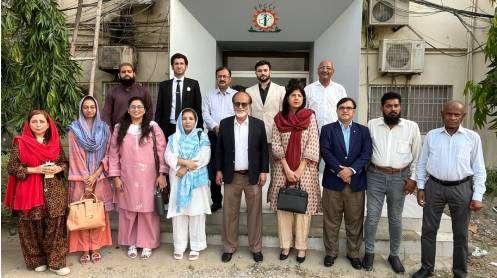
KARACHI: A strong call for urgent and enforceable action against deforestation and unchecked tree cutting echoed at a seminar held at Federation House, Karachi, where environmental experts, journalists, lawyers, and policy advocates expressed grave concern over Pakistan’s rapidly declining forest cover.
The seminar titled “Pakistan’s Vanishing Forests: From 5% to 3% — What’s Next?” was organized by the Central Standing Committee on Sustainable Development Goals (SDGs) of the Federation of Pakistan Chambers of Commerce and Industry (FPCCI) in collaboration with civil society stakeholders.
Participants unanimously warned that tree cutting in major cities such as Karachi and Islamabad has reached alarming levels, pushing the ecological system toward collapse. They demanded that environmental activists and NGOs should consider approaching courts and environmental tribunals against responsible authorities for negligence and destruction of green cover.
Speaking at the seminar, Muhammad Naeem Qureshi, Convener of the FPCCI Standing Committee and President of **National Forum for Environment & Health (NFEH), stated that Karachi’s green cover has dropped to nearly 2%, with an estimated more than 50,000 trees reportedly lost due to development projects. He further warned that Pakistan’s overall forest cover has declined from over 5% to nearly 3%, far below the international minimum benchmark of 25% required for ecological balance.
He urged Sindh Forest Department and the Sindh Environmental Protection Agency (SEPA) to take strict action against illegal tree cutting and hold responsible institutions accountable. He also appealed to provincial and city authorities including the Sindh Local Government Minister, the Mayor of Karachi, and the Commissioner Karachi to immediately halt deforestation activities.
Environmental expert Dr. Zainab Naeem, Fellow at SDPI, highlighted that Pakistan has experienced an 18% decline in forest cover since 1992. She warned that deforestation has intensified climate-induced disasters such as urban flooding, landslides, glacial lake outburst floods, and extreme weather events. She added that Pakistan loses more than 11,000 hectares of forest annually and emphasized the need for indigenous tree plantation and better inter-agency coordination.
Senior lawyer Muhammad Hassan Qureshi termed large-scale tree cutting as “environmental terrorism,” arguing that its impacts on biodiversity, human health, and climate resilience are devastating and irreversible.
Tariq Ali Nizamani, Managing Director of the Sindh Solid Waste Management Board, shared ongoing initiatives to convert organic waste into compost in collaboration with educational institutions and communities to promote urban gardening and plantation.
Environmental expert Rafi ul Haq noted the lack of comprehensive scientific forest data in Pakistan but stressed consensus among stakeholders on the urgency of immediate intervention.
Journalist Shabina Faraz called for awareness programs for youth and children and proposed the use of artificial intelligence and satellite technology for forest monitoring. She also demanded a strict ban on single-use plastic bags.
Speakers collectively stressed that symbolic observance of environmental days is no longer sufficient, and practical enforcement mechanisms are urgently required. Deputy Convener of the FPCCI committee Abdul Rahman emphasized stronger institutional accountability, while Islamabad Deputy Convener Khawaja Sheeraz Ali proposed a youth-led nationwide movement for forest protection and expansion.
The seminar concluded with a consensus that deforestation must be treated as a serious environmental crime, requiring immediate legal, administrative, and civic action across Pakistan.