ISLAMABAD: The government is intensifying efforts to persuade Chinese Independent Power Producers (IPPs) operating under the China-Pakistan Economic Corridor framework to sign renegotiated settlement agreements, similar to those accepted by other IPPs, in order to unlock the remaining amount from a Rs1.225 trillion financing facility arranged through commercial banks.
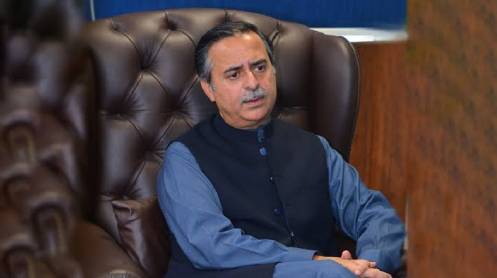
According to informed sources, the National Energy Task Force — headed by Federal Minister for Power Sardar Awais Ahmed Khan Leghari and comprising Adviser to the Prime Minister on Privatisation and Lt Gen Zafar Iqbal — has finalised its recommendations regarding a proposed settlement mechanism for Chinese power producers.
Sources revealed that the Central Power Purchasing Agency-Guaranteed (CPPA-G) currently owes more than Rs560 billion (approximately $2 billion) to Chinese IPPs, compared to Rs430 billion outstanding as of June 30, 2025. The increase in liabilities has largely been attributed to delays in payments caused by the government’s financial constraints.
Chinese power companies are reportedly raising the issue of unpaid dues through multiple channels, including the CPEC Secretariat, while urging Pakistani authorities to expedite payments.
Officials said the government has asked Chinese IPPs to utilise the Rs1.225 trillion circular debt retirement facility to clear their receivables. However, the projects are resisting the move because the arrangement requires them to sign revised agreements and offer discounts on outstanding claims, similar to concessions accepted by other IPPs.
Earlier, the government released around Rs100 billion to nearly 16 Chinese power projects, including coal-fired plants, ahead of Prime Minister Shehbaz Sharif’s visit to China in August 2025. However, authorities are reportedly reluctant to continue such ad hoc payments without a broader settlement framework.
The Rs1.225 trillion loan facility, arranged through 18 commercial banks, was designed to reduce Pakistan’s mounting circular debt, which currently stands at approximately Rs1.8 trillion. Despite this, a significant portion of the financing remains undistributed because CPEC-related IPPs have not agreed to proposed payment discounts.
According to insiders, the federal cabinet has already decided that no payments from the facility can be disbursed unless Chinese IPPs agree to revised settlement terms.
The government is reportedly considering two options: renegotiating payment agreements with CPEC projects or proceeding with payments under existing contracts if stakeholders agree to provide concessions.
During a recent hearing at the National Electric Power Regulatory Authority (NEPRA), CPPA-G Chief Executive Officer Rihan Akhtar stated that delays in disbursement of the banking facility had contributed significantly to the growth in circular debt.
Meanwhile, the Chief Executive Officer of Port Qasim Electric Power Company reportedly wrote to the finance minister expressing serious concern among Chinese and Qatari shareholders regarding mounting unpaid dues. The company warned that under Section 9.10 of its Power Purchase Agreement, it could suspend operations without liability for liquidated damages if receivables continue to rise.
Sources indicated that most Chinese IPPs established under the CPEC framework are now actively pressing authorities for payments so they can transfer returns to their shareholders abroad.
According to the International Monetary Fund, Pakistan’s circular debt had reached approximately Rs1.764 trillion in early 2026, prompting the government to commit to major power-sector reforms under its IMF programme.
These reforms include regular tariff adjustments, gradual withdrawal of untargeted subsidies, conversion of circular debt into CPPA-G liabilities, and additional surcharges aimed at retiring the debt stock.
While the measures are intended to improve the financial sustainability of the power sector, analysts warn that they may increase short-term affordability pressures on electricity consumers.
Story by Mushtaq Ghumman