ISLAMABAD: The government has sought approval from the National Electric Power Regulatory Authority (Nepra) for the Integrated System Plan (ISP) 2025–35, valued at over USD 53 billion, without third-party validation — triggering concerns over potential electricity tariff increases and criticism from industry stakeholders.
The two-day public hearing, chaired by Nepra Chairman Waseem Mukhtar alongside Member (Tariff & Finance) Amina Ahmed and Member (Development) Maqsood Anwar Khan, also saw notable absences of representation from Sindh and Balochistan.
Officials from the Independent System and Market Operator (ISMO) and the Private Power and Infrastructure Board/PPMC presented the plan and responded to queries raised by the regulator.
The ISP 2025–35 includes the Indicative Generation Capacity Expansion Plan (IGCEP) 2025–35 and the Transmission System Expansion Plan (TSEP) 2024–34. It is designed around objectives of affordability, reliability, energy security, and sustainability, based on projected electricity demand growth of 2.6 per cent.
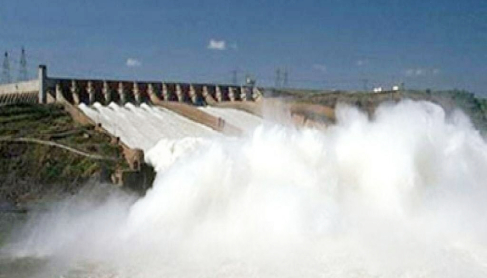
Under the plan, projects are categorised as “committed” if they meet specific financial or physical progress benchmarks or have achieved financial close. The Diamer Bhasha hydropower project has been included as a strategic initiative.
The framework applies a Least-Cost, Least-Violation (LCLV) approach, while also factoring transmission costs into generation project economics. It assumes around 9,000 MW of additional net-metering capacity and includes 3,000 MW of market-based renewable energy additions against an 800 MW demand baseline.
Certain power plants located near load centres have been designated as “must-run” during summer months until 2027–28 due to transmission constraints. Meanwhile, contractual minimum dispatch obligations remain in place for several RLNG and gas-based plants, extending in some cases up to 2032.
Officials informed the hearing that the power purchase price (PPP) is expected to rise to Rs37.28 per kWh from the current Rs25 per kWh. However, they argued the net impact on consumers would be contained at around Rs4 per unit.
Industry representatives strongly disputed this assessment, warning that electricity tariffs could surge up to Rs70 per unit if costly capacity additions continue under the new plan, potentially undermining industrial competitiveness and triggering broader economic stress.
They urged authorities to prioritise least-cost generation options to prevent tariff escalation and avoid further burdening consumers.
Nepra Member (Tariff & Finance) Amina Ahmed questioned the exclusion of certain previously classified projects from the updated plan, seeking clarity on the revised selection criteria.
Responding to queries, officials stated that some projects were dropped due to failure to meet required “committed” status conditions. They also acknowledged that the transmission expansion plan does not fully align with distribution company requirements but said gaps would be addressed in upcoming revisions.
Authorities further revealed that out of an initial 26,000 MW project pipeline, 17,485 MW were selected after extensive consultations held across 62 meetings, including 30 chaired by the Power Minister, reportedly resulting in estimated savings of Rs300–400 billion.
On regional supply, officials said electricity flows to K-Electric from the national grid are planned to increase to 3,000 MW by 2028 through new transmission infrastructure, though they admitted such projects often face implementation delays.
Regarding the Diamer Bhasha Dam, they clarified that only the power generation component cost will be recovered through tariffs, while the reservoir component will be financed through the Public Sector Development Programme (PSDP).
By Mushtaq Ghumman