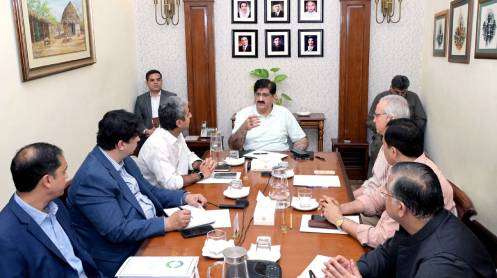
ISLAMABAD: The National Assembly Standing Committee on Power on Tuesday approved two major amendments to electricity-related laws without debate, aiming to streamline decision-making, support market liberalisation, and facilitate the launch of a competitive business-to-business (B2B) electricity market.
The meeting, chaired by MNA Sheikh Aftab Ahmed in the absence of Committee Chairman Muhammad Idrees, approved the proposed changes after brief proceedings, with lawmakers describing the amendments as procedural in nature.
The Power Division presented two legislative proposals: the Regulation of Generation, Transmission and Distribution of Electric Power (Amendment) Bill, 2026 and the Electricity (Amendment) Bill, 2026.
According to the Power Division, the amendments to the 1997 Act are designed to align the legal framework with ongoing structural changes in the power sector. A key modification replaces references to the “federal government” with “appropriate authorities” to improve administrative efficiency and reduce procedural delays.
The reforms also support open access and wheeling arrangements, enabling bulk electricity consumers to shift suppliers more easily. In this regard, the notice period required for consumers to discontinue power procurement has been reduced from one year to two months, a move intended to accelerate the rollout of a competitive B2B electricity market.
Officials said the existing notice requirement had become a barrier to market liberalisation and no longer reflected current sector dynamics. The amendments further update terminology by replacing “distribution company” with “supplier of last resort,” reflecting the post-2018 separation of supply and distribution functions.
Separately, amendments to the Electricity Act, 1910, aim to reassign certain powers from the federal government to relevant administrative authorities. These include dispute resolution mechanisms related to electric supply lines and designation of officials for routine correspondence.
The Power Division said the changes are intended to remove procedural bottlenecks, clarify institutional responsibilities, and ensure that operational matters are handled at appropriate administrative levels, allowing policymakers to focus on broader strategic issues.
During the session, MNA Raja Qamarul Islam noted that the amendments were largely procedural and did not warrant detailed debate. The committee subsequently approved both legislative proposals unanimously.
Story by Mushtaq Ghumman