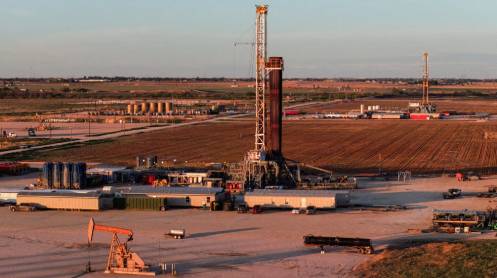
Pakistan’s hydrocarbon sector showed improvement in 2025 as a series of new oil and gas discoveries boosted reserves and helped extend the country’s overall reserve life, partially offsetting ongoing production declines.
According to data released by Arif Habib Limited, Pakistan’s total hydrocarbon reserve life increased to 17 years as of December 2025, supported by gains in both oil and gas reserves driven largely by fresh exploration activity.
The brokerage report stated that gas reserve life rose to 18 years, while oil reserve life improved to 11 years, reflecting a positive shift in the country’s energy balance.
Pakistan’s oil reserves increased 6% year-on-year to 253 million barrels, primarily due to a major addition of 21.01 million barrels from Baragzai, along with contributions from the Bettani and Shahdadpur fields.
Meanwhile, gas reserves rose 4% year-on-year to 18,854 billion cubic feet (Bcf), driven by discoveries and expansions at Mari Ghazij, Shahdadpur, Shewa, and Bettani, as well as additional volumes from Baragzai, Spinwam, and Soho fields.
The report highlighted that newly discovered fields including Spinwam, Baragzai, Bitrism East, Chakar, and Faakir collectively contributed 23.8 million barrels of oil and 367.2 Bcf of gas to national reserves by December 2025.
Energy experts described the development as a positive sign for Pakistan’s energy security, particularly at a time when global geopolitical tensions—especially the ongoing US-Iran conflict—pose risks to energy markets and supply chains.
Pakistan remains heavily dependent on imported crude oil, refined petroleum products, and LNG, much of which is sourced from Gulf countries and transported through the Strait of Hormuz, a critical global energy route. Any disruption in this corridor could significantly impact import-dependent economies such as Pakistan.