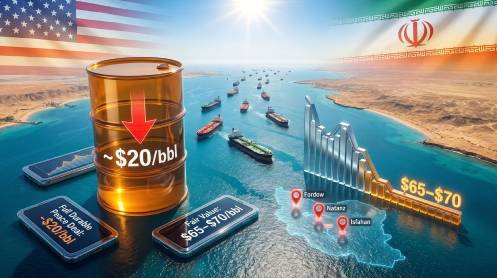
LONDON: Oil prices edged higher on Friday as uncertainty deepened over the durability of a reported US–Iran truce, following the cancellation of peace talks in Switzerland and renewed geopolitical tensions in the Middle East.
By 0645 GMT, Brent crude futures rose 51 cents, or 0.64%, to $80.36 per barrel, while US West Texas Intermediate (WTI) gained $1.28, or 1.7%, to $77.88 per barrel. The front-month July WTI contract is set to expire on Monday. Despite the uptick, both benchmarks were on track for a weekly decline of around 8%.
The more actively traded August WTI contract was up 59 cents at $76.44 per barrel.
Market sentiment weakened after Switzerland announced that scheduled US–Iran negotiations aimed at solidifying a peace arrangement would not take place on Friday. The development followed the withdrawal of US Vice President JD Vance from the planned talks, adding to uncertainty over the stability of the tentative agreement.
Analysts said the fragile geopolitical situation continues to weigh on market confidence.
“Prices may have bottomed out and we may see a renewed climb accompanied by volatility as cracks have already emerged in the agreement,” said Vandana Hari, founder of Vanda Insights. She added that the situation has not yet restored confidence in the normalisation of shipments through the Strait of Hormuz.
Oil prices had earlier fallen to their lowest level since early March after reports that several tankers, including Saudi-flagged vessels carrying millions of barrels of crude, successfully passed through the Strait of Hormuz following the interim understanding between Washington and Tehran.
Analysts estimate that the deal could release more than 85 million barrels of oil currently held in storage across the Middle East Gulf, while a potential easing of US sanctions on Iranian crude could further increase global supply.
However, traders remain cautious, awaiting clear evidence that shipping routes through the Strait of Hormuz are fully stabilising before positioning for further price declines.
The Strait of Hormuz, a critical global energy chokepoint, accounts for nearly one-fifth of global oil and liquefied natural gas (LNG) shipments, making it highly sensitive to geopolitical developments.
Adding to supply-side expectations, regional producers signaled a gradual return to normal operations. Kuwait Petroleum Corp lifted all force majeure notices issued during the conflict, while Iraq announced plans to restore oil production to pre-crisis levels.
Despite easing tensions in parts of the region, continued Israeli military activity in Lebanon has raised concerns over the sustainability of the fragile diplomatic progress.
Market analysts warn that renewed instability could quickly reverse recent gains in global supply confidence, keeping oil prices volatile in the near term.
By Reuters