Washington / New York / Paris / Geneva / Abu Dhabi: Despite significant advances in renewable energy and clean technologies, 655 million people worldwide still lack access to electricity, while nearly two billion people continue to rely on polluting fuels and technologies for cooking, underscoring the urgent need for accelerated action to achieve universal energy access by 2030.
These findings are highlighted in the latest Tracking SDG 7: The Energy Progress Report, which presents new data for 2023 and 2024. The report warns that progress toward Sustainable Development Goal (SDG) 7—ensuring access to affordable, reliable, sustainable and modern energy for all—is falling behind schedule.
Sub-Saharan Africa continues to face the greatest challenge, with more than 560 million people lacking electricity and 970 million without access to clean cooking solutions. While most regions are approaching universal electricity access, progress in Sub-Saharan Africa has slowed considerably, requiring the pace of electrification to triple if the 2030 target is to be met.
Renewable Energy Shows Strong Momentum
The report highlights encouraging progress in renewable energy deployment. Renewable sources now account for more than 30 percent of global electricity generation, while renewable energy generation capacity reached a record 544 watts per person globally.
International public financial support for clean energy in developing countries increased slightly to US$24.6 billion in 2024, while improvements in global energy efficiency reached 3.76 megajoules per US dollar of GDP. However, these gains remain insufficient to meet SDG 7 targets.
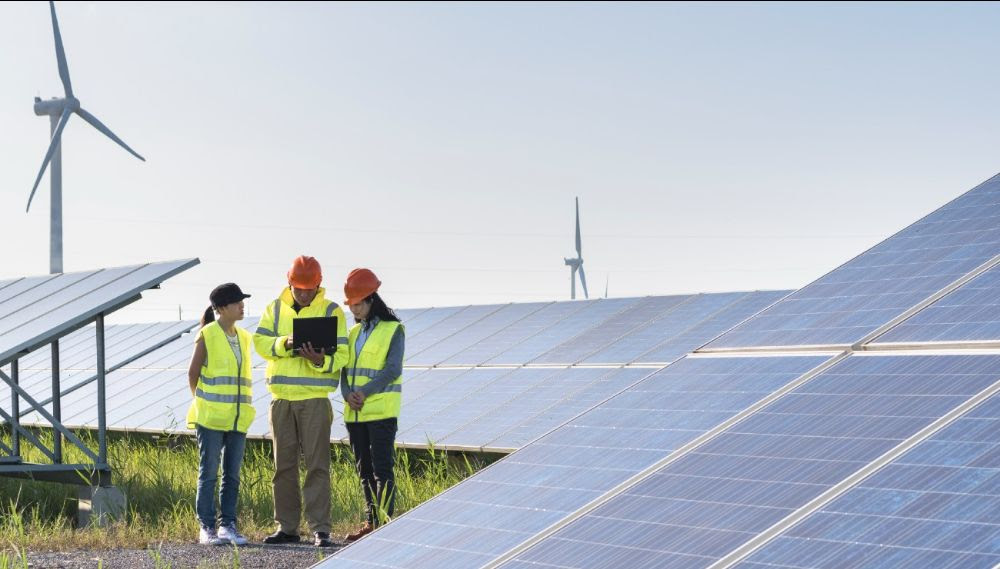
The report notes that expanding domestic renewable energy has become increasingly important for improving energy security, affordability, economic resilience and climate action. Off-grid solar systems and mini-grids are already providing affordable electricity to hundreds of millions of people, while electric cooking, bioethanol and biogas are emerging as scalable clean cooking solutions.
Affordability and Financing Remain Major Barriers
Despite infrastructure expansion, affordability continues to limit access to electricity. High connection charges, household wiring costs and the price of basic energy services prevent millions from benefiting from available electricity networks.
The report calls for targeted subsidies, innovative financing mechanisms and least-cost electrification strategies to ensure vulnerable communities are not left behind.
Financing remains another major obstacle. International public financial flows to the world’s least developed countries declined by 11 percent, falling to US$3.7 billion in 2024. Debt financing accounted for approximately 80 percent of total international clean energy finance, while grants represented just 13 percent, highlighting the need for more concessional funding.
Key Findings
- Electricity Access: Global electricity access remained stagnant at 92 percent in 2024. Annual progress has slowed sharply, with rural communities in Sub-Saharan Africa experiencing an increasing access gap. Universal electricity access by 2030 will require annual progress to accelerate to 1.3 percent.
- Clean Cooking: Around two billion people still lack access to clean cooking technologies. While 89 percent of urban residents have access, only 56 percent of rural populations benefit from clean cooking solutions. Without stronger action, 1.8 billion people could still depend on charcoal, firewood, kerosene and coal by 2030, contributing to nearly three million premature deaths annually from household air pollution.
- Renewable Energy: Renewables now provide over 30 percent of global electricity, although their contribution to heating and transport remains comparatively low. Significant disparities persist, with renewable generation capacity reaching only 33.6 watts per person in low-income countries compared to 1,224 watts per person in high-income economies.
- Energy Efficiency: Progress slowed from 2.4 percent in 2022 to 1.5 percent in 2023, well below the pace required to achieve global efficiency targets.
- Clean Energy Finance: International public finance for clean energy rose only marginally from US$24.4 billion in 2023 to US$24.6 billion in 2024, remaining far below investment needs.
Stronger Leadership Needed
The report emphasizes that stronger political commitment, improved cross-sector coordination and greater investment in the countries most at risk are essential to achieving SDG 7 by 2030. Governments are urged to accelerate renewable energy deployment, diversify national energy systems, reduce dependence on imported fossil fuels and strengthen resilience against global energy market disruptions.
Francesco La Camera, Director-General of the International Renewable Energy Agency (IRENA), said recent global energy shocks have demonstrated that countries with strong renewable energy capacity are better equipped to withstand economic and supply disruptions.
“Accelerating the deployment of cost-competitive domestic renewables must now be central to strengthening both energy security and economic resilience, while pursuing SDG 7. To achieve this, the international community must prioritise affordable and tailored financial support, particularly for least developed countries facing the greatest barriers to access,” he said.
The report will be officially presented to global policymakers during a special launch event on 8 July 2026, following the High-Level Political Forum on Sustainable Development in New York, where progress on SDG 7 will be reviewed.