ISLAMABAD: The Cabinet Committee on State-Owned Enterprises (SOEs) has rejected a request by Sui Northern Gas Pipelines Limited (SNGPL) and Sui Southern Gas Company Limited (SSGC) for exemption from international accounting and financial reporting standards, a move aimed at preventing the two gas utilities from being classified as financially insolvent.
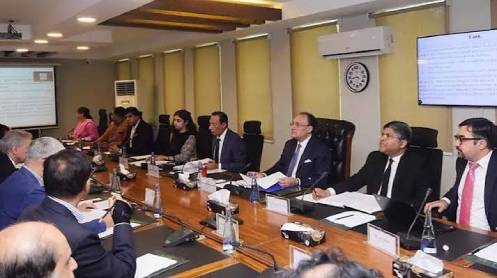
The committee, chaired by Finance Minister Muhammad Aurangzeb, directed the Petroleum Division to hold further consultations with the Finance Division and the Ministry of Law and Justice before submitting a revised proposal for reconsideration.
According to an official statement, the Petroleum Division had sought exemptions for selected energy-sector SOEs from the application of International Financial Reporting Standards (IFRS-9 and IFRS-14). Sources said similar exemptions had previously been granted for a three-year period.
During the meeting, the finance minister observed that granting such an exemption would be inconsistent with the provisions of the State-Owned Enterprises (Ownership and Management) Act, 2023. He stressed that the matter required comprehensive review, particularly in light of objections raised by the Finance Ministry’s Central Monitoring Unit (CMU), which oversees SOE governance under commitments linked to the International Monetary Fund (IMF) programme.
The two gas utilities are currently burdened with an estimated Rs3.44 trillion in gas-sector circular debt. Implementation of IFRS-9 and IFRS-14 would require them to recognize expected credit losses, impairments, and regulatory liabilities, potentially resulting in significant provisions against receivables that may never be recovered. Such adjustments could substantially erode the companies’ equity despite maintaining sufficient operational cash flows.
The Petroleum Division argued that the utilities should continue reporting under the previous Generally Accepted Accounting Principles (GAAP) framework, citing the regulated nature of their operations.
Under IFRS-9, financial assets and liabilities must be recognized based on business models, cash flow characteristics, and expected credit loss assessments. Meanwhile, IFRS-14 governs the reporting of regulatory deferral accounts for entities operating under regulated pricing mechanisms.
The CMU maintained that full compliance with these standards is essential to ensure transparency and accurate financial reporting under the SOEs Act. It also recommended that any outstanding receivables related to circular debt should be clearly disclosed through appropriate financial statement notes while the government finalizes a broader circular debt resolution plan with the IMF.
Board Appointments Reviewed
The committee also reviewed proposed appointments to the boards of Pakistan Petroleum Limited (PPL) and Saindak Metals Limited (SML). It rejected the nomination of two board members from the Petroleum Division, stating that the proposals did not align with established corporate governance principles.
However, it approved the remaining board appointments and directed that only one ex-officio representative from the Petroleum Division be nominated to each board. The revised nominations will be submitted to the federal cabinet for formal approval.
The committee reiterated that the composition of SOE boards must remain fully compliant with the State-Owned Enterprises (Ownership and Management) Act and Policy, which limits representation from the sponsoring ministry or division to a single ex-officio director on each board.
SMEDA Removed from SOE List
In a separate decision, the committee approved a proposal from the Ministry of Industries and Production to remove the Small and Medium Enterprises Development Authority (SMEDA) from the list of state-owned enterprises, recognizing its statutory and non-commercial mandate.
Story by Khaleeq Kiani