ISLAMABAD: South Korea’s state-owned Korea South-East Power Co. Ltd. (KOEN) has appealed directly to Prime Minister Shehbaz Sharif, alleging that nearly $1 billion worth of planned hydropower investments in Pakistan has been unfairly stalled due to prolonged regulatory delays.
In a letter addressed to the prime minister, KOEN President and CEO Kim Min Young expressed frustration over what he described as years of procedural delays despite the company fulfilling all regulatory and contractual requirements for its two hydropower projects in Khyber Pakhtunkhwa.
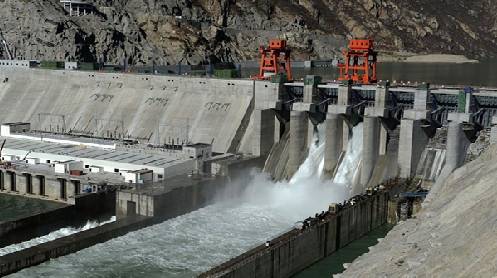
KOEN, a subsidiary of Korea Electric Power Corporation (KEPCO), has been developing the 229MW Asrit Kedam and 238MW Kalam Asrit run-of-the-river hydropower projects on the Swat River since 2016. The combined projects represent an estimated $1 billion investment, with the company already investing approximately $25 million in project development.
“We write to you today with the greatest respect, and with candour, because we no longer know where else to turn,” Kim wrote in the letter.
According to KOEN, the company signed a Memorandum of Understanding (MoU) with the Government of Khyber Pakhtunkhwa in 2017, secured Letters of Intent from the Pakhtunkhwa Energy Development Organization (PEDO), completed feasibility studies, maintained performance guarantees through June 2027, and obtained a generation licence from the National Electric Power Regulatory Authority (NEPRA) in June 2023.
The company said both projects were also included in the Indicative Generation Capacity Expansion Plan (IGCEP) 2022–31, and that it had complied with every requirement under Pakistan’s Power Generation Policy 2015.
However, KOEN said the projects remain stalled because NEPRA has yet to determine the tariff despite admitting the tariff petition in June 2023 and conducting a public hearing on July 17, 2023. Under NEPRA’s tariff rules, a determination is typically expected within four to six months.
“Three years have now passed since that hearing, and the tariff has still not been determined,” the company stated.
KOEN said it had repeatedly pursued the matter with NEPRA through written correspondence and personal meetings. In June 2024, it also appealed to the NEPRA Appellate Tribunal, which directed the regulator on July 23, 2024, to decide the tariff case. According to the company, that directive has yet to be implemented.
The company also objected to the exclusion of both projects from the draft IGCEP 2025–35, submitting formal objections during NEPRA’s public hearing and detailed post-hearing comments in May.
Responding to the issue, a NEPRA spokesperson said the projects had not been “optimised” under the draft IGCEP and therefore remained pending for consideration.
KOEN further revealed that South Korea’s Minister for Trade had raised the issue with Pakistan’s Commerce Minister in April, while a company delegation met Pakistani officials on June 30. The firm also acknowledged continued support from Pakistan’s Ministry of Foreign Affairs.
“Every one of these doors received us with courtesy. Not one has produced the decision,” Kim wrote.
The company warned that if the draft IGCEP 2025–35 is approved without including the two projects, its planned $1 billion investment could remain stranded indefinitely after nearly a decade of preparation.
While acknowledging Pakistan’s current surplus electricity generation capacity, KOEN said it was willing to synchronize the commercial operation dates of both projects with the country’s future power requirements.
The company urged the prime minister to ensure that the pending tariff determination is completed and that the projects continue to be processed under the Power Generation Policy 2015, under which the investments were originally initiated.
Pakistan and South Korea have been working to strengthen bilateral economic cooperation. In May, both countries agreed to advance negotiations on a Comprehensive Economic Partnership Agreement (CEPA) and enhance investment collaboration, following talks between Commerce Minister Jam Kamal Khan and South Korea’s Trade Minister Yeo Han-koo.
Story by Khaleeq Kiani