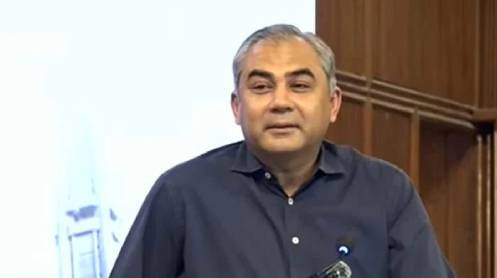
**ISLAMABAD:** Federal Interior Minister **Mohsin Naqvi** on Thursday called for a comprehensive overhaul of Pakistan’s governance system, including the creation of new administrative units or provinces, arguing that the country’s existing administrative structure is no longer capable of effectively addressing its political, economic and governance challenges.
Addressing Pakistan’s first **Economic Summit Conference** in Islamabad, Naqvi said many of the country’s problems have persisted for decades due to deep-rooted structural weaknesses in the administrative and political system. He stressed that meaningful progress would only be possible through consensus-based institutional reforms.
“I generally avoid political speeches, but today I must speak about politics,” he said. “The system we are living under has collapsed. If it continues in its current form, we will still be discussing the same problems 10 years from now.”
Naqvi urged all stakeholders—including political parties, state institutions, the business community and civil society—to work together within the democratic framework to reform the country’s governance structure.
He advocated greater decentralisation by establishing new administrative units or provinces to improve governance and public service delivery.
“Whether we call them administrative units or provinces, we have to move in that direction,” he said, adding that the proposal should be debated by political stakeholders and ultimately placed before the people for approval.
The interior minister argued that excessive centralisation has made governance inefficient, forcing citizens to travel long distances to access basic public services and legal remedies. Delegating administrative powers to lower tiers of government, he said, would accelerate decision-making and improve service delivery.
### Focus on economy and youth
Naqvi said Pakistan has the potential to generate billions of dollars in exports but bureaucratic hurdles and administrative inefficiencies continue to discourage investment and industrial growth. He urged the government to involve the business community more actively in policymaking, describing entrepreneurs as key partners in national development.
Highlighting the aspirations of Pakistan’s youth, he said young people seek merit-based employment, equal opportunities and access to justice rather than temporary financial assistance. He warned that growing frustration among the youth could have serious consequences if their expectations remain unmet.
Referring to Pakistan’s fiscal challenges, Naqvi said the country starts each financial year with structural budget deficits and rising debt.
“We prepare our budget knowing how much more we will have to borrow. Every year our debt increases. Unless we reset the system, there will be no real improvement,” he remarked.
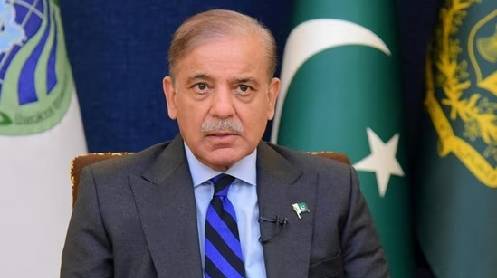
While acknowledging improvements in Pakistan’s international standing and progress in several sectors, Naqvi maintained that these achievements largely reflected crisis management rather than sustainable development. He also praised Prime Minister **Shehbaz Sharif** for his commitment, saying the premier’s efforts alone could not resolve the country’s structural governance issues without broader institutional reforms.
### Rules out political changes
Speaking separately to reporters, Naqvi said Pakistan’s economic and administrative challenges require long-term structural reforms rather than short-term policy measures.
He observed that even significant efforts by **Field Marshal Syed Asim Munir** and the military leadership would not produce lasting results unless politicians addressed the country’s governance deficiencies. He added that improvements in Pakistan’s foreign relations, including ties with the United States, would have limited impact without strengthening domestic institutions.
The interior minister said the military leadership remains committed to democratic continuity and emphasised that responsibility for implementing political and institutional reforms lies with elected leaders.
Rejecting political speculation, Naqvi ruled out any early change in the current political setup, reaffirming that the government would complete its constitutional term. He also dismissed reports of a presidential form of government, denied rumours of a cabinet reshuffle and said he would continue serving as interior minister.
He urged major political parties—including the **PML-N**, **PPP** and **PTI**—to rise above partisan politics and build consensus on governance reforms. Responding to a question regarding PTI founder **Imran Khan**, Naqvi said the matter is before the courts and should be decided by the judiciary.
Highlighting bureaucratic inefficiencies, he noted that official files often remain delayed at multiple levels within the Prime Minister’s Office and reiterated the need to decentralise administrative authority to improve efficiency.
Commenting on **Azad Jammu and Kashmir (AJK)**, Naqvi clarified that the region’s internal affairs fall under the jurisdiction of the AJK government.
### Hazara Province demand gains support
Meanwhile, leaders of the **Hazara Province Movement** welcomed Naqvi’s remarks, describing the creation of new provinces as essential for improving governance, ensuring equitable development and strengthening public service delivery.
Speaking at a meeting, **Federal Minister for Religious Affairs Sardar Muhammad Yousaf**, **Senator Talha Mahmood**, former federal minister **Murtaza Javed Abbasi** and the movement’s Central Coordinator **Professor Sajjad Qamar** reiterated their demand for a separate Hazara Province.
Sardar Yousaf said the demand originated in the Hazara region and recalled that seven people lost their lives during the movement. He added that the **Khyber Pakhtunkhwa Assembly** had passed resolutions supporting the creation of Hazara Province on three occasions, while related bills have already been introduced in both the National Assembly and Senate.
### President, interior minister review security
Separately, President **Asif Ali Zardari** and Interior Minister Mohsin Naqvi reviewed the country’s law and order situation during a meeting at **Bilawal House** in Karachi, with particular focus on security challenges in **Khyber Pakhtunkhwa** and **Balochistan**.
Naqvi briefed the president on ongoing counterterrorism measures and the prevailing security situation in both provinces. President Zardari paid tribute to the sacrifices and professionalism of the armed forces, law enforcement agencies and police, reaffirming the nation’s resolve to eliminate terrorism and ensure lasting peace.
Story by Shakeel Anjum & Muhammad Anis & Asim Yasin