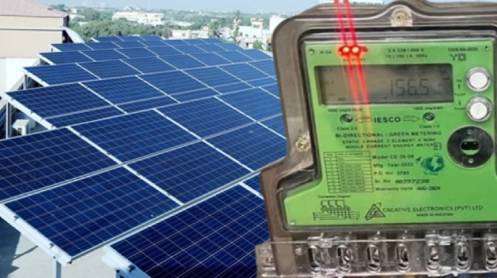
**ISLAMABAD:** Power Division Advisor **Syed Faizan Ali** has proposed the introduction of **Time-of-Use (ToU) net metering and net billing**, offering enhanced evening discharge rates of **Rs18–22 per kWh** between **5:00 pm and 10:00 pm** to encourage the deployment of Battery Energy Storage Systems (BESS) and reduce peak-hour electricity procurement costs.
The proposal comes as Pakistan’s annual evening peak electricity demand has surpassed **26,000 MW**, highlighting the growing need for energy storage solutions to support grid stability.
The recommendation is part of Faizan’s market intelligence report, **“Li-Ion Battery & BESS Import Analysis 2024–26,”** based on 30 months of customs transaction data covering **January 2024 to June 2026**. The report concludes that Pakistan’s battery energy storage market has reached a historic turning point, driven by rapid growth in lithium-ion battery imports and increasing adoption across residential, commercial, industrial, and utility-scale sectors.
According to the report, Pakistan imported **6.004 GWh** of lithium-ion batteries under **HS Code 8507.6000** during the review period, valued at approximately **Rs126 billion (USD 454.7 million)**. Monthly imports surged by **1,640%**, rising from **42 MWh in January 2024** to a record **652.2 MWh in April 2026**. The country’s annualised import run rate now stands at approximately **5.86 GWh**, placing Pakistan among the world’s fastest-growing emerging BESS markets.
The report attributes the rapid market expansion to rising demand for energy independence, accelerated by regional energy disruptions linked to geopolitical tensions in the Middle East. It also notes a structural shift from export-oriented rooftop solar installations to **self-consumption-focused solar-plus-storage systems**, following revisions to Pakistan’s net metering framework finalised in **February 2026** after NEPRA issued draft prosumer regulations in **December 2025**.
The telecom sector has emerged as a significant driver of demand. **CMPAK Limited** became the largest single-month telecom BESS buyer by importing **3,512 ZTE and Huawei lithium backup batteries**, equivalent to **9.6 MWh**, reflecting the industry’s transition from traditional VRLA batteries to lithium iron phosphate (LFP) technology.
Utility-scale adoption has also accelerated, with **containerised BESS projects of 1 MWh and above accounting for over 252 MWh across 19 installations**, indicating a shift from pilot projects to large-scale deployments. Meanwhile, **11–20 kWh commercial rack-mounted battery systems** now represent **35% of total 2026 imports**, compared with just **1% in 2024**, driven by products such as Dyness PowerBrick and Pylontech. The residential **3–6 kWh** segment continues to account for the largest share of battery module volumes at **39%**.
Average monthly imports during **January–June 2026** reached **413 MWh**, approximately **6.6 times higher than the 2024 average** and more than **double the 2025 average**, demonstrating sustained market momentum.
Despite this rapid growth, the report warns that Pakistan lacks essential regulatory safeguards. The country currently imports BESS at an annualised rate exceeding **5 GWh** without mandatory product safety standards, comprehensive grid interconnection regulations, or defined tariffs for storage-based grid services.
Faizan stressed that introducing a **Time-of-Use net metering and billing mechanism** would encourage consumers to discharge stored electricity during evening peak hours, transforming distributed battery storage into an active grid resource capable of reducing system costs.
He also recommended establishing a **national battery registration and monitoring framework** to enable utilities to track installed storage capacity, geographic distribution, and operational performance. Such visibility, he noted, would improve demand forecasting, network planning, and optimisation of distributed and utility-scale battery investments.
The report further cautions that falling battery prices, combined with widespread rooftop solar adoption, could encourage partial grid defection by commercial, industrial, and high-income residential consumers, potentially reducing utility revenues and increasing tariffs for remaining consumers. A forward-looking regulatory framework is therefore needed to ensure distributed storage remains integrated with the national grid by enabling services such as **peak shaving, demand response, voltage support, and congestion management**.
To support the sector’s long-term growth, the report recommends a comprehensive policy package, including:
* Zero-duty classification for BESS components under the national HS schedule.
* Competitive multi-megawatt BESS tenders between **2025 and 2028**.
* Grid interconnection standards aligned with **IEC and IEEE** benchmarks.
* Mandatory compliance with **IEC 62619** battery safety standards.
* Establishment of a national BESS registry.
* Mobilisation of **USD 500 million** in concessional financing through the **State Bank of Pakistan**, **World Bank**, **Asian Development Bank (ADB)**, and **KfW**.
The report also proposes developing a battery technology policy under **CPEC** to promote local assembly of lithium iron phosphate cells and battery management systems, targeting **500 MWh of annual domestic manufacturing capacity by 2028**. Additionally, it recommends introducing an **Extended Producer Responsibility (EPR)** framework to ensure environmentally responsible recycling and disposal of batteries as Pakistan’s installed storage capacity approaches **10 GWh**.
Story by Mushtaq Ghumman