Policy Uncertainty Could Slow Pakistan’s EV Momentum
**ISLAMABAD:** Pakistan’s drive towards cleaner and more energy-efficient transportation could lose momentum if uncertainty surrounding the country’s automotive policy persists, with industry stakeholders and policy experts urging the government to ensure continuity and predictability as the automobile market begins to recover.
Experts believe the next automobile policy should be closely aligned with the **National Electric Vehicle (NEV) Policy 2025-30** to ensure consistency in incentives, investment decisions and implementation timelines.
They stressed that a stable policy environment is essential not only for consumers but also for investors planning local assembly and manufacturing projects, where investments typically require several years to mature.
Danish Khaliq, Vice President Sales and Strategy at BYD, said policy certainty was particularly important for consumers making major financial commitments such as purchasing a vehicle.
“Purchasing a vehicle is one of the most significant financial decisions a person makes, and buyers need certainty to make that decision with confidence,” Khaliq said.
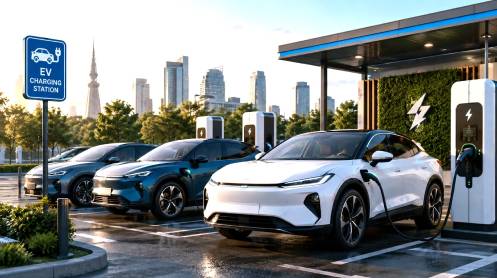
He noted that Pakistan’s automotive industry had worked over the past three years to rebuild market confidence, with the growing adoption of electric vehicles and other new-energy vehicles (NEVs) contributing significantly to the recovery.
According to Khaliq, EVs and NEVs offer consumers substantial value through advanced technology, lower fuel costs and improved product quality, making them an increasingly attractive mobility option.
“However, prolonged uncertainty around the auto policy risks slowing this momentum by causing consumers to postpone their purchase decisions,” he cautioned.
He added that a clear, consistent and forward-looking policy framework would strengthen consumer confidence, support sustainable industry growth and accelerate Pakistan’s transition towards more affordable and energy-efficient mobility.
Policy experts also emphasised that long-term predictability is critical for investors considering local manufacturing and assembly. While automotive policies need to evolve in response to technological developments and changing market conditions, they said proposed incentives and regulatory measures should provide investors with sufficient visibility over the long term.
Experts further suggested that any major policy changes should be preceded by an assessment of their potential impact on existing investments as well as projects under consideration, rather than being introduced through abrupt shifts in policy direction.
The call for greater policy clarity comes as the government reviews the future direction of Pakistan’s automobile policy, with stakeholders urging policymakers to maintain consistency with the country’s broader NEV targets and provide a stable environment for the continued growth of electric mobility.