# DISCO Buyers Seek Dollar Returns, Strong Guarantees in Privatisation Push
**ISLAMABAD:** Prospective buyers of three power distribution companies (DISCOs) have sought **foreign-currency-linked returns, sovereign guarantees and stronger contractual protections** as the government moves ahead with the first phase of DISCO privatisation.
Investors have also demanded greater flexibility in electricity procurement, longer tariff control periods and safeguards against future governments or courts reopening existing commercial agreements.
Officials familiar with the discussions said several demands stem from investor concerns over the government’s past handling of commercial contracts, weak regulatory capacity and uncertainty surrounding the power sector’s legal and judicial framework.
However, demands such as guaranteeing profits in US dollars or exempting privatised DISCOs from purchasing expensive electricity from Independent Power Producers (IPPs) are considered difficult to accept because of their potential impact on consumers and the wider economy.
The government, meanwhile, is willing to address genuine investor concerns, particularly those relating to the regulatory and market framework after privatisation.
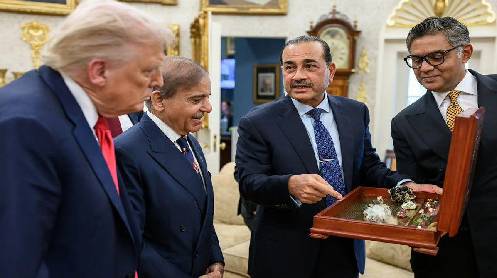
The investors’ feedback has been shared with Prime Minister **Shehbaz Sharif**, who has directed the Privatisation Commission to develop a transparent, predictable and rule-based post-privatisation regime.
### Three DISCOs in First Phase
The government has initiated the privatisation process for **Faisalabad Electric Supply Company (FESCO), Gujranwala Electric Power Company (GEPCO) and Islamabad Electric Supply Company (IESCO)**.
Around **12 investors**, including four foreign parties, have expressed interest in the process. Officials said some investors have indicated an interest in acquiring 100% ownership of FESCO and GEPCO.
The investors have demanded protection against the reopening or renegotiation of contracts outside agreed control periods, citing the government’s previous decision to renegotiate IPP agreements.
They have also called for stronger regulatory institutions, effective enforcement of service-level agreements and timely tariff adjustments by the **National Electric Power Regulatory Authority (NEPRA)**.
A key concern is that future governments or courts could alter or reduce tariffs agreed as part of the privatisation process.
To address this risk, the financial adviser has recommended seeking **political-risk guarantees from multilateral institutions** and incorporating contractual safeguards against reopening agreements into transaction documents.
### Investors Seek Power Procurement Flexibility
Another major demand concerns electricity procurement.
Prospective buyers want greater freedom to purchase and sell electricity competitively and are reluctant to remain obligated to procure expensive power from certain IPPs under existing government commitments.
Officials said completely exempting DISCOs from these purchase obligations would be difficult because if the government stops purchasing the contracted electricity, it would still have to meet capacity payment obligations to generation companies.
Some prospective bidders also own power generation facilities and have sought licences allowing them to both purchase and sell electricity.
Investors have further argued that the existing **five-year tariff control period** is too short to justify large, long-term investments. They have proposed extending the period to **seven to 10 years**.
### Push for Performance-Based Tariffs
Investors have also questioned the existing uniform tariff structure, proposing that tariffs should instead reflect the performance and efficiency of individual DISCOs.
Under the current system, consumers in relatively efficient utilities such as FESCO can face the same base electricity price as consumers in loss-making DISCOs such as Sukkur and Peshawar.
Bidders have also requested greater certainty over capital investment returns, investment-plan approvals and tariff determinations before submitting final bids.
They have sought timely reimbursement of government subsidies for consumers receiving subsidised electricity.
### Dollar-Linked Returns Under Review
Another major demand is an **inflation-adjusted guaranteed return on investment linked to foreign currency**.
Officials indicated that the government may consider inflation-adjusted returns but remains reluctant to link investor payments directly to the US dollar because of the potential implications for consumers, tariffs and the broader economy.
Investors have also sought unrestricted commercial use of DISCO-owned land and assets, including opportunities for **telecom towers, optical fibre networks and electric vehicle charging infrastructure**.
### Staffing and Legacy Liabilities
Prospective buyers want pension and legacy liabilities separated from the privatised entities. However, the Finance Ministry is reportedly reluctant to accept the proposal, maintaining that pension costs are already incorporated into the tariff structure.
Bidders have also sought full flexibility in hiring and firing employees, arguing that existing staffing levels are excessive, particularly following the rollout of **Advanced Metering Infrastructure (AMI)**.
Investors have opposed any prolonged restriction on workforce restructuring, while the government may impose a minimum **one-year moratorium on retrenchments**.
Meanwhile, public-sector enterprises’ debt and liabilities increased by **8.7% to Rs3.11 trillion** during the last fiscal year, according to central bank data, highlighting the broader financial pressures facing state-owned entities.
Officials of the Privatisation Commission said both local and foreign investors have shown strong interest in the DISCOs but stressed that bidders are seeking certainty over the regulatory framework, tariff regime, contractual protections and long-term returns before committing substantial capital.
The success of the privatisation process will therefore depend largely on the government’s ability to balance investor demands for commercial certainty with the need to protect consumers from additional tariff and foreign-exchange risks.
Story by Shahbaz Rana