From LNG to Thar coal Rethinking Pakistan’s Energy Transition

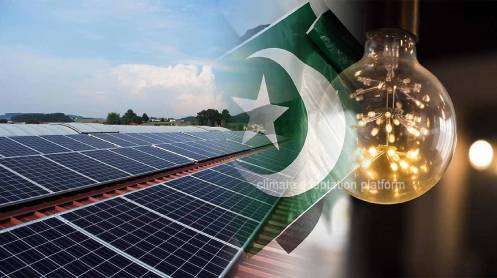
Pakistan’s future energy system will not be judged by whether it invested more in coal or more in renewables; it will be judged by whether it successfully managed three transitions at once: reducing dependence on imported LNG, harnessing the rapid growth of distributed solar, and using domestic resources such as Thar coal without undermining long-term competitiveness. By Dr Rubina Ilyas Pakistan’s energy transition is unfolding very differently from what many anticipated. While official policy continues to emphasize renewable energy and climate commitments, the country’s latest budget reveals a quieter but…

Read More

Turning the Tide on Power ShortagesWave Energy Can Boost Pakistan’s Power Capability

Solar-Energy

If Pakistan wants to achieve rapid socio-economic development in the 21st century, it must become self-reliant in electricity production. By Ayoub Hameed A World Bank’s Pakistan Energy Survey reports that 7.3 per cent of Sindh’s population lacks electricity, followed by 2.6 per cent in Balochistan, 1.0 per cent in Punjab, 0.4 per cent in Islamabad and 0.2 per cent in Khyber Pakhtunkhwa. It also found that only 3.0 per cent of households receive 16 hours of electricity daily, while 97 per cent fall into Tier 3 or below.Moreover, 7.3 per…

Read More

The most ambitious policy scenario

New-solar2

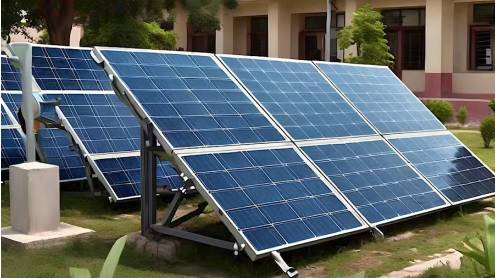
The rooftop solar boom is already generating demand for electricians, installers, inverter technicians, battery vendors and after-sales workers well beyond what official data captures.The quality of newly created employment opportunities in the renewable sector is a policy concern. Around three-quarters of the projected jobs are semi-skilled or unskilled. One in five renewable-energy workers is part-time. Small rooftop firms retain only sales staff while assembling temporary or “floating” technical teams on a project-by-project basis. More than 80 percent of renewable energy companies provide in-house training to address gaps in the public…

Read More

To date, rooftop capacity installed under a net metering policy (excluding off-grid) has surpassed 7 GW

To date, rooftop capacity installed under a net metering policy (excluding off-grid) has surpassed 7 GW Iftikhar Ahmad In early 2025, Pakistan became one of the fewer than 20 nations that generated at least 25 percent of their electric energy from solar. In 2020, solar energy had accounted for less than 3 percent of total utility electricity generation. Pakistan imported over 30 GW of solar modules in 2024 and 2025. Its more than 33 GW of distributed solar capacity is equivalent to two-thirds of Pakistan’s total installed generation capacity of…

Read More

FPCCI Conducted Roundtable Session with High-Profile Stakeholders on Adopting Cashless Economy

Karachi: Mr. Atif Ikram Sheikh, President of the Federation of Pakistan Chambers of Commerce & Industry (FPCCI), has expressed his satisfaction on FPCCI hosting a very-well-attended and interactive roundtable session today with high-profile stakeholders from key federal and provincial government institutions, and multi-sectoral private-sector representatives. Mr. Atif Ikram Sheikh apprised that the roundtable focused on the transition to a cashless economy. The session, held at the FPCCI Head Office, Federation House Karachi, convened key stakeholders from the business community, the State Bank of Pakistan (SBP), the Federal Board of Revenue…

Read More