Abu Dhabi, UAE — December 3, 2025: Artificial intelligence is rapidly emerging as a transformative force in the global clean energy landscape, and the World Future Energy Summit (WFES) 2026 is set to spotlight its game-changing potential. Taking place from January 13–15 at the Abu Dhabi National Exhibition Centre (ADNEC) during Abu Dhabi Sustainability Week (ADSW), the Summit will explore how AI can revolutionise energy production, transmission and intelligent, data-driven distribution across the region.
For 2026, AI will be woven into all seven conference tracks, further amplified by the launch of the FUSE AI Zone, a new platform hosting more than 40 companies showcasing advanced AI innovations for clean energy, smart infrastructure and climate resilience. The event will also debut the Artificial Intelligence Conference, a high-level forum focused on responsible, scalable AI adoption across the energy, urban development and infrastructure sectors.
AI Driving the Future of Clean Energy
With AI deployment accelerating across the Middle East and North Africa—from grid balancing and demand-response optimisation to forecasting and storage—WFES 2026 will convene global experts to discuss how AI can enable a faster, more resilient transition to net-zero systems.
Key questions to be explored include:
- Can AI help overcome gaps in policy that slow down decarbonisation?
- How can AI speed up technological innovation for climate solutions?
- What role can AI play in areas like mineralisation for carbon capture?
The discussions come as the UAE advances its Net Zero by 2050 Strategic Initiative, aiming to raise clean energy’s share of the national mix to 50% and triple renewable capacity by 2030. According to the ADSW Advisory Committee’s 2025 AI and Technology Insights Report, AI will be central to achieving these goals, improving grid efficiency, boosting reliability and expanding renewable integration.
Unlocking Massive Energy Efficiency Gains
WFES 2026 will also spotlight AI’s growing impact on energy efficiency in buildings. The World Economic Forum reports that AI-driven solutions can reduce energy consumption by up to 60%, presenting major opportunities for the MENA region’s rapidly growing built environment.
Experts will examine:
- AI-powered design tools for cost-effective, energy- and water-efficient buildings
- Smart software that quickly tests design models to reduce environmental impact
- The role of resilient supply chains and cross-sector collaboration in shaping sustainable future cities
Shyam Parmar, Event Director for WFES, noted:
“WFES serves as a global hub for unlocking AI’s vast potential to accelerate clean energy and sustainability goals. The FUSE AI Zone and our new AI conference provide unmatched opportunities for innovation, collaboration and meaningful dialogue.”
Addressing AI’s Growing Energy Footprint
While AI offers enormous benefits, its energy demand is rising sharply. Estimates show AI-related electricity consumption could grow by up to 50% annually between 2023 and 2030. Data centres alone may exceed 3% of global electricity demand by 2030.
WFES 2026 will host a dedicated discussion on strategies to reduce AI’s energy footprint and align digital growth with climate targets.
One standout project shaping the future of sustainable AI is the Masdar–EWEC giga-scale, solar-plus-storage facility launched in 2025, delivering up to 1GW of renewable baseload power. The project showcases how clean energy can reliably power AI systems without fossil backup—a model expected to be discussed extensively during the summit.
Beyond Energy: AI for Climate, Agriculture, Health and More
WFES 2026 will also highlight AI’s role in agriculture, healthcare and advanced weather modelling. A keynote featuring G42, NVIDIA and Earth Two Climate will showcase a breakthrough AI forecasting system capable of modelling weather patterns down to a one-square-metre scale—an invaluable tool for farmers, smart agriculture planners and climate resilience strategists.
The 2025 Advisory Report underscores that while AI has enormous potential, its deployment must remain purpose-driven: “AI should be used to solve real problems, not deployed for its own sake.” Human oversight, interdisciplinary collaboration and clear climate-aligned goals will be critical.
About World Future Energy Summit 2026
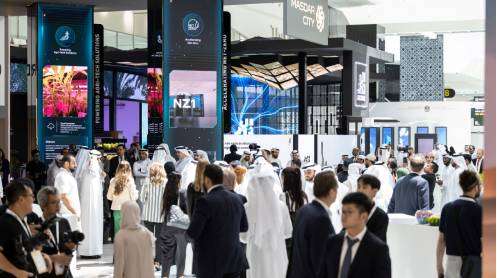
Now in its 18th edition and hosted by Masdar, WFES continues to be the flagship event of ADSW. This year’s Summit will feature over 800 global brands, the Greenhouse start-up zone, the new Fuse AI cleantech pavilion and the first-ever Greenpeace Cinema. More than 300 expert speakers, nine exhibition halls and 50,000+ attendees are expected.
About ADSW and Masdar
ADSW is a major global platform advancing sustainability dialogue and action, while Masdar—jointly owned by TAQA, ADNOC and Mubadala—continues to expand its global renewable energy portfolio, targeting 100GW of clean energy capacity by 2030.
For visitor registration, please visit the WFES website. For media inquiries, contact: press@masdar.ae.