DUBAI / TEHRAN: Escalating tensions in the Middle East have pushed global energy markets to the brink after multiple commercial vessels were struck near the strategic Strait of Hormuz, raising concerns about disruptions to a vital route that carries nearly 20 percent of the world’s oil supply.
According to reports, Iran launched fresh attacks against Israel and other targets across the region on Wednesday, demonstrating its ability to retaliate despite intense military strikes by the United States and Israel.
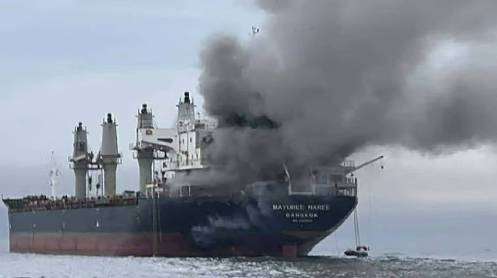
The situation intensified as at least three commercial vessels were hit by projectiles in the Gulf region. The Thailand-flagged bulk carrier Mayuree Naree caught fire after being struck about 11 nautical miles north of Oman, forcing its crew to evacuate. Its owner, Precious Shipping, confirmed the incident.
A Japan-flagged container vessel, One Majesty, sustained minor damage after being hit approximately 25 nautical miles northwest of Ras Al Khaimah in the United Arab Emirates. Meanwhile, the Marshall Islands–flagged bulk carrier Star Gwyneth suffered hull damage after a projectile strike about 50 nautical miles northwest of Dubai, according to maritime risk management firm Vanguard Tech.
Iran claimed responsibility for attacks on some vessels, including the Liberian-flagged container ship Express Rome, stating the ships had ignored warnings from the naval forces of the Islamic Revolutionary Guard Corps (IRGC).
The US military said it had destroyed 16 Iranian minelayer boats near the Strait of Hormuz and released footage showing Iranian vessels being struck by missiles. Washington also warned that civilian ports in Iran could be treated as legitimate military targets if used for naval operations.
“If mines are placed and not removed immediately, the military consequences to Iran will be severe,” said Donald Trump, President of the United States.
Reports suggest Iran has deployed multiple sea mines in the strait, although the strategy for removing them remains unclear. The Trump administration has offered to provide naval escorts for oil tankers passing through the region, though officials later clarified that an earlier announcement about a first escort operation was inaccurate.
Meanwhile, Emmanuel Macron, President of France, said he had received no confirmation of tanker escort operations following consultations with leaders of the Group of Seven (G7). He noted that US and Israeli strikes had weakened Iran’s military capabilities but had not eliminated them entirely.
Iranian officials warned that the conflict could escalate into a prolonged war of attrition. Ali Fadavi, adviser to the IRGC commander-in-chief, said the United States and Israel should consider the possibility of a long-term conflict that could severely damage the global economy.
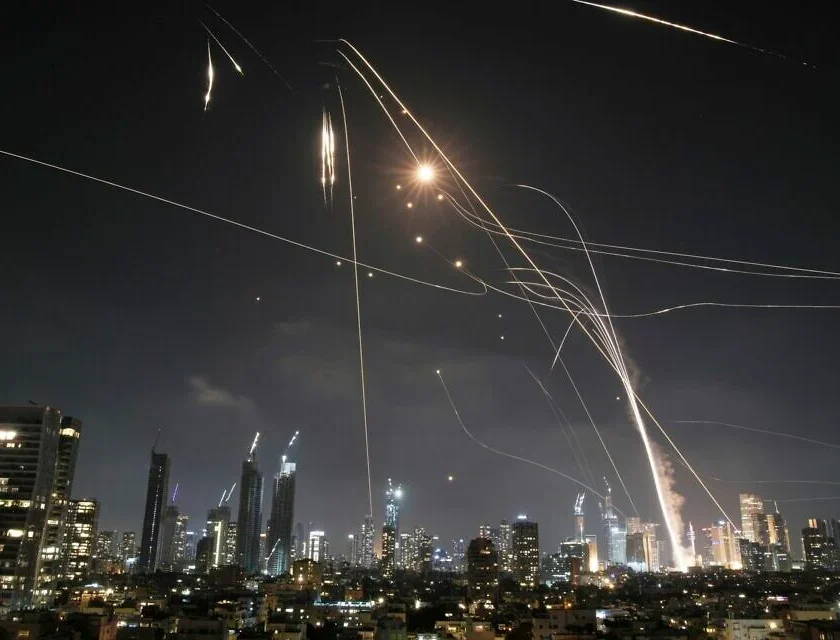
The broader conflict continues to intensify. Israel launched additional airstrikes on Tehran and Beirut, while Iran’s Revolutionary Guards announced the launch of another wave of missiles and drones targeting Israeli cities including Tel Aviv, Jerusalem and Haifa.
Regional tensions have also spilled into neighboring countries. Drones reportedly fell near Dubai International Airport, injuring several people, while fuel tanks at Salalah Port in Oman were hit in a separate incident.
Air defense systems across the Gulf region were activated as multiple countries reported intercepting missiles and drones. Saudi Arabia said it shot down drones and ballistic missiles targeting sites including Prince Sultan Air Base and the Shaybah oil field. Similar interceptions were reported in Kuwait, Qatar and the United Arab Emirates.
The IRGC also claimed it had fired ballistic missiles at facilities linked to the US Navy’s United States Fifth Fleet in Bahrain and at US-related targets in Iraqi Kurdistan.
According to estimates cited by Al Jazeera, nearly 1,900 people have been killed in the conflict so far, including more than 1,200 in Iran, around 570 in Lebanon, 13 in Israel, and eight US soldiers. The Pentagon said about 140 US service members had been wounded in the first ten days of the campaign.
Meanwhile, Iranian officials said the country’s Supreme Leader Mojtaba Khamenei was safe despite rumors he had been injured during the conflict.
The rapidly escalating hostilities and attacks on shipping lanes have heightened fears of prolonged instability in the Middle East and severe disruption to global energy supplies.
By Agencies | Monitoring Desk