ISLAMABAD: The ongoing Middle East conflict is expected to significantly disrupt Pakistan’s trade flows with Gulf Cooperation Council (GCC) countries and other regions, potentially reducing exports by $1.5 billion to $2 billion, while imports—mainly energy—could decline by up to $3 billion.
According to a recent Policy Viewpoint by the Pakistan Institute of Development Economics (PIDE), authored by Dr. Syed Hasanat Shah and Wajid Islam, the escalating confrontation involving the US, Israel, and Iran has evolved into a global economic crisis with far-reaching implications.
The report highlights that instability in the Middle East has disrupted both direct and indirect trade routes, posing risks to Pakistan’s domestic production and export performance. At the same time, rising global energy prices could inflate Pakistan’s import bill by an estimated $4.5 billion, further straining the country’s current account and increasing external debt.
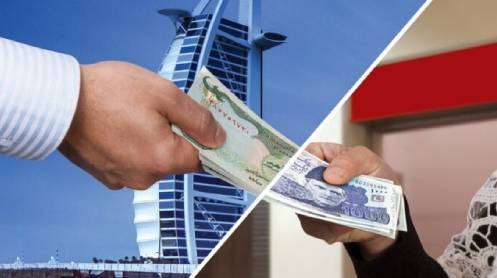
The crisis is also expected to negatively impact Pakistan’s balance of payments by reducing export earnings and remittance inflows, potentially placing renewed pressure on foreign exchange reserves. Additionally, already strained border trade—particularly with Iran—may deteriorate further if the conflict persists.
Higher oil prices could also trigger a return to double-digit inflation, reversing the relative economic stabilisation achieved during FY25.
To mitigate these risks, PIDE recommends rerouting oil imports through Yanbu port in the Red Sea, diversifying energy sources, and leveraging CPEC 2.0 as an alternative trade and economic corridor. These measures, the report suggests, are critical to enhancing resilience against external shocks.
The study concludes that the ongoing crisis underscores a shifting global landscape, where economic survival will increasingly depend on competitiveness, innovation, and efficiency rather than reliance on external support.
Story by Hamza Habib